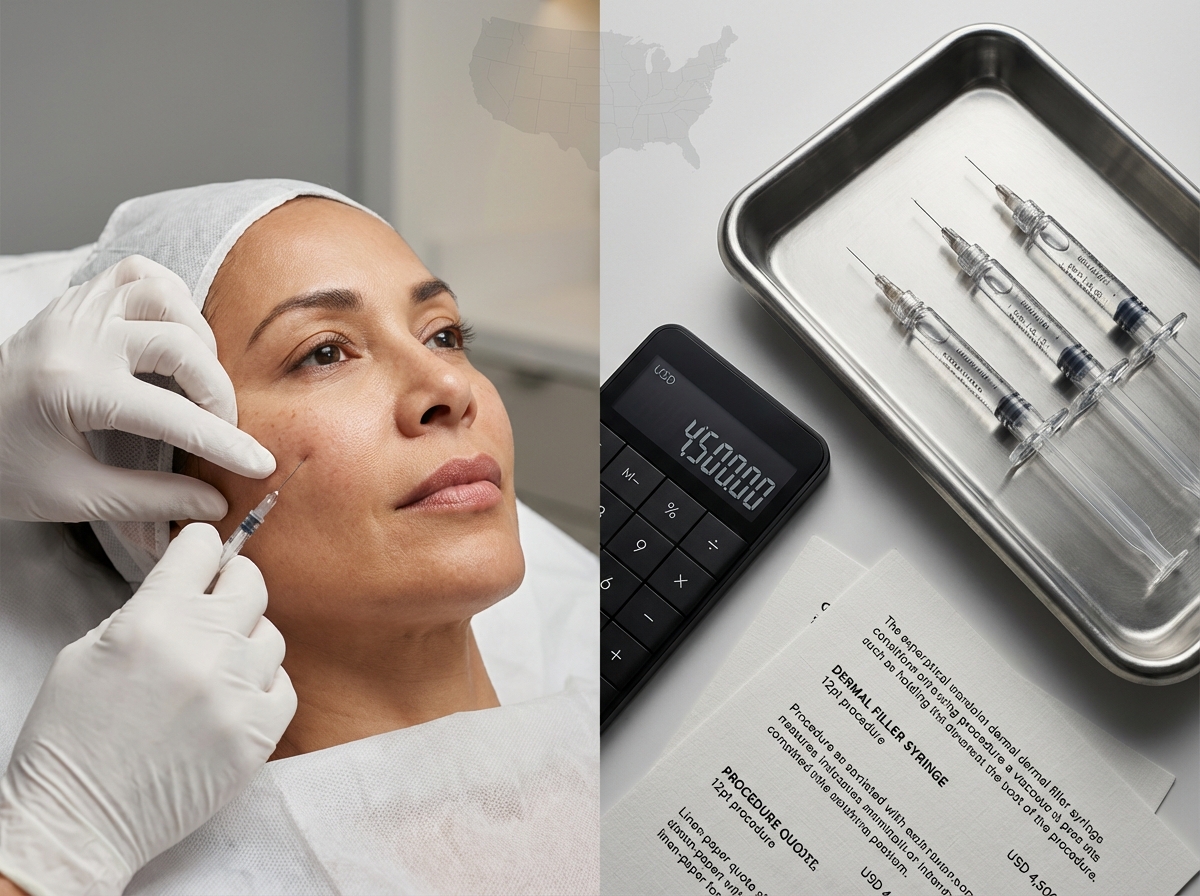
Choosing between thread lifts and dermal fillers often comes down to cost, longevity, and desired results. This article compares typical US prices for thread lifts, hyaluronic acid fillers, neuromodulators, and noninvasive treatments, and explains how to calculate cost per month of longevity. Learn pricing models, regional and provider factors, and practical tips to avoid overpaying before you book and protect your results.
Understanding treatments and real world longevity
To understand the real cost of aesthetic treatments, you have to look past the upfront price. You need to look at the biological clock of the product. A cheaper treatment that vanishes in three months often costs more annually than a premium option that holds for two years. This chapter breaks down exactly how these materials interact with your tissue and how long they actually last before your body metabolizes them.
The Dual Action of Thread Lifts
Thread lifts are unique because they function in two distinct phases. When a provider inserts a thread, you get an immediate mechanical lift. The barbs or cones on the thread physically grab the tissue and pull it upward. This is the “tensile support” phase. It provides that instant gratification you see in the mirror right after the procedure.
The Biostimulatory Phase
The second phase happens silently under your skin. The thread material triggers a foreign body response. Your body recognizes the suture and begins to heal around it. This process stimulates the production of new collagen and elastin. This biological reaction creates a mesh of your own tissue that maintains the firming effect even after the thread itself dissolves. The physical thread might disappear, but the collagen structure remains.
Thread Materials and Degradation Timelines
Not all threads are the same. The material determines both the strength of the lift and how long it survives in your body.
PDO (Polydioxanone) Threads
These are the most common threads used in US clinics. Your body absorbs PDO through hydrolysis. The tensile strength—the actual lifting power—typically lasts about 6 to 12 months. However, the collagen stimulation can extend the aesthetic improvement to roughly 12 to 18 months. These are excellent for patients who want a safety profile with a material used in surgery for decades.
PLLA and PCL Threads
Poly-L-lactic acid (PLLA) and Polycaprolactone (PCL) threads are built for endurance. These polymers degrade much slower than PDO. PLLA threads can maintain structural integrity for over 18 months. PCL threads last even longer. They can provide structural support for up to 24 to 36 months. Because the material stays in the tissue longer, it stimulates collagen production for a more extended period. This makes them a higher-value option for patients looking for longevity over quick absorption.
Injectable Fillers: Volume and Biostimulation
Fillers work differently. They do not lift tissue mechanically. They lift by occupying space. They inflate the tissue to smooth out wrinkles or restore lost volume. The longevity depends entirely on the main ingredient and how your body breaks it down.
Hyaluronic Acid (HA) Fillers
HA fillers like Juvéderm or Restylane are gels made of cross-linked hyaluronic acid. Cross-linking links the molecule chains together like a net. Tighter nets take longer for your body to break down. A thin, lightly cross-linked filler used for lips might last 6 to 9 months. A thick, highly cross-linked filler placed deep on the cheekbone can last 18 to 24 months. The placement matters. Fillers in high-movement areas like the mouth break down faster due to constant mechanical stress.
Calcium Hydroxylapatite (CaHA)
Products like Radiesse use calcium-based microspheres suspended in a gel. The gel provides immediate volume. The microspheres act as a scaffold. They stimulate your fibroblasts to grow new collagen. The gel absorbs within a few months, but the new collagen and the calcium particles persist. You typically see results lasting 12 to 18 months.
Poly-L-lactic Acid (PLLA)
Sculptra is the primary example here. It is a biostimulator rather than a traditional filler. It is injected as a liquid suspension. The water absorbs in days, leaving PLLA micro-particles behind. These particles irritate the tissue slightly, forcing the body to produce significant amounts of collagen. The full result takes months to appear. The longevity is impressive, often lasting 18 to 36 months or more depending on the number of treatment sessions.
Neuromodulators: The Short-Term Maintenance
Botox, Dysport, and Xeomin are neuromodulators. They do not fill or lift. They temporarily paralyze the muscle to stop wrinkles from forming. Their longevity is strictly biological. The nerve endings eventually regenerate new connections to the muscle. This process takes about 3 to 4 months for most people. This short cycle makes neuromodulators the most frequent recurring cost in any aesthetic plan.
Factors That Shorten Longevity
The ranges listed on a brochure are averages. Your personal biology dictates the real timeline.
Metabolism and Age
Younger patients with fast metabolisms often break down HA fillers faster than older patients. Conversely, older patients produce less collagen in response to threads or biostimulators. A 60-year-old might need more threads or more vials of Sculptra to achieve the same duration of result as a 35-year-old.
Lifestyle Stressors
Smoking reduces blood flow and oxygen to the skin. This hampers collagen production and accelerates the breakdown of fillers. High-intensity athletes often metabolize products faster. Excessive sun exposure damages the skin structure, reducing the hold of threads and the visual impact of fillers.
Replacement Cadence and Real Value
Understanding these timelines allows you to calculate the replacement cadence. This is how you determine the “cost per month.”
If you choose a Thread Lift vs. Fillers, the maintenance schedule looks very different. A thread lift might cost $2,500 upfront but requires no maintenance for 18 months. That is roughly $139 per month.
Compare that to a lip filler regimen. You might pay $700 per syringe. If you metabolize it quickly and need a top-up every 6 months, your annual cost is $1,400. The monthly cost is roughly $117.
Combination treatments change the math. Using Botox extends the life of fillers. By relaxing the muscles, you reduce the mechanical stress on the filler gel. This can push a 9-month filler to last 12 months. However, it adds the quarterly cost of the Botox itself.
| Treatment Type | Primary Mechanism | Typical Longevity Range | Biostimulatory Window |
|---|---|---|---|
| Botox / Neuromodulators | Muscle Relaxation | 3 – 4 months | None |
| HA Fillers (Lips/Lines) | Volume (Gel) | 6 – 12 months | Minimal |
| HA Fillers (Cheeks/Jaw) | Volume (Gel) | 12 – 24 months | Minimal |
| CaHA (Radiesse) | Scaffold + Volume | 12 – 18 months | High (months 1–6) |
| PLLA (Sculptra) | Collagen Induction | 18 – 36+ months | Very High (months 2–9) |
| PDO Threads | Lift + Collagen | 6 – 12 months (Lift) | Moderate (months 1–6) |
| PCL / PLLA Threads | Lift + Collagen | 18 – 36 months (Lift) | High (months 1–18) |
You must ask your provider for the specific product brand and its expected duration for your specific facial anatomy. A cheek filler will last longer than a lip filler. A thread lift in the heavy tissue of the jowls may degrade faster than threads in the lighter tissue of the brow. Knowing these biological realities prevents sticker shock when it is time for a touch-up.
How clinics set prices and typical US price ranges
Understanding the biological clock of these treatments is only half the battle. The other half is understanding the financial commitment before you walk into a clinic. Pricing in the US aesthetic market is rarely transparent until you are sitting in a consultation chair. Clinics use different pricing models that can make direct comparisons difficult. You might see a price per syringe for one treatment and a flat fee for another. To calculate real value, you first need to know exactly what you are paying for and why the numbers on the invoice vary so much between providers.
How Clinics Structure Their Prices
Aesthetic medicine does not have a standardized pricing menu. Clinics choose their billing models based on the product type and the time required for the procedure. Understanding these models helps you decode the quote.
Per Unit Pricing
This is the standard for neuromodulators like Botox, Dysport, or Xeomin. You pay for the exact amount of liquid used. A single unit is a tiny measurement. Treating a forehead or frown lines usually requires 20 to 40 units. This model is precise because you only pay for what your muscles need.
Per Syringe Pricing
Dermal fillers are almost always sold by the syringe. A standard syringe contains 1.0 mL of product. If you only need 0.5 mL for a subtle lip enhancement, you typically still pay for the full syringe because the remainder cannot be used on another patient. For larger areas like cheeks, you might need two or three syringes, which multiplies the cost linearly.
Per Thread or Per Package
Thread lifts are trickier. Some clinics charge a flat fee per thread. For example, they might charge $300 for one barbed thread. Other clinics offer package pricing based on the area. They might list a “Lower Face Lift” for a set price that includes a specific number of threads, usually between 8 and 12.
Per Cycle
Body contouring treatments like CoolSculpting are priced by the “cycle.” A cycle refers to one application of the cooling device to a specific area for about 35 to 45 minutes. Treating both sides of your waist would count as two cycles. Most treatment plans require multiple cycles to see results.
Flat Procedure Fees
For complex procedures that involve a mix of techniques, clinics often charge a flat fee. This is common for non-surgical nose jobs or comprehensive “liquid facelifts” where the provider uses a combination of fillers and threads to achieve a specific look.
The Invisible Costs Behind the Price Tag
When you see a price of $800 for a syringe of filler, the product itself is only a fraction of that cost. You are paying for the infrastructure that ensures your safety.
Provider Expertise and Credentials
This is the biggest variable. An injector nurse or a physician assistant generally charges less than a board-certified plastic surgeon or dermatologist. You are paying for their years of training and their ability to handle complications. An experienced injector knows exactly where to place a thread to avoid nerve damage. That peace of mind commands a premium.
Location and Overhead
Rent in major metropolitan hubs like New York or Los Angeles is astronomical. Clinics pass these costs down to the patient. A practice on the Upper East Side pays significantly more per square foot than a clinic in a rural suburb. This covers the physical space, high-end medical chairs, and the sterile environment required for safe procedures.
Insurance and Licensing
Malpractice insurance for aesthetic procedures is expensive. Clinics also pay for medical licensing, state certifications, and continuous training to keep staff updated on the latest safety protocols.
Marketing and Staff
Acquiring patients is costly. The front desk staff, the consultation coordinators, and the marketing campaigns all contribute to the final price of your treatment.
Typical US Price Ranges in 2025
Prices have adjusted over the last few years due to inflation and supply chain shifts. The following ranges represent what you can expect to pay in reputable US clinics right now.
| Treatment Type | Typical Price Range | Notes on Pricing |
|---|---|---|
| Botox / Neuromodulators | $10 – $20 per unit | Average treatment is 20–40 units ($200–$800 total). |
| HA Dermal Fillers | $500 – $1,500 per syringe | Price depends on brand and density. Cheeks often cost more. |
| PDO Thread Lift | $1,500 – $6,000 | Varies by thread count. Thread Lifts typically range from $1,500 to $4,500 depending on severity. |
| CoolSculpting | $700 – $1,500 per cycle | Most patients need 2–4 cycles per session. |
| Laser / RF Tightening | $200 – $800 per session | Usually requires a series of 3–6 sessions. |
Neuromodulator Variance
While the per-unit cost is low, the total bill adds up. A “sprinkle” of Botox might cost $200, but a full upper-face freeze can easily reach $800. Some clinics offer membership pricing that drops the per-unit cost if you commit to regular visits.
Filler Product Differences
Not all syringes are equal. Standard fillers for lips might be around $600 to $750. However, structural fillers used for cheekbones or jawlines, such as Juvederm Voluma or Restylane Lyft, are thicker and last longer. These premium products often cost $900 to $1,500 per syringe.
Thread Lift Complexity
A simple “fox eye” lift using just two or four threads might cost around $1,500. A comprehensive full-face lift involving 12 to 20 barbed threads for heavy lifting will push the price toward $4,000 or $6,000. The material cost for threads is high, and the procedure takes significantly longer than injections.
Geography and Provider Levels
Your zip code dictates your price. In major aesthetic hubs like Miami, Los Angeles, and New York City, demand is high and overhead is steep. Expect to pay 20% to 40% more in these cities compared to the national average.
The Surgeon Premium
A board-certified plastic surgeon performing a thread lift will likely charge at the top of the range. They view the procedure as a surgical alternative and price it according to their time and skill. A medical spa run by nurse practitioners might offer the same procedure for 30% less. Both can deliver excellent results, but the surgeon charges for their advanced surgical anatomy knowledge.
Hidden Costs and Add-Ons
The sticker price is rarely the final price. There are several additional fees you need to ask about before booking.
Consultation Fees
Many top-tier providers charge a consultation fee ranging from $100 to $300. This filters out non-serious inquiries. Often, this fee is applied toward the cost of your treatment if you decide to book, but you should confirm this policy in advance.
Anesthesia and Facility Fees
For fillers and Botox, numbing cream is usually complimentary. For thread lifts, local anesthesia is required. Some clinics include this in the package price, while others add a separate fee for the medications and the extended time in the procedure room.
Touch-Ups and Maintenance
This is a common surprise for filler patients. Swelling can distort the immediate look. Once it subsides in two weeks, you might notice asymmetry or want more volume. Most clinics charge for the additional product used during a touch-up. It is rarely free.
How to Get a Fair Price
You do not have to accept the first number you hear. While you should never bargain shop for medical procedures like you would for a used car, you can ensure you are getting fair value.
Request an Itemized Quote
Ask for a breakdown in writing. The quote should list the cost of the product separately from the procedure fee if applicable. It should also detail any facility fees or post-care kit costs.
Verify the Brand and Lot Number
You are paying for FDA-approved products. Cheap threads or fillers imported from unauthorized sources can be dangerous. Ask specifically which brand of thread or filler will be used. Reputable clinics will happily show you the box and record the lot number in your file.
Ask About Maintenance Intervals
Price is relative to longevity. If a clinic quotes you a lower price for a filler that only lasts six months, it might be more expensive in the long run than a premium filler that lasts 18 months. Ask the provider specifically: “How many months before I need to come back?” Write this number down. You will need it to calculate the true monthly cost.
Check What Is Included
Ask if the price includes follow-up visits. A thread lift requires a follow-up to check for infection or thread migration. This visit should be part of the initial fee. If they charge for a simple 15-minute check-up, that is a red flag.
By understanding these pricing structures and asking the right questions, you protect your wallet and your health. You shift the conversation from “How much is it?” to “What is the value?” This prepares you for the next step, which is doing the math to see which treatment actually makes financial sense over time.
Calculating cost per month of longevity and comparing value
Most patients look at the sticker price on a clinic menu and stop there. Seeing $4,000 for a thread lift next to $800 for a filler syringe often makes the decision feel purely financial. You might think the filler is five times cheaper. But aesthetic medicine rarely works like a grocery store receipt. You aren’t buying a product; you are buying a duration of effect.
To understand what you are actually paying, you have to ignore the upfront number for a moment and look at the timeline. A cheaper procedure that requires three visits a year often costs more than a pricier procedure that lasts two years. By breaking these costs down into a monthly “subscription” fee, you can compare apples to apples.
The Value Formula
You need a simple way to standardize these costs. The most effective method is calculating the Cost Per Month of Longevity. This turns a large, scary upfront sum into a manageable monthly operating expense, similar to how you might budget for a gym membership or a car lease.
The Calculation
Cost Per Month = Total Upfront Cost ÷ Expected Months of Effect
This formula reveals the true financial weight of the procedure. It also helps you decide if a treatment fits your long-term cash flow, rather than just your current savings account.
Running the Numbers: Real-World Scenarios
Let’s look at common 2025 pricing examples to see how this math changes the perspective on value.
Scenario 1: The Single Syringe Touch-Up
You book an appointment for a standard Hyaluronic Acid (HA) filler to address mild nasolabial folds. The clinic charges $800 for one syringe. Based on the product and your metabolism, the injector estimates it will last 12 months.
Math: $800 ÷ 12 months = $66.67 per month.
This is the baseline. For roughly the cost of a high-end gym membership, you maintain that specific correction.
Scenario 2: Volume Replacement with Two Syringes
You need more structural support in the cheeks. The provider suggests two syringes of a denser, longer-lasting HA filler. The upfront cost is $1,600. However, because this product is thicker and placed deeper, the expected longevity increases to 18 months.
Math: $1,600 ÷ 18 months = $88.89 per month.
Even though you paid double the upfront cost of Scenario 1, your monthly cost only went up by about $22. You are getting more volume and longer duration, which improves the value proposition.
Scenario 3: The Thread Lift
This is where the sticker shock usually happens. A full mid-face thread lift using PLLA or PCL threads might cost $4,000. This covers the threads, the anesthesia, and the provider’s time. The structural lift and subsequent collagen stimulation are expected to last 24 months.
Math: $4,000 ÷ 24 months = $166.67 per month.
While the monthly cost is higher than filler, it isn’t five times higher, even though the upfront price was. You are paying for a mechanical lift that fillers cannot achieve, and you don’t need to return to the clinic for two years.
The Hidden Cost of Maintenance: Neuromodulators
Botox, Dysport, and other neuromodulators often seem like the cheapest option because the receipt at the desk is lower. A typical treatment for the forehead and glabella might cost $400.
The catch is frequency. These products metabolize strictly, usually wearing off between 3 to 4 months.
The Maintenance Math
Upfront: $400
Duration: 4 months
Math: $400 ÷ 4 months = $100 per month.
Surprisingly, maintaining a smooth forehead often costs more per month than a single syringe of filler ($66.67/month) and isn’t that far off from the monthly breakdown of a thread lift. When you skip a maintenance appointment, the effect disappears immediately, unlike the gradual decline of collagen-stimulating treatments.
Complex Calculations: Combination Treatments
Advanced treatment plans often mix modalities. You might get a thread lift for structure and a small amount of filler for fine tuning. Calculating the value here requires apportioning the costs because they have different expiration dates.
Example: Threads + Filler
Procedure: Thread lift ($3,500) + 1 Syringe Lip Filler ($700).
Thread Longevity: 24 months.
Filler Longevity: 12 months.
You cannot just add them up and divide by 24. You have to calculate the “stack.”
- Thread Cost: $3,500 ÷ 24 = $145.83/month
- Filler Cost: $700 ÷ 12 = $58.33/month
For the first year, your face costs you $204.16 per month (145.83 + 58.33).
For the second year, if you don’t top up the filler, the cost drops to $145.83 per month (just the threads).
If you plan to keep the lips filled, you must budget for that $700 top-up at month 12. This helps you forecast your spending for the next two years rather than being surprised by a bill next December.
Sensitivity Analysis: What If It Doesn’t Last?
Longevity is an estimate, not a guarantee. Your metabolism, exercise habits, and stress levels dictate how long products last. It is smart to run a “pessimistic” calculation to see if the treatment is still worth it if it fades faster than advertised.
High Metabolism Scenario (Filler)
You pay $800 for a syringe expecting 12 months ($66/month).
Your body metabolizes it in 8 months.
New Math: $800 ÷ 8 = $100 per month.
The cost efficiency just dropped by 50%.
Short Duration Scenario (Threads)
You pay $4,000 for threads expecting 24 months ($166/month).
The visible lift settles significantly after 12 months.
New Math: $4,000 ÷ 12 = $333.33 per month.
This analysis highlights the financial risk of high-ticket procedures. If a thread lift doesn’t hold, your monthly cost skyrockets compared to a filler that fades early. This is why selecting an experienced provider who uses high-quality threads (like molded or stamped barbs rather than simple cuts) is a financial decision, not just a safety one.
The Break-Even Point
Sometimes paying more upfront yields better value. This is the “boots theory” of aesthetics. Buying cheap treatments repeatedly can cost more than buying a durable treatment once.
Compare a patient chasing volume with fillers versus one getting a biostimulator or thread lift.
Option A: Filler Stacking
Patient buys 2 syringes every 9 months to maintain cheek volume.
Cost: $1,600 per visit.
Over 36 months (4 visits): $6,400 total.
Option B: Structural Lift
Patient gets a thread lift ($4,000) and one maintenance booster ($1,500) at 18 months.
Over 36 months: $5,500 total.
In this three-year window, the thread lift patient saves $900 and undergoes fewer injection sessions. The break-even point occurred somewhere around month 24. If you know you are in this for the long haul, looking at 3-year costs is smarter than looking at 3-month costs.
Don’t Forget Ancillary Costs
The procedure price isn’t the only number on the spreadsheet. When calculating true value, you must account for the hidden costs of the appointment itself.
- Downtime: A thread lift might require 2–3 days off work due to swelling or puckering. If you earn $300 a day, that’s a $900 hidden cost added to the $4,000 procedure. Fillers usually allow you to return to work immediately.
- Follow-ups: Does the clinic charge for the two-week check-up? Most don’t, but ask.
- Touch-ups: If a thread snaps or a filler lump needs dissolving, is that correction free? Complication management can add hundreds of dollars if not covered by the original fee.
Comparison Worksheet
You can use a simple table structure to compare quotes from different clinics. When you call for pricing, ask for the specific variables below to fill in the blanks.
| Treatment | Upfront Price | Expected Months | Monthly Cost | Downtime Cost |
|---|---|---|---|---|
| HA Filler (1 Syringe) | $700 – $900 | 9 – 12 | $58 – $100 | $0 (Lunch break) |
| HA Filler (2 Syringes) | $1,400 – $1,700 | 12 – 18 | $77 – $141 | $0 (Lunch break) |
| Botox (3 Areas) | $500 – $700 | 3 – 4 | $125 – $233 | $0 |
| PDO Thread Lift | $2,500 – $4,500 | 18 – 24 | $104 – $250 | 2-3 Days Wages |
| CoolSculpting (4 Cycles) | $2,800 – $3,200 | Permanent* | N/A | $0 – 1 Day |
*Note on Permanent Fat Reduction: Procedures like CoolSculpting have a high upfront cost but technically infinite longevity if weight is maintained. In these cases, divide the cost by 60 months (5 years) to get a realistic medium-term comparison.
By forcing yourself to do this math, you remove the emotion from the purchase. You might find that the “expensive” $4,000 procedure is actually the most responsible financial choice for your goals, or you might realize that the “cheap” Botox habit is your biggest annual expense.
Frequently Asked Questions
You now have the math to figure out if a $4,000 procedure is actually a better deal than an $800 one. But formulas only work if the numbers you plug in are accurate. The biggest variable in the “cost per month” equation isn’t the price tag—it is the longevity. And that is where clinics often get vague.
I have compiled the most frequent questions prospective patients ask when trying to pin down these numbers. These answers cut through the marketing fluff to help you get a realistic quote.
How do I estimate realistic longevity for my specific case?
The “up to 18 months” printed on a brochure is a best-case scenario, not a guarantee. Your personal biology plays a massive role in how long a treatment lasts. Patients with high metabolisms or those who exercise intensely often metabolize hyaluronic acid fillers and neuromodulators faster than average. For thread lifts, the physical lift relies on the barbs holding tissue; if you have heavy skin or significant laxity, that mechanical hold may fail months before the material actually dissolves.
Action Step: Ask the provider, “In your experience, how long does this specific product last for a patient with my activity level and skin type?”
Note: This requires an in-person consultation to assess your skin quality and muscle strength.
Why do prices vary so much between clinics?
You might see a thread lift advertised for $1,500 at a med-spa and $4,500 at a plastic surgeon’s office down the street. In 2025, overhead is the primary driver of this variance. Clinics in high-rent metropolitan areas like New York or Los Angeles charge a premium to cover their lease. More importantly, you are paying for the injector’s credentials. A board-certified plastic surgeon or dermatologist generally charges more than a nurse injector because you are paying for their ability to handle complications and their anatomical expertise.
Action Step: Check if the price difference is due to the provider’s level of education or just the luxury furniture in the waiting room.
Are cheaper injectors safe?
If a price seems significantly lower than the local average—for example, Botox at $8 per unit when the city average is $14, or a filler syringe for $350—it is a red flag. Extremely low prices often indicate one of three things: the product is diluted (common with neuromodulators), the product is nearing its expiration date, or it is a grey-market import that is not FDA-approved. In the worst cases, counterfeit products containing silicone or non-sterile substances are used. Safety equipment and legitimate products cost money, and safe clinics cannot afford to undercut the market by 50%.
Action Step: Ask to see the vial or box before they inject. Legitimate providers will happily show you the sealed package and lot number.
How many threads or syringes will I actually need?
This is the most common source of “sticker shock.” A single syringe of filler contains only 1 milliliter of product—roughly one-fifth of a teaspoon. For a visible mid-face lift, a patient often needs 2 to 4 syringes, pushing the cost from $800 to over $3,000. Similarly, a thread lift advertised at a low price might only include 4 threads, but a proper structural lift for the jawline and cheeks often requires 10 to 20 threads to create a mesh that actually holds.
Action Step: Ask for a “full correction” quote. Ask specifically, “How many syringes/threads do I need to see the result shown in your before-and-after photos?”
Note: This strictly requires an in-person consult. No one can estimate volume loss over the phone.
Do threads and fillers work together and how does that affect cost?
Yes, and they are often better together. Thread lifts vs fillers is not always an either-or choice. Threads provide the structural lift to reposition sagging tissue, while fillers replace the volume lost in cheeks or temples. Combining them increases your upfront cost significantly—often into the $4,000 to $6,000 range—but it can improve the “cost per month” value. By using threads to lift, you may need less filler volume. Conversely, restoring volume can take tension off the threads, potentially helping the lift last longer.
Action Step: Ask if the clinic offers a package rate for combination treatments, or if you can stage them a month apart to spread out the payments.
How often will I need maintenance for Botox or filler?
Budgeting for aesthetics is like budgeting for rent; it is recurring. Neuromodulators (Botox, Dysport, Xeomin) typically require maintenance every 3 to 4 months. If you wait too long, the muscles regain full strength, and you start from zero. Hyaluronic acid fillers generally need a “top-up” once a year, though lip fillers often metabolize faster (6–9 months) due to mouth movement. Thread lifts are usually repeated every 18 to 24 months, though some patients opt for a small “tweak” with just a few threads at the one-year mark.
Action Step: Ask the clinic to write down a 12-month maintenance calendar for you with estimated costs for each visit.
Will insurance cover complications?
Standard health insurance almost never covers elective cosmetic procedures or their direct complications. If you develop an infection or a nodule that requires medical treatment, your insurance may deny the claim because it stems from a non-covered service. Some clinics offer their own limited “warranty” for minor corrections, but for significant medical issues, you are usually paying out of pocket.
Action Step: Explicitly ask, “If I have a complication like an infection or asymmetry, are the follow-up visits and treatments covered by my initial fee?”
What questions should I bring to a consultation?
You need to interview your injector. Do not be passive. You are trusting them with your face and your money. Bring a list of questions that force them to be specific about the product and the outcome.
Action Step: Use this mini-checklist:
- How many times have you performed this specific procedure this month?
- What specific brand of product are you using, and why do you prefer it over others?
- Can you show me before-and-after photos of patients with my specific bone structure?
- What is the plan if I am unhappy with the results?
How to spot hidden fees?
The price listed on the website is rarely the final bill. Clinics often charge separate fees that appear only when you are at the front desk. Common additions include a “facility fee,” a consultation fee (which may or may not be applied to the treatment cost), and charges for numbing cream or dental blocks. Some clinics also charge for the two-week follow-up appointment, even if it is just a five-minute check-up.
Action Step: Request an “all-inclusive” written quote. Ask, “Does this total include anesthesia, facility fees, and my follow-up appointment?”
Are payment plans and financing options common?
Yes, because these procedures are expensive. Most US aesthetic clinics in 2025 accept third-party medical financing like CareCredit, Cherry, or PatientFi. These allow you to pay monthly, often with interest-free periods if paid within 6 or 12 months. However, be careful with interest rates if you miss the promotional window, as they can be very high.
Action Step: Ask if the clinic has an in-house membership plan. These often provide better value (like 10% off all injectables) for a monthly fee, avoiding the credit checks of third-party lenders.
Can I get a quote over the phone?
Clinics that give firm quotes over the phone are often doing you a disservice. Without seeing your skin laxity, facial asymmetry, and volume loss, a phone quote is just a guess. A reputable clinic will give you a wide range (e.g., “$800 to $2,400”) to manage expectations but will refuse to give a final number until they see you.
Action Step: Be wary of any provider who promises a fixed price for a “full face lift” without seeing your face first.
Note: This confirms the necessity of an in-person assessment for accurate pricing.
What happens if I need a touch-up?
Aesthetic medicine is an art, and sometimes the result isn’t perfect on the first try. Swelling can hide asymmetry during the procedure. Most reputable clinics will bring you back at the two-week mark. However, policies on touch-ups vary wildly. Some offer free adjustments for minor asymmetry; others charge for every additional unit of product used.
Action Step: Clarify the touch-up policy before booking. “If one eyebrow is higher than the other in two weeks, is the correction free?”
Final recommendations and next steps
You have the numbers and the raw data. You understand that a four thousand dollar procedure might actually cost less per month than a five hundred dollar one if the longevity is there. The marketing noise in the aesthetic industry is loud. It tries to distract you with flash sales and immediate gratification. Your job is to ignore the hype and focus on the math.
Making a smart decision requires a systematic approach. You need to treat this like an investment rather than an impulse buy. The goal is to walk into a clinic with clear expectations and walk out with a fair deal that makes sense for your long-term budget.
The Pre-Booking Checklist
Before you hand over your credit card or sign any consent forms, you need to verify the details. Do not rely on verbal promises. Use this checklist to vet every provider you consider.
- Verify Provider Credentials
Do not just look for a white coat. Ask specifically if your injector is a board-certified plastic surgeon, a dermatologist, or a specialized nurse practitioner. Experience matters immensely for longevity. A skilled provider places product where it lasts longer. Ask them how many thread lifts or filler injections they perform weekly. You want someone who does this every day. - Request Specific Brand Names
Not all products are equal. A generic hyaluronic acid filler might cost the same upfront as a premium brand like Juvéderm Voluma or Restylane Lyft but last half as long. Ask for the exact product name. Check if they use FDA-cleared PDO threads or reputable filler brands. If they cannot tell you the brand or if they say it is a “house blend,” that is a major warning sign. - Get a Written Itemized Quote
A verbal estimate of “around two thousand” is not enough. You need a breakdown. Ask for the cost of the procedure itself, anesthesia fees, facility fees, and any necessary post-procedure products. Ensure the quote includes the number of threads or syringes. You need to know if that price covers ten threads or twenty. This prevents surprise bills at the checkout desk. - Clarify the Touch-Up Policy
Aesthetic procedures are art and science. Sometimes you need an adjustment. Ask if a two-week follow-up appointment is included in the price. Ask if minor tweaks or additional units of Botox are billed separately or if there is a grace period for adjustments. Knowing this upfront saves you from awkward conversations later. - Check Consistent Before and After Photos
Do not look at the brochures provided by the manufacturer. Those show the best-case scenarios. Ask to see the provider’s own work. Look for patients who have similar facial structure to yours. Check the lighting in the photos. If the “after” photo has better lighting or the patient is wearing makeup, you cannot trust the result. You want to see raw and honest documentation of their skill. - Calculate the Real Monthly Cost
Take the total quote and divide it by the lower end of the expected longevity range. If a clinic promises a thread lift lasts 12 to 24 months, divide the price by 12. This gives you the worst-case scenario cost per month. If that number fits your monthly budget, the procedure is affordable. If it does not, the upfront price does not matter.
Budgeting for Maintenance and Emergencies
Your financial plan must extend beyond the day of treatment. Aesthetic maintenance is an ongoing expense. You need to budget for the reality that biology is unpredictable.
The Emergency Fund
Things happen. You might have persistent swelling. You might dislike the result and want the filler dissolved. Dissolving filler with hyaluronidase often costs extra. It is rarely free. Complications like infection are rare but possible. Most insurance plans do not cover complications from elective cosmetic procedures. You should have a small emergency fund set aside, perhaps ten to twenty percent of the procedure cost, to handle these unexpected needs without financial stress.
Planning for Fade
Results do not disappear overnight. They fade gradually. A filler that lasts 12 months will look different at month 10 than it did at month 3. You might want a “top-up” before the product is fully gone to maintain the look. Ask your provider about maintenance pricing. Some clinics offer loyalty programs or lower rates for maintenance syringes if you return within a certain window. Factor these potential interim treatments into your annual calculation.
When Combination Treatments Make Sense
Clinics often suggest combining therapies. They might recommend Thread Lifts vs Fillers in the same session. This can feel like an upsell, but it often provides better value.
Threads provide the structural lift that fillers cannot achieve alone. Fillers provide the volume that threads cannot replace. If you try to lift sagging skin with filler alone, you often end up with an overfilled and puffy look that requires more product and costs more money. Using threads to lift and a small amount of filler to smooth can actually use less product overall.
However, you must run the math on the combined longevity. If you combine a thread lift that lasts 18 months with Botox that lasts 4 months, your maintenance schedule becomes complex. You will be back in the chair for Botox long before the threads wear off. Ensure you are willing to commit to the different maintenance intervals for each part of the combination.
Safety Red Flags
You must be willing to walk away if something feels off. Your safety is worth more than a discount.
Walk-In Availability
High-quality aesthetic medicine requires planning. If a clinic accepts walk-ins for invasive procedures like thread lifts without a prior medical history review or consultation, it is dangerous. Good providers are usually booked weeks in advance. Immediate availability for a complex procedure is suspicious.
Extremely Low Prices
If the average price for a syringe of filler in your city is seven hundred dollars and a clinic offers it for three hundred, ask why. It could be near-expired product. It could be a gray-market import that has not been stored correctly. It could be counterfeit. The risk of infection or vascular occlusion increases significantly with cut-rate materials.
No Medical History Intake
Your provider needs to know about your autoimmune conditions, your allergies, and previous injections. If they skip the medical history form and go straight to the chair, they are negligent. Certain conditions affect how you heal and how long the product lasts. A provider who does not ask is a provider who does not care about your long-term outcome.
Practical Next Steps
You are ready to move forward. Do not rush. Follow this sequence to ensure you get the best value and safety.
- Gather Three Quotes
Do not book with the first clinic you visit. Schedule consultations with three different providers. This gives you a baseline for pricing in your specific area. It also lets you compare their treatment plans. One might suggest five syringes while another suggests a thread lift. Hearing different perspectives helps you understand what you actually need. - Run the Numbers
Sit down with the three quotes. Use the formula we discussed. Total Cost divided by Expected Months. Compare the monthly cost of the thread lift quote against the filler quote. Look at the long-term value. Often the more expensive upfront option is cheaper over two years. - Check the Vibe
Trust your gut. Did the provider listen to you? Did they pressure you to buy more? Did they explain the risks clearly? You want a partner in your aging process, not a salesperson. Choose the provider who was transparent about the limitations and the costs. - Schedule Your Appointment
Once you have selected the provider and the plan that fits your monthly budget, book the date. Ask about pre-procedure protocols like avoiding blood thinners or alcohol to minimize bruising.
The aesthetic industry relies on confusion to drive sales. By breaking everything down into a cost-per-month metric, you take back control. You stop looking at the sticker price and start looking at the value. You make choices that keep you looking refreshed without breaking your bank account. That is the smartest way to approach beauty in 2025.
References
- Thread Lift vs. Fillers: Which Is the Better Option for You? — Thread Lifts: The cost of a thread lift ranges from $1,500 to $4,500, contingent on the severity of the procedure. Fillers: Typically, dermal fillers cost you …
- PDO Thread Lift vs. Fillers: Which One is Right For You? — The total cost of a PDO thread lift is, on average, between $700 and $4,500. This price can vary based on how many threads the aesthetician uses, as well as the …
- Lifting Threads Cost: Top 3 Amazing Savings 2025 — The average cost of a PDO thread lift varies widely, ranging from $700 to $4,500. The price depends on the treatment area, the complexity of the procedure, and …
- PDO Thread Lift Cost: Your 2025 Pricing Guide — A targeted treatment for just the neck or jawline typically costs between $800 and $1,000. If you're looking to address areas like the cheeks or …
- Cost Comparison: PDO Lip Threads vs. Other Lip Enhancements — PDO lip threads can cost anywhere from $500 to $1,500. Medically reviewed by: Elizabeth Williams RN Updated: 6/5/2025. PDO Lip Threads. PDO lip threads are …
- PDO Threads vs Fillers | Glow Medical Aesthetics Monroe, NJ — When comparing PDO threads vs fillers, thread lifting offers more structural lift. They anchor the skin and create a gentle lift from underneath …
- Thread Lift vs. Filler: How to Choose and Why? – MetaGlow % — Compare thread lifts and fillers for natural facial rejuvenation. Discover which is right for sagging, volume loss, or both.
- Facial Rejuvenation Options | A Comparison Guide – Icon Dental — Compare thread face lift, facelifts, fillers, and Botox. Discover the best facial rejuvenation solution in Denver and learn which treatment …
- Dermal Fillers Cost: Your Ultimate 2025 Guide – ProMD Health — Dermal fillers cost typically ranges from $500 to $1,500 per syringe, with most treatments in the U.S. averaging $700 to $750 per syringe. The …
- Mid-Face Lift vs. Fillers: Complete Cost and Longevity Comparison … — Mid-Face Lift vs. Fillers: Complete Cost and Longevity Comparison for 2025 – Salisbury Plastic Surgery.
Legal Disclaimers & Brand Notices
The information provided in this article is for informational and educational purposes only and does not constitute medical advice, diagnosis, or treatment. Always seek the advice of a physician or other qualified health provider with any questions you may have regarding a medical condition or aesthetic procedure. Never disregard professional medical advice or delay in seeking it because of something you have read in this content.
All product names, logos, and brands are the property of their respective owners. Use of these names, trademarks, and brands does not imply endorsement. This article references several registered trademarks, including but not limited to:
- Botox®, Juvéderm®, and CoolSculpting® are registered trademarks of Allergan Aesthetics (an AbbVie company).
- Dysport®, Restylane®, and Sculptra® are registered trademarks of Galderma Laboratories.
- Radiesse® and Xeomin® are registered trademarks of Merz Aesthetics.