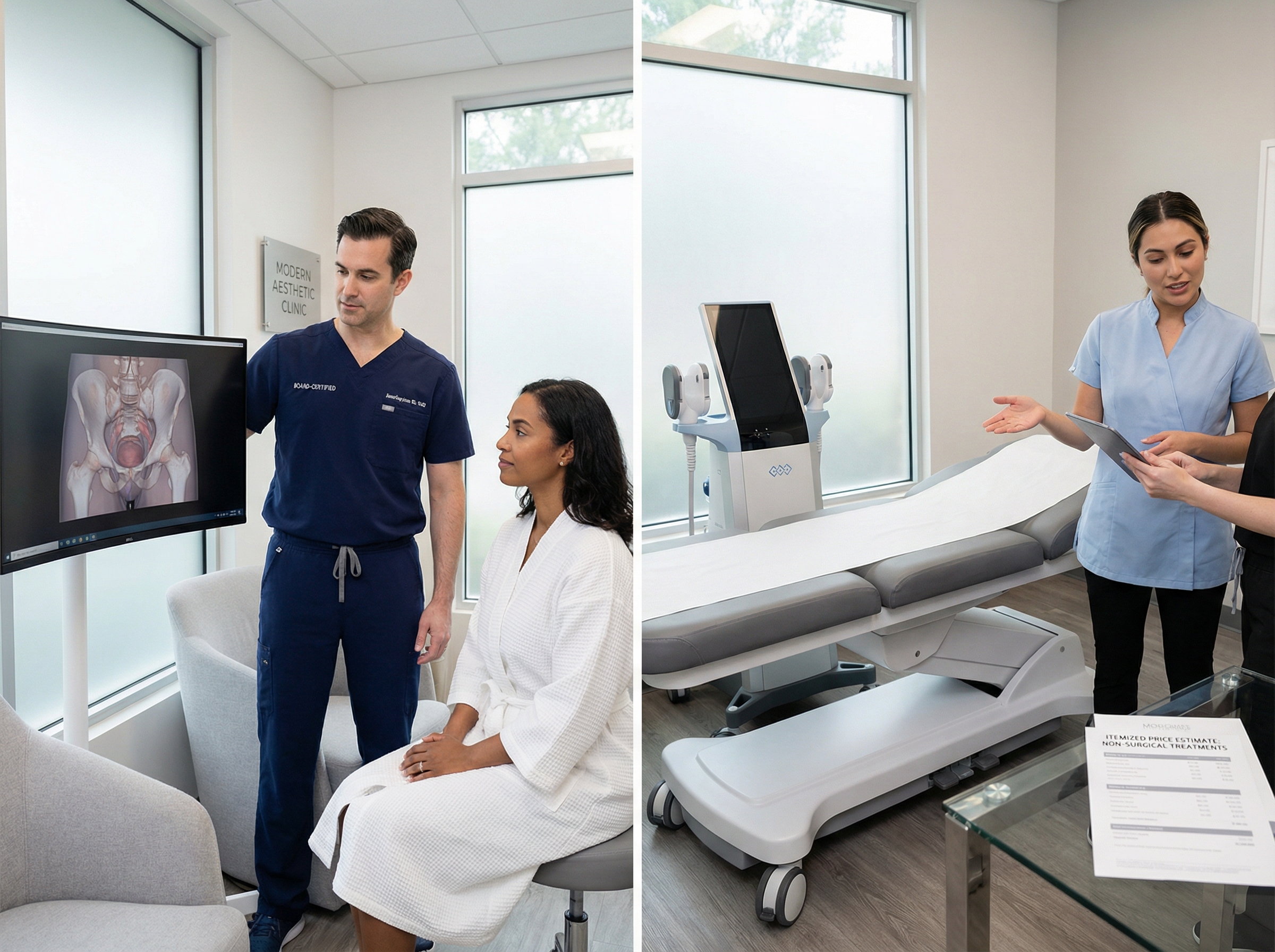
Deciding between a Brazilian Butt Lift (BBL) and non‑surgical butt‑lift options requires balancing cost, downtime, and safety. This article compares typical U.S. prices, common non‑surgical alternatives (Sculptra, injectables, body‑contouring devices, CoolSculpting), and surgical BBL costs and risks. Use the price‑versus‑risk matrix and practical tips to evaluate clinics, avoid overpaying, and make a safer, value‑driven choice.
What BBL and non‑surgical butt lift options actually mean
You see the term “butt lift” everywhere in aesthetic marketing, but it usually refers to two completely different medical approaches with vastly different commitments. Understanding the mechanics of these procedures is the only way to determine if the potential result justifies the price tag or the recovery time. We need to strip away the branding and look at what actually happens to your anatomy during these treatments.
The Surgical Brazilian Butt Lift (BBL)
A Brazilian Butt Lift is technically a misnomer because it rarely involves removing skin to “lift” the buttocks in the traditional sense. It is actually a fat grafting procedure designed to add volume and change the shape of the gluteal area. The medical term is autologous fat transfer. This surgery relies on using your own fat cells to reshape your lower body.
The process happens in three distinct stages. First, the surgeon performs aggressive liposuction on surrounding areas. They typically target the lower back, flanks (love handles), abdomen, or thighs. This step is crucial because slimming the waistline creates a visual contrast that makes the buttocks appear more prominent before any fat is even injected.
The second stage involves processing the harvested fat. The surgical team uses a centrifuge or filtration system to separate viable fat cells from blood and tumescent fluid. Only the healthy, purified fat is kept for the final step.
Finally, the surgeon reinjects this processed fat into specific areas of the buttocks. This is where safety guidelines have changed drastically in recent years. Current safety standards from major plastic surgery societies strictly advise surgeons to inject fat only into the subcutaneous space (the layer of fat just under the skin) and never into the gluteal muscle. Injecting into the muscle carries a high risk of fat embolism, where fat enters the bloodstream. You should always confirm your surgeon adheres to these subcutaneous-only injection protocols.
Typical Goals: Significant volume increase, widening of the hips, and creating an hourglass silhouette through waist reduction.
Longevity: The results are generally permanent. However, about 30% to 40% of the transferred fat may not survive the initial transfer. The remaining fat behaves like normal body fat and will expand or shrink if you gain or lose weight.
Recovery: This is physically demanding. You cannot sit directly on your buttocks for two to three weeks. Most patients need 10 to 14 days off work and wear compression garments for six weeks.
Gluteal Implants
Some patients do not have enough excess body fat to perform a BBL. For these individuals, buttock implants are the primary surgical alternative. This procedure involves placing solid silicone implants, which are much firmer than breast implants, deep within or below the gluteal muscle fascia.
Implants provide projection and a very round, defined shape. They do not offer the waist-slimming benefit of a BBL since no liposuction is required for the augmentation itself. The risk profile is different here. Implants can shift, flip, or cause seromas (fluid collection). Infection is also a higher risk compared to other implant surgeries due to the location of the incision near the intergluteal cleft.
Typical Goals: High projection and upper pole fullness for very lean patients.
Longevity: Implants are long-lasting but may need replacement after 10 to 15 years if complications arise.
Recovery: Similar to BBL, with strict restrictions on sitting to prevent wound opening (dehiscence).
Non-Surgical Injectable Options
Patients wanting to avoid anesthesia often look at injectables. It is vital to understand that most of these uses are “off-label” in the United States. This means the FDA approved the product for other areas (usually the face), but doctors use their discretion to apply it to the body.
Sculptra (Poly-L-Lactic Acid): This is the most common non-surgical option. Sculptra is not a filler that provides instant volume. It is a biostimulator. The doctor injects a liquid suspension containing micro-particles of PLLA. These particles irritate the tissue slightly, which triggers your body to produce its own collagen. You typically need a series of treatments spaced weeks apart. The volume comes gradually over months as your collagen builds up.
Hyaluronic Acid (HA) Fillers: Some practitioners use thick HA fillers to add immediate volume. This is less common for large augmentations because of the immense cost required to achieve visible size. There are also significant safety concerns regarding vascular occlusion if large amounts of filler compress blood vessels.
Typical Goals: Subtle hip dip correction, smoothing skin texture, and minor volume addition. It will not create the drastic projection of surgery.
Longevity: Sculptra results can last 2 to 3 years. Maintenance injections are usually needed once a year.
Recovery: Minimal. You might be sore for a few days, but there are usually no restrictions on sitting.
Energy-Based Body Contouring
Devices offer a completely different approach by focusing on muscle tone or fat reduction rather than adding volume.
Muscle Toning (Emsculpt, Emsculpt Neo, HIFEM): These devices use High-Intensity Focused Electromagnetic energy to force the gluteal muscles to contract thousands of times in a 30-minute session. The goal is to thicken the muscle fibers, creating a firmer, slightly lifted look. It is essentially an intense workout without the sweat.
Cryolipolysis (CoolSculpting): This is a fat reduction treatment, not an augmentation. However, providers often use it to enhance the buttock shape by freezing fat in the “banana roll” (the pocket of fat under the buttock crease). Removing this fat can create a visual effect that makes the buttocks look perkier and more defined.
Typical Goals: Toning, firming, and subtle shaping. Best for athletic patients who want more definition.
Longevity: Muscle results last about 6 months to a year unless you maintain them with exercise or follow-up sessions.
Recovery: None. You can return to the gym immediately.
To help you compare these options at a glance, here is a breakdown of the key factors for each procedure type.
| Procedure | Primary Goal | Recovery Time | Typical Longevity |
|---|---|---|---|
| Surgical BBL | Volume & Waist Contouring | 2-3 weeks (no sitting) | Permanent (weight dependent) |
| Butt Implants | Projection for lean patients | 2-3 weeks (no sitting) | 10+ years (may need revision) |
| Sculptra | Hip dips & texture | 0-2 days | 2-3 years |
| Muscle Devices | Lift & Tone | None | 6-12 months (needs maintenance) |
When reviewing these options, always verify the regulatory status of the device or product. For Brazilian Butt Lift (BBL) Cost and Procedure Guide details, ensure you are looking at current data, as safety protocols have evolved. If a provider suggests injecting silicone oil, hydrogel, or PMMA, leave immediately. These are dangerous, unapproved substances that can cause permanent disfigurement. Stick to board-certified surgeons and FDA-cleared devices to ensure you are paying for safety, not just a result.
Typical U.S. prices and what drives costs
Pricing in the aesthetic world is often opaque. You see an advertisement for a $4,000 BBL on social media, but your local board-certified plastic surgeon quotes you $18,000. This gap creates confusion and suspicion. Understanding where your money goes helps you distinguish between a fair price for expertise and an inflated bill for luxury marketing. It also helps you spot “bargains” that cut corners on safety.
Surgical BBL Costs in 2025
The price of a Brazilian Butt Lift varies more than almost any other cosmetic procedure. In 2025, the realistic total cost in the United States typically falls between $8,000 and $25,000. The national average sits near the midpoint of that range, often around $12,000 to $15,000 for a complete package with a reputable provider.
It is vital to distinguish between the “surgeon’s fee” and the “total procedure cost.” Many clinics advertise only the surgeon’s fee to get you in the door. That fee usually covers the doctor’s time and labor but excludes anesthesia, the operating room, and post-op supplies.
The average cost of a Brazilian butt lift in the U.S. varies significantly by region, but here is a typical breakdown of where the money goes for a standard procedure:
| Cost Component | Typical Cost Range (2025) | Notes |
|---|---|---|
| Surgeon’s Fee | $6,000 – $12,000 | Pays for the doctor’s expertise and labor. |
| Anesthesia Fees | $1,000 – $2,500 | Board-certified anesthesiologist or CRNA. |
| Facility Fees | $1,500 – $4,000 | Operating room time, nursing staff, equipment. |
| Post-Op Supplies | $300 – $800 | Compression garments (fajas), foams, medications. |
| Total Estimated Cost | $8,800 – $19,300 | Varies by location and complexity. |
If you require liposuction solely for harvesting fat without extensive contouring of other areas, the price might lean toward the lower end. However, most patients view the BBL as a “two-in-one” procedure that includes 360-degree liposuction of the waist and back. Extensive liposuction increases operating room time and anesthesia costs.
Buttock Implants and Revision Pricing
Buttock implants involve placing silicone prosthetics rather than transferring fat. This surgery is technically demanding and carries higher hardware costs.
- Primary Buttock Implants: Expect to pay between $8,000 and $20,000. The cost of the implants themselves adds to the total.
- Revision Surgery: Correcting a botched procedure or fixing asymmetry is always more expensive than the initial surgery. Scar tissue makes the work harder and slower. Revision BBL or implant removal/replacement often starts at $15,000 and can exceed $30,000 depending on the severity of the issue.
Non-Surgical Butt Lift Price Ranges
Non-surgical options often seem cheaper upfront. However, they usually require multiple sessions or ongoing maintenance. The cumulative cost over two years can sometimes equal or exceed a surgical BBL.
Sculptra and Injectables
Sculptra (poly-L-lactic acid) builds collagen over time. It is not a “one-and-done” shot. You typically need multiple vials per session and multiple sessions for visible volume.
- Cost Per Session: Approximately $1,500 to $4,500.
- Total Protocol Cost: A full course often runs $3,000 to $10,000.
- Hyaluronic Acid (HA) Fillers: Using fillers like specialized body HA is less common in the U.S. due to the massive volume required. If found, prices can be exorbitant, often exceeding $10,000 for significant augmentation because the material cost is high.
Muscle Toning and Fat Reduction Devices
Devices like Emsculpt or Emsculpt Neo focus on muscle tone rather than adding volume.
- Per Session: $700 to $1,500.
- Standard Package: A typical starter series of 4 sessions costs $2,500 to $6,000.
- Maintenance: You will likely need single maintenance sessions every 3 to 6 months.
CoolSculpting (Cryolipolysis)
This is used to reduce fat rolls under the buttocks (banana roll) to improve contour, not to add volume.
- Per Applicator: $700 to $1,500.
- Total Cost: Treating both legs usually requires at least two applicators, often totaling $1,400 to $3,000 per session.
Key Factors That Drive Costs
Understanding why one quote is double another helps you evaluate value.
Provider Credentials
A board-certified plastic surgeon generally charges more than a cosmetic surgeon or a general practitioner offering “lipo-sculpting.” You are paying for verified training and safety protocols. One medical doctor estimates that a safe BBL procedure can cost anywhere from $12,000 to $18,000 when performed by a board-certified expert.
Geographic Market
Location dictates overhead. A clinic in Manhattan or Beverly Hills pays premium rent and salaries, which reflects in your bill.
- Major Metros (NYC, LA, Miami): Prices vary wildly. Miami is known for high-volume, low-cost clinics (sometimes under $5,000), while luxury practices in the same city charge $15,000+.
- Mid-Sized Cities (San Antonio, Atlanta): Often offer better value. For instance, San Antonio ranges from $8,000 – $12,000 for high-quality work.
Facility Accreditation and Anesthesia
Surgery performed in an accredited ambulatory surgery center (AAAASF or AAAHC) or a hospital costs more than an in-office procedure room. Accredited facilities require strict safety equipment, backup power, and emergency protocols. Additionally, having a board-certified anesthesiologist (MD) monitor you is more expensive than a nurse anesthetist or using only local anesthesia, but it offers a different safety profile.
Hidden Fees and How to Compare Quotes
Clinics sometimes omit necessary expenses to make the quote look attractive. When you receive a consultation, ask for an “itemized, out-the-door quote.” Look specifically for these potential hidden costs:
- Pre-op Testing: Blood work, EKGs, and medical clearance exams often cost $200 to $500 and are rarely included.
- Medications: Painkillers, antibiotics, and anti-nausea meds are usually pharmacy expenses you pay separately.
- Garments: You will need specific compression garments (fajas) for weeks. High-quality ones cost $100 to $200 each, and you will need at least two.
- Massages: Lymphatic drainage massages are crucial for BBL recovery. A package of 10 massages can add $800 to $1,500 to your budget.
- BMI Surcharges: Some clinics charge extra fees for patients with a higher BMI due to the increased surgical time and physical effort required.
Comparing a $9,000 all-inclusive quote with a $6,000 surgeon-fee-only quote often reveals they are nearly the same price once you add the facility and anesthesia fees. Always compare the final bottom line.
Financing is another factor. Most clinics accept third-party financing like CareCredit or Alphaeon. These allow you to pay monthly, but be aware that interest rates can be high if you do not pay off the balance within the promotional period.
Price is a filter, but it should not be the only one. A price that seems too good to be true usually signals a compromise in safety, such as rushing patients, overlapping surgeries, or using non-accredited facilities. In the next section, we will look at how these choices directly impact your safety and the risk of complications.
Comparing safety and complications across the options
Now that we have looked at the financial investment required for these procedures, we need to have a serious conversation about what you are actually buying. When you pay for a butt lift—whether it is surgical or non-surgical—you are paying for a result, but you are also paying for risk management. The safety profiles of these options are drastically different, and understanding them is the only way to make a choice that protects your health.
The Reality of Surgical BBL Risks
Let’s be direct: The Brazilian Butt Lift (BBL) has a history. For a long time, it held the statistical title of the deadliest cosmetic surgery. While safety has improved significantly by late 2025 due to new regulations, the risks are still higher than many other aesthetic procedures. This is not to scare you, but to make sure you respect the surgery.
The most serious complication is a fat embolism. This happens if fat is accidentally injected into the deep gluteal muscles. From there, it can enter the large veins and travel to the heart or lungs (pulmonary embolism). This is a life-threatening emergency. Because of this, surgical societies and safety guidelines now strictly emphasize that fat must only be injected into the subcutaneous space—the layer of fat just under the skin, never into or under the muscle.
Beyond the rare but severe risk of embolism, there are other surgical complications to consider:
- Infection: The incision sites are near an area of the body that is hard to keep sterile. Strict hygiene during recovery is non-negotiable.
- Seroma: Fluid can build up in the areas where liposuction was performed, requiring drainage.
- Fat Necrosis: If the transferred fat doesn’t get a blood supply, it dies and can form hard, painful lumps.
- Anesthesia Risks: As with any major surgery, general anesthesia carries its own set of systemic risks.
To mitigate these risks, the current gold standard involves using ultrasound guidance during the procedure. This allows the surgeon to see exactly where the cannula is tip is located, ensuring it stays above the muscle. When you see a price tag that seems higher than average, check if it includes these safety measures. As noted in cost breakdowns, a buttock enhancement cost often reflects the surgeon’s investment in safety technology and accredited facilities.
Risks of Non-Surgical Injectables and Devices
Many patients assume that avoiding the operating room means avoiding risk. That is not entirely true. While non-surgical options generally have lower acute mortality risks, they come with their own specific complications, especially when high volumes of product are used.
Injectable Risks (Sculptra and Fillers)
Sculptra (poly-L-lactic acid) and HA fillers are injected blindly in many cases, though some advanced providers now use ultrasound here too. The primary risks include:
- Vascular Occlusion: If filler is injected into a blood vessel, it can stop blood flow, leading to tissue death (necrosis). This is a medical emergency.
- Nodules and Granulomas: The body may react to the foreign substance by forming hard lumps that can be felt or seen under the skin. These can sometimes appear months or years later.
- Migration: Filler is a gel. In large quantities, it can shift from the intended area, changing the shape of the buttocks in unintended ways.
- Off-Label Volume Issues: Using massive amounts of filler to mimic a surgical BBL result is controversial. The safety data for large-volume filler in the buttocks is not as robust as it is for the face.
Device Risks (CoolSculpting and Emsculpt)
Body contouring devices are generally the safest category, but they are not foolproof.
CoolSculpting carries a rare risk called Paradoxical Adipose Hyperplasia (PAH). Instead of shrinking, the fat cells in the treated area expand and harden, leaving a visible mass shaped like the applicator. This usually requires surgery to correct.
Muscle stimulation devices (like Emsculpt) typically cause only temporary soreness, similar to a hard workout. Burns or skin issues are extremely rare but possible if the device is not monitored correctly.
Comparing Recovery and Long-Term Implications
Safety isn’t just about what happens on the table; it is about how your body heals and maintains the result.
| Feature | Surgical BBL | Non-Surgical (Injectables) | Non-Surgical (Devices) |
|---|---|---|---|
| Acute Risk Level | High (requires anesthesia, embolism risk) | Moderate (vascular issues, infection) | Low (burns, soreness) |
| Recovery Time | 2–4 weeks off work. No sitting on buttocks for 2–6 weeks. | Immediate return to routine. Soreness for a few days. | Zero downtime. |
| Durability | Permanent (once fat survives). Changes with weight fluctuation. | Temporary (2–5 years). Requires maintenance. | Temporary. Requires maintenance every 6–12 months. |
| Revision Potential | Moderate. May need touch-up lipo or fat grafting. | High. Repeat sessions are part of the protocol. | High. Results fade without upkeep. |
Surgery demands a heavy upfront toll on your body. You are committing to a difficult recovery where you cannot sit normally for weeks. However, once the fat integrates, it is your own tissue. It behaves like the rest of your body fat.
Non-surgical options offer an easier afternoon but a more complex long-term relationship. You are introducing foreign materials or energy into the body repeatedly. We have less data on what happens to a buttock treated with fillers after ten years of repeated injections compared to the decades of data we have on fat grafting.
A practical price versus risk decision matrix and how to evaluate clinics
Deciding between a surgical BBL and a non-surgical option like Sculptra or Emsculpt often comes down to a balance sheet of cost versus potential complications. You understand the safety profiles from the previous section. Now we need to apply a financial lens to those risks. A low price tag often signals cut corners while the highest price does not always guarantee the best hands. You need a framework to evaluate the value of what you are paying for.
The Price and Risk Decision Matrix
We can categorize aesthetic procedures into four quadrants based on financial investment and safety outcomes. This matrix helps you visualize where a specific clinic or quote falls. Your goal is to stay in the “Pay for Quality” or “Mid-Range Value” zones while strictly avoiding the high-risk low-cost quadrant.
| Category | Price Range (Est. 2025) | Risk Profile | Typical Scenario |
|---|---|---|---|
| The Danger Zone | Low ($3,500 – $5,000 for BBL) |
High | “Chop shop” clinics. High volume of patients per day. Surgeon may not be board-certified in plastic surgery. Anesthesia often performed by a nurse without MD supervision. No ultrasound guidance used. |
| Standard Value | Mid ($8,000 – $12,000 for BBL) |
Moderate/Low | Reputable private practice or medical spa. Board-certified provider. Standard safety protocols are followed. Results are reliable but may lack high-end concierge aftercare. |
| Premium Safety | High ($14,000 – $20,000+ for BBL) |
Lowest | Top-tier board-certified plastic surgeons. Procedure performed in an accredited hospital or surgery center. Full anesthesia team. Ultrasound guidance is mandatory. Extensive post-op follow-up included. |
| The Marketing Trap | High ($4,000+ for fillers/devices) |
Variable | Paying premium prices for non-surgical options (like 10+ vials of Sculptra) expecting surgical results. Low surgical risk but high financial risk due to dissatisfaction and need for repeat treatments. |
Step-by-Step Guide to Evaluating Clinics
Finding a provider requires more than scrolling through Instagram. You must act like an auditor. Use this process to verify if a clinic justifies their price and prioritizes your safety.
1. Request an Itemized Estimate
Never accept a flat “all-inclusive” number over the phone without seeing the breakdown. A proper quote separates the surgeon’s fee, anesthesia costs, operating room facility fees, and post-operative garments. The cost of a Brazilian Butt Lift varies significantly based on these variables. If a clinic refuses to break down the costs, they might be hiding inflated facility fees or cutting costs on safety equipment.
2. Verify Board Certification
This is your most critical check. Ensure the surgeon is certified by the American Board of Plastic Surgery (ABPS). Many doctors claim to be “board certified” but hold certificates from non-accredited cosmetic boards or entirely different medical fields (like dentistry or general medicine). You can verify this status directly on the ABPS website. A Brazilian Butt Lift cost of $5,000 might look appealing, but if the provider isn’t a board-certified plastic surgeon, the safety trade-off is not worth it.
3. Check Facility Accreditation
Surgery should happen in a safe environment. Ask if the facility is accredited by AAAASF, AAAHC, or The Joint Commission. These organizations require strict safety standards regarding equipment, sterilization, and emergency protocols. If the quote is for an “office procedure” without these accreditations, walk away.
4. Confirm Anesthesia Protocols
Ask who performs the anesthesia. The safest standard is a board-certified anesthesiologist (MD) or a Certified Registered Nurse Anesthetist (CRNA) supervised by an MD. Avoid clinics where the surgeon attempts to manage anesthesia while operating or where they rely solely on oral sedation for major fat transfer procedures.
5. Demand Specific Safety Measures
For BBL surgery specifically, ask about the use of ultrasound guidance. This technology allows the surgeon to see exactly where the cannula is to ensure fat is injected into the safe subcutaneous space and not into the muscle. In 2025, operating without this visualization is a significant unnecessary risk. You should also ask about their revision rate and complication history. A trustworthy surgeon will answer this openly; if they claim “zero complications,” they are likely not being honest.
6. Written Informed Consent
You should receive a detailed document explaining the risks specific to the procedure you are choosing. Read it. It shouldn’t just be a formality. If the clinic rushes you through the paperwork or pressures you to sign before you’ve had a chance to read, that is a major red flag.
Smart Negotiation and Cost-Saving Tips
You can manage costs without compromising your health. There are legitimate ways to lower the price tag that do not involve choosing a less qualified doctor.
- Bundle Procedures: Surgeons often offer a discount if you combine procedures. Doing “Lipo 360” with a BBL is standard, but adding other areas or treatments during the same anesthesia session saves on facility fees and recovery time.
- Teaching Hospitals: Look for residency programs at major university hospitals. Senior residents often perform procedures under the direct supervision of top attending professors. These rates are typically lower while the safety oversight remains incredibly high.
- Timing and Promotions: Clinics may have slower months depending on the region. Ask if they have upcoming seasonal promotions. Some practices offer lower rates for surgery dates that they need to fill on short notice.
- Medical Financing: Most reputable clinics work with third-party financing like CareCredit. This allows you to break the average cost of a Brazilian butt lift into monthly payments. Be aware of interest rates but use this to access a safer surgeon rather than settling for a cheaper one.
When Not to Bargain
Walk away if you see red flags. A price that seems too good to be true usually is. If a clinic offers a massive discount for booking “today only,” they are pressuring you to bypass your due diligence. Never negotiate on pre-operative testing. Blood work and medical clearance are mandatory for your safety. If a surgeon agrees to skip these to save you $200, they are reckless.
The 12-Question Consultation Checklist
Bring this list to your consultation. The answers will reveal hidden costs and the clinic’s commitment to safety.
- Is the quote fully itemized including anesthesia, facility fees, and follow-up visits?
- Are you board-certified by the American Board of Plastic Surgery?
- Do you have hospital privileges to perform this specific procedure at a local hospital?
- Who will be administering anesthesia and what are their credentials?
- Is the surgical facility accredited by AAAASF, AAAHC, or JCAHO?
- Do you use ultrasound guidance during the fat injection phase of the BBL?
- What is your policy and cost structure for revisions if I am unhappy with the result?
- How many times have you performed this specific procedure in the last year?
- Can I see before and after photos of patients with a similar body type to mine who are at least one year post-op?
- What is the protocol if a medical emergency occurs during surgery?
- Are post-surgical garments and medications included in the price?
- Do you have a 24-hour line I can call if I have concerns during recovery?
Asking these questions shifts the power dynamic. You become an informed patient rather than just a customer. A quality surgeon will welcome these questions as they show you are serious about your results and your safety. A clinic that gets defensive or vague provides you with all the information you need to look elsewhere.
Advanced questions about BBL and non‑surgical alternatives
You have looked at the risk matrix and you have a general idea of the costs. Now you probably have specific worries or doubts keeping you from booking that consultation. It is normal to have a list of questions before you let anyone near your body with a cannula or a needle. I have compiled the most frequent questions people ask when they are torn between surgery and non-surgical options. These answers rely on current medical standards and typical patient experiences in late 2025.
How many Sculptra sessions do I need to see results?
Sculptra is not a “one and done” treatment. Most patients need two to four sessions spaced about four to six weeks apart. You also will not see immediate gratification. You might look full right after the injection due to the liquid carrier, but that goes away in a day or two. The real results appear gradually over three to six months as your body builds new collagen. It requires patience. If you want to wake up with a new shape tomorrow, biostimulators are not the right choice.
Can I combine liposuction with non-surgical devices?
Yes, and this is becoming a very popular hybrid approach. Some patients have stubborn fat in the waist or flanks that they want removed to create an hourglass shape, but they do not have enough fat to transfer to the buttocks. Or perhaps they just want a modest improvement without the risk of fat grafting.
In this scenario, you undergo liposuction to narrow the waist. Once you heal, you use muscle-stimulating devices to tone and lift the glutes. You get the dramatic curve from the liposuction and a firmer look from the device. It avoids the specific risks of fat injection while still improving the overall silhouette.
How can I avoid being upsold during the consultation?
Clinics are businesses. They often try to increase the ticket price. A common upsell with BBL is “Lipo 360” or adding extra areas of liposuction that you did not ask for. They might say you need to do your arms and chin to “balance the look.”
Stick to your original goals. Listen to their aesthetic advice, but do not feel pressured to add procedures you are uncomfortable with. Another common upsell is post-surgical lymphatic massages sold in expensive packages. While massages help, you can often find independent therapists for less than what the surgeon’s office charges. Ask for an itemized quote so you can see exactly what each part costs and remove what you do not need.
What should I do if I feel something is wrong after the procedure?
You must act fast. If you experience sudden shortness of breath, chest pain, or dizziness, call 911 immediately. These could be signs of a fat embolism. If you notice one buttock is purple, extremely painful, or cold to the touch, seek medical help instantly. This could indicate vascular compromise where blood flow is blocked. Do not wait for your follow-up appointment. It is always better to be overly cautious with these symptoms.
Why do some sources list BBL costs as low as $6,000?
You may see data, such as CareCredit’s average cost range of $6,672 to $16,847, that suggests a lower entry price. It is important to note that lower averages often reflect only the surgeon’s fee or data from high-volume, discount clinics. In 2025, a comprehensive package that includes facility fees, anesthesia, and modern safety measures like ultrasound guidance rarely falls below $8,000. If the price seems too good to be true, you are likely paying with your safety.
Conclusions and practical next steps
We have looked at the numbers, the risks, and the recovery timelines. Now it comes down to making a decision that fits your body and your budget. The choice between a surgical Brazilian Butt Lift and non-surgical alternatives like Sculptra or Emsculpt is rarely just about the sticker price. It is about how much risk you are willing to accept for a permanent result versus how much maintenance you are willing to pay for a safer, temporary one.
The Core Tradeoff: Durability vs. Safety
A surgical BBL is a major financial and physical commitment. You are paying for a permanent structural change. The fat cells that survive the transfer are there to stay. This is why the upfront cost is high. In 2025, we are seeing total costs in major hubs like Los Angeles or New York easily reaching $15,000 to $24,000 once you add anesthesia and facility fees. Even in more affordable states like Oklahoma or Arkansas, the average hovers around $7,500 to $8,000.
The tradeoff is the risk profile. BBL surgery carries higher risks than almost any other aesthetic procedure if not performed correctly. The danger of fat embolism is real. That is why finding a surgeon who uses ultrasound guidance and strictly adheres to subcutaneous injection (under the skin, never in the muscle) is the only way to proceed.
Non-surgical options flip this script. Injectables and body contouring devices are much safer in the short term. You avoid general anesthesia and the long recovery of liposuction. But you are renting your results. Sculptra requires a series of treatments to build volume, and that volume fades. You might spend $4,000 this year and another $2,000 next year just to maintain the look. With surgery, you own the volume; with injectables, you are leasing it.
Here is a quick breakdown of what you are really signing up for with each path.
| Factor | Surgical BBL | Non-Surgical (Sculptra/Devices) |
|---|---|---|
| Primary Cost | High upfront ($8,000 – $18,000+) | Medium upfront ($2,500 – $6,000) |
| Long-Term Value | Permanent results (one-time cost) | Recurring costs (annual maintenance) |
| Downtime | Significant (2–3 weeks off work) | Minimal (0–2 days) |
| Safety Risk | Higher (requires strict vetting) | Lower (bruising, soreness) |
| Ideal Candidate | Needs significant volume/shape change | Needs hip dip correction or subtle lift |
Practical Next Steps for Booking
If you are ready to move forward, do not just book the first clinic that pops up on Instagram. You need to protect your health and your wallet. Follow these specific steps to ensure you get fair value and safe treatment.
1. Prioritize Board Certification
This is the most critical filter. For surgery, your doctor must be certified by the American Board of Plastic Surgery. In 2025, we still see cosmetic surgeons with vague credentials offering “discount” BBLs. Do not risk it. For non-surgical injections, ensure the provider is a board-certified dermatologist or a plastic surgeon. If a nurse injector is doing the work, they should be operating under the direct supervision of a board-certified MD who is on-site.
2. Get a Fully Itemized Quote
Never accept a flat number written on a sticky note. You need a formal breakdown. A surgeon’s fee might be listed as $6,000, but that is only half the story.
You need to see these specific line items:
- Surgeon’s Fee: This pays for the doctor’s time and expertise.
- Anesthesia Fee: Expect to pay between $500 and $2,000. Ensure a certified anesthesiologist (MD) or CRNA is administering it.
- Facility Fee: This covers the operating room. It typically runs $1,000 to $3,000. Verify the facility is AAAASF accredited.
- Post-Op Supplies: Compression garments and medications can add another $200 to $500.
If a clinic refuses to break these costs down, walk away. Hidden fees are a major red flag.
3. Confirm Safety Protocols Explicitly
For a BBL, you must ask two specific questions during your consultation. First, ask if they use ultrasound guidance during the fat transfer. This technology allows the surgeon to see exactly where the cannula is, ensuring fat is placed safely above the muscle. Second, confirm they adhere to the “subcutaneous only” injection standard. If they mention injecting into the muscle for “better projection,” leave the office. That technique is outdated and dangerous.
For non-surgical fillers like Sculptra, ask about their protocol for vascular safety. Even with fillers, there is a small risk if material enters a blood vessel. An experienced provider will know exactly how to mitigate this and will have a dissolving agent (if applicable for other fillers) or emergency protocol on hand.
4. Compare Long-Term Value
Do the math for a five-year period.
If a BBL costs $14,000 total, that is your cost for five years (assuming stable weight).
If a non-surgical plan costs $4,000 initially, plus $2,000 a year for maintenance top-ups, your five-year cost is $12,000.
The price gap is smaller than it looks. If you want a significant change, surgery is often more cost-effective over time. If you only want a slight adjustment to hip dips, the non-surgical route saves you the physical toll of surgery, which has its own value.
Brazilian Butt Lift (BBL) Cost and Procedure Guide – CareCredit offers a good resource for understanding how financing can bridge the gap between these upfront costs if you decide the surgical route provides better long-term value.
Final Booking Checklist
Before you sign any paperwork or put down a deposit, run through this final check. It takes five minutes and could save you from a botch job or a surprise bill.
- Credential Check: I have verified the surgeon is certified by the American Board of Plastic Surgery (not just a “cosmetic board”).
- Total Cost Confirmation: I have a written quote that includes anesthesia, facility fees, and garments, so there are no surprise bills on surgery day.
- Safety Verification: The surgeon confirmed they use ultrasound guidance and inject fat only into the subcutaneous space, not the muscle.
- Recovery Plan: I have a written post-op plan detailing how long I must stay off my backside and I have arranged help for the first week.
- Emergency Protocol: I know who to call and where to go if I experience complications like shortness of breath or extreme pain after hours.
Your body is your most valuable asset. Whether you choose the operating room or the med-spa chair, make sure you are paying for expertise and safety, not just a brand name or a trend. Take your time, ask the hard questions, and choose the path that makes you feel confident and secure.
References
- The Bottom Line on Brazilian Butt Lift Prices | Plastic Surgeon San … — National Average: $6,083 – $8,686 (surgeon's fee only) · Total Procedure Cost: $5,000 – $15,000+ (all-inclusive) · San Antonio Range: $8,000 – $12,000 (typical …
- How Much Does a Brazilian Butt Lift Cost? — The cost of a Brazilian Butt Lift varies depending on several factors, but on average, it ranges between $5,000 and $15,000 in the United States …
- Average Cost of a Brazilian Butt Lift (BBL) in California 2025 — Patients here typically see a cost range of $9,500 to $15,000 or more in 2025. This wider range reflects not only the strong demand but also the …
- Brazilian Butt Lift (BBL) Cost and Procedure Guide – CareCredit — The average cost of a Brazilian butt lift in the U.S. ranges from $6,672 to $16,847, with an average cost of $8,686.
- How Much Does a Brazilian Butt Lift (BBL) Cost? – GoodRx — One medical doctor estimates that a safe BBL procedure can cost anywhere from $12,000 to $18,000 in most parts of the U.S. if you work with a board-certified …
- How much is a bbl in atlanta 2025: Wise Investment – Georgia Plastic — The surgical BBL costs between $10,000 and $18,000 in Atlanta, delivering significant, long-term volume and shape improvement. Other options …
- How Much Does a Brazilian Buttock Lift Cost? – BH Plastic Surgery — At BH Plastic Surgery, a BBL typically starts at $3,000, and this price can vary depending on your goals and specific treatment plan. Cost Breakdown of a …
- Buttock Enhancement Cost – American Society of Plastic Surgeons — How much does buttock enhancement cost? The average cost of buttock augmentation with fat grafting (Brazilian butt lift) is $7,264, the average cost of buttock …
- Mommy Makeover Cost Breakdown 2025 – Dr. Sukkar — Brazilian Butt Lift (BBL): $7,000 – $15,000; Labiaplasty: $3,000 – $6,000; Full Mommy Makeover: $15,000 – $30,000+. Before you start calculating how many lattes …
Legal Disclaimers & Brand Notices
The information provided in this article is for educational and informational purposes only and does not constitute medical advice, diagnosis, or treatment. Always seek the advice of a qualified physician or other licensed healthcare provider with any questions you may have regarding a medical condition or procedure. Never disregard professional medical advice or delay in seeking it because of something you have read in this content.
All product names, logos, brands, and trademarks mentioned in this article, including but not limited to Sculptra® and CoolSculpting®, are the property of their respective owners. Use of these names, logos, and brands does not imply endorsement, affiliation, or certification by the trademark holders.