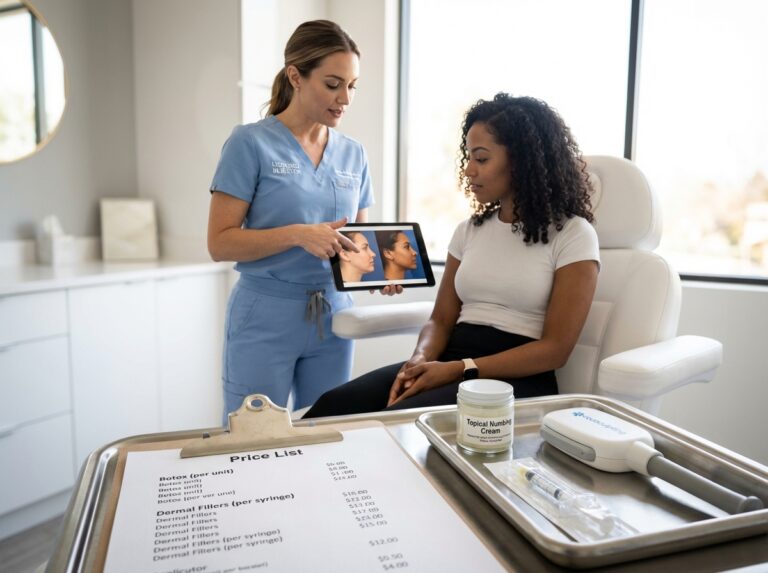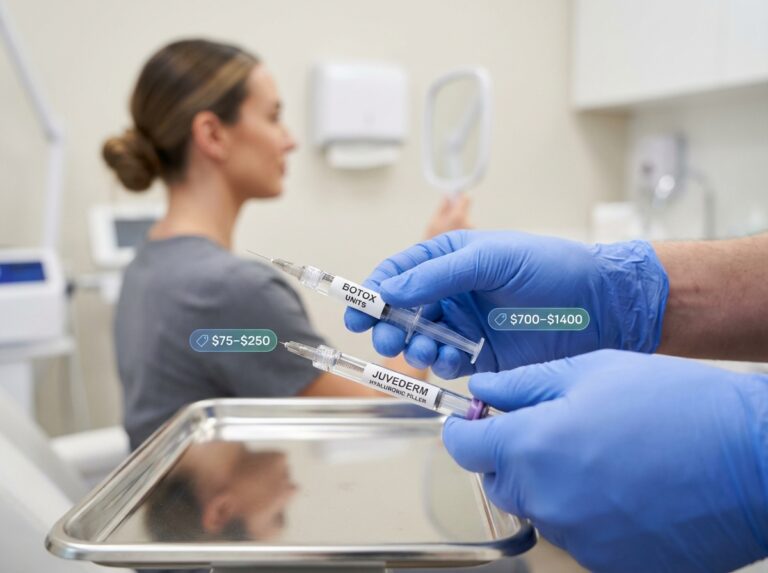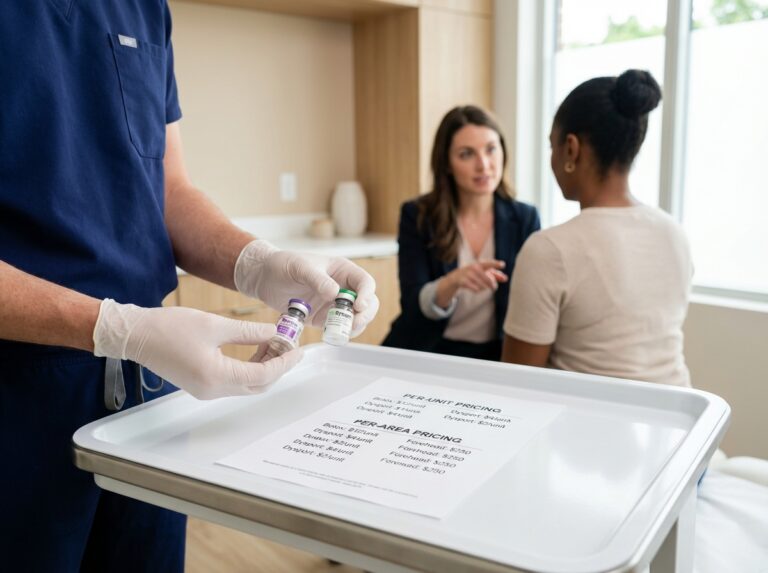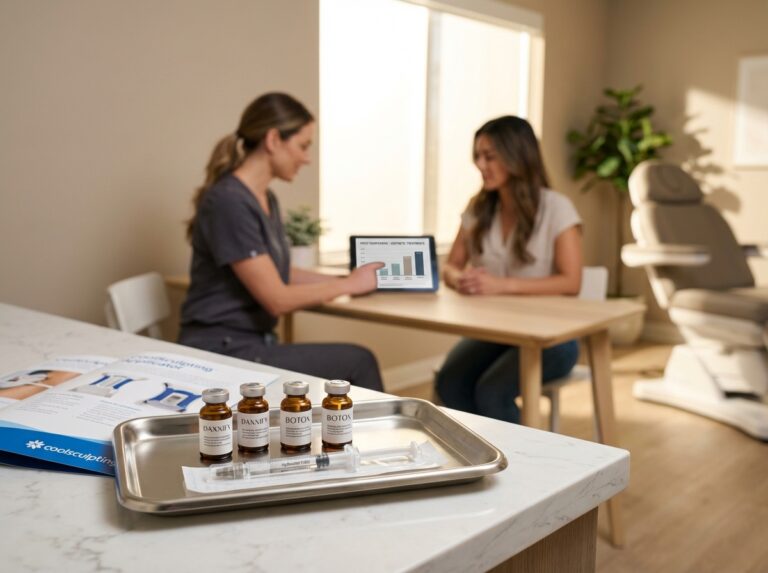
Planning injectable or non-surgical aesthetic treatments in 2025 means comparing real prices, not marketing. This article breaks down national Botox cost per unit, regional variation across the U.S., how clinics price services, price comparisons with fillers and CoolSculpting, and practical steps to avoid overpaying while staying safe and getting predictable results.
2025 National Averages and Regional Price Ranges for Botox
The cost of Botox in 2025 reflects a market that has stabilized after years of rapid inflation, yet prices remain at an all-time high. If you are booking an appointment today, you will likely encounter a national price range between $11 and $25 per unit. This wide gap depends heavily on where you live and who holds the syringe.
Most clinics price Botox by the unit rather than by the area. This method is the industry standard because muscle strength varies significantly between patients. One person might need 20 units to smooth a frown line while another needs 35 units for the same effect. Paying per unit ensures you only pay for the product actually used during your treatment.
National Averages and The Median Price
Across the United States, the median price for a single unit of Botox currently sits around $16 to $17. However, averages can be misleading. A clinic in rural Ohio will have a very different pricing structure than a dermatology practice on the Upper East Side of Manhattan.
Data from 2025 indicates that the typical total cost for a single treatment session falls between $350 and $900. This usually covers 30 to 40 units, which is a standard dosage for treating multiple areas like the forehead and crow’s feet simultaneously.
In 2025, the average price per Botox unit ranges between $11 and $25 depending on the region. It is rare to find legitimate Botox Cosmetic for under $10 per unit. Prices this low often signal that the product is diluted or that the provider is inexperienced and trying to build a client base.
Regional Price Bands
Geography is the single biggest factor influencing the price on your invoice. Overhead costs like rent, insurance, and staff salaries dictate the base rate a clinic must charge to stay profitable.
Northeast (New York, Boston, Philadelphia)
The Northeast consistently ranks as the most expensive region for aesthetic procedures. In major metropolitan hubs like New York City and Boston, you should expect to pay between $18 and $30 per unit. High-end board-certified dermatologists or plastic surgeons in these cities may charge as much as $35 per unit.
- Typical Per-Unit Range: $18 to $30
- Average Session Total: $500 to $1,000
West Coast (Los Angeles, San Francisco, Seattle)
The West Coast market is competitive but expensive due to high demand and living costs. Los Angeles and San Francisco see prices similar to New York, though the high volume of clinics can sometimes drive prices slightly lower due to competition.
- Typical Per-Unit Range: $15 to $25
- Average Session Total: $450 to $950
Midwest (Chicago, Detroit, Minneapolis)
The Midwest offers some of the most reasonable pricing in the country. While downtown Chicago prices will align more with coastal cities ($14–$22), the broader region sees lower averages.
- Typical Per-Unit Range: $12 to $18
- Average Session Total: $350 to $650
The South (Miami, Dallas, Atlanta)
Pricing in the South varies wildly. Miami is a major hub for aesthetics and commands premium prices ($15–$24), similar to LA. However, cities like Dallas and Atlanta often offer competitive rates, and rural areas in the South can be very affordable.
- Typical Per-Unit Range: $11 to $20
- Average Session Total: $350 to $700
Small Towns and Rural Areas
Outside of major urban centers, prices drop by approximately 10% to 15%. In these areas, the focus is often on affordability and retention.
- Typical Per-Unit Range: $10 to $15
- Average Session Total: $300 to $500
Calculating Your Total and Annual Cost
To budget effectively, you need to know the typical unit counts for the areas you want to treat. Multiply the estimated units by the price per unit at your chosen clinic.
Here are the standard unit requirements for 2025:
| Treatment Area | Typical Units | Low Cost ($12/unit) | Median Cost ($16/unit) | High Cost ($25/unit) |
|---|---|---|---|---|
| Glabella (Frown Lines) | 15 – 25 | $180 – $300 | $240 – $400 | $375 – $625 |
| Forehead Lines | 10 – 20 | $120 – $240 | $160 – $320 | $250 – $500 |
| Crow’s Feet (Both Eyes) | 20 – 30 | $240 – $360 | $320 – $480 | $500 – $750 |
| Full Upper Face | 45 – 75 | $540 – $900 | $720 – $1,200 | $1,125 – $1,875 |
These calculations show why “How much is Botox?” is a difficult question to answer without a consultation. A 20-unit treatment for frown lines could cost $240 at a med spa in Texas but $500 at a plastic surgery clinic in Beverly Hills.
Annual Maintenance Costs
Most neurotoxins last between three and four months before the body metabolizes the protein and muscle movement returns. You should budget for three to four treatments per year to maintain smooth skin. If a single session costs you $450, your annual maintenance cost will sit between $1,350 and $1,800. Newer products like Daxxify may last up to six months, potentially reducing the frequency of visits, though the upfront cost per vial is typically higher.
Year-to-Year Trends: 2024 vs 2025
We have seen a modest increase in pricing from 2024 to 2025. Inflation has driven up the cost of medical supplies, rent, and labor. Consequently, clinics have passed these costs on to patients. You might notice that the “per unit” price has increased by $1 or $2 compared to last year.
Competition remains a stabilizing factor. The introduction of newer neurotoxins like Daxxify and Jeuveau has prevented Botox prices from skyrocketing. While Botox remains the gold standard with the highest brand recognition, competitors often offer lower price points to gain market share. In 2025, Botox averages $12-$20 per unit across the U.S., while Xeomin is slightly more affordable at $10-$17 per unit. This pressure forces some clinics to keep their Botox pricing competitive or offer loyalty discounts.
Why Prices Vary Within the Same City
You might find two clinics on the same street with a $5 difference in their per-unit price. Several factors drive this local variability.
Provider Credentials
Who is holding the needle matters. A board-certified dermatologist or plastic surgeon charges a premium for their extensive medical training and anatomical knowledge. Their rates often hover in the $20 to $30 range. Conversely, a nurse injector or physician assistant at a med spa typically charges less, often in the $12 to $18 range.
Clinic Overhead
A luxury medical spa with marble floors, a concierge, and a prime location has higher operating costs than a modest clinical office. You are partly paying for the experience and the amenities.
Appointment Availability
Clinics with high demand and long waitlists have no incentive to lower prices. If a provider is booked out for three months, their pricing reflects that scarcity. Newer clinics or those with open schedules are more likely to run promotions or keep base prices lower to attract new business.
Benchmarks vs. Fixed Prices
Treat the numbers in this chapter as benchmarks. The only way to get an exact price is to have a consultation where a provider assesses your muscle mass and aesthetic goals.
Men, for example, often require higher doses than women due to stronger facial muscles. A treatment for glabellar lines that takes 20 units for a woman might require 30 to 35 units for a man, increasing the total cost significantly even if the per-unit price is the same.
Always ask for a breakdown of the estimated units before treatment begins. This transparency allows you to do the math yourself and ensures the final bill matches your expectations.
How Clinics Price Injectables and What Factors Drive Cost
Understanding the national averages gives you a baseline. The next step is recognizing how clinics structure those numbers on your final bill. You might see a low per-unit price advertised on Instagram but walk out paying significantly more than expected. Clinics use specific pricing strategies to cover their overhead and maintain profit margins. Knowing these models helps you compare apples to apples.
Common Pricing Models for Injectables
Clinics generally stick to one of four pricing structures. Each has distinct advantages for the patient and some potential downsides regarding transparency.
Per Unit Pricing
This is the most common model in 2025. You pay a set rate for every unit of neurotoxin injected. If the price is $14 per unit and you receive 20 units, your total is $280.
Pros
You pay only for what you receive. This is ideal for younger patients or those seeking “baby Botox” who require smaller doses. It allows for precise customization.
Cons
The final price is variable. You will not know the exact total until the injector determines your dosage during the consultation.
Transparency Level
High. You can ask to see the syringe or the log of units used.
Per Area Pricing
Some clinics charge a flat fee for a specific zone. For example, they might list “Forehead Lines” at $300 and “Crow’s Feet” at $250 regardless of how many units they use.
Pros
Budgeting is simple. You know the exact cost before you sit in the chair. This benefits patients with strong facial muscles who require higher-than-average doses.
Cons
Patients requiring fewer units end up subsidizing those who need more. You might pay $300 for a forehead treatment that only required 10 units. That works out to $30 per unit.
Transparency Level
Low. Clinics rarely disclose the specific unit count in this model.
Membership and Subscription Programs
Clinics increasingly offer monthly memberships. You pay a fee like $149 a month. This credit goes into your “bank” for future treatments. Members usually get a discounted per-unit rate, such as $11 instead of $15.
Pros
It lowers the long-term cost for regular patients. It encourages consistent maintenance which yields better results.
Cons
You are financially tied to one provider. If the injector leaves or quality drops, you might have trouble using your banked credit or getting a refund.
Transparency Level
Medium. The per-unit rate is clear but cancellation policies can be murky.
Tiered Package Pricing
This involves buying units in bulk upfront. You might purchase a package of 100 units for $1,200. This brings the price down to $12 per unit. You use these units over multiple visits.
Pros
Significant savings for committed patients. It protects you against price increases during the year.
Cons
It requires a large upfront payment.
Transparency Level
High. You track your remaining balance after every visit.
Key Factors That Drive Cost
Price variations between clinics are rarely arbitrary. Specific operational costs and quality factors dictate the fee schedule.
Injector Credentials and Expertise
Who holds the syringe matters most. A board-certified dermatologist or plastic surgeon typically charges $18 to $25 per unit or more. Their extensive anatomical knowledge justifies the premium. A Registered Nurse (RN) or Physician Assistant (PA) working under supervision often charges between $12 and $18 per unit.
Medical Director vs. Nurse Injector
Clinics with an on-site Medical Director generally have higher overhead. This ensures immediate support if a complication arises. “Med spas” operating with a remote medical director often have lower labor costs and can undercut prices.
Clinic Type and Location
A private plastic surgery practice in a medical building has different expenses than a franchise med spa in a strip mall. Franchises benefit from bulk purchasing power with manufacturers like Allergan. They pass these volume discounts to patients. Private practices focus on a bespoke experience and charge for the time and privacy they provide.
Geographic overhead is massive. Rent in Manhattan or Los Angeles forces clinics to charge $20 or more per unit just to break even. A clinic in a Midwest suburb pays a fraction of that rent and can remain profitable at $13 per unit.
Product Brand and Authenticity
The specific neurotoxin affects the price.
- Botox (Allergan): The market leader with the highest brand recognition. It usually commands the highest price.
- Dysport (Galderma): Often priced lower per unit but requires more units to achieve the same effect. The total treatment cost is usually comparable to Botox.
- Jeuveau (Evolus): Marketed as a modern alternative. It is often priced competitively to attract younger demographics.
- Daxxify (Revance): A newer entrant formulated to last longer. It carries a premium price tag, often 30% to 50% higher than standard Botox.
Sourcing and Authenticity
Legitimate clinics buy directly from the manufacturer. Gray market products imported from overseas are cheaper but illegal and potentially compromised by temperature changes during shipping. If a price seems too good to be true, the sourcing might be the reason.
Real-World Example: Unit Pricing vs. Flat Fees
Two clinics in the same city can quote vastly different totals for the same patient. Let’s look at a patient needing a standard forehead treatment.
| Clinic Type | Pricing Model | Rate | Patient Needs | Total Cost |
|---|---|---|---|---|
| Clinic A | Per Unit | $14 / unit | 15 units | $210 |
| Clinic B | Flat Fee (Area) | $350 / area | 15 units | $350 |
In this scenario, the patient overpays by $140 at Clinic B because the flat fee assumes a higher dosage. However, if that same patient had very strong muscles and required 30 units, Clinic A would cost $420 while Clinic B would remain $350.
Guidance
Always ask for a treatment plan that estimates the unit count before agreeing to a flat fee. If the math does not work in your favor, request per-unit pricing or find a different provider.
Bundled Pricing and Combined Treatments
Clinics often bundle neurotoxins with fillers or body contouring to increase transaction value. A common offer is “Buy 2 Syringes of Filler, Get 20 Units of Botox Free.”
How Bundles Are Calculated
Clinics have high margins on service fees but fixed costs on the product itself. When they bundle, they usually discount the service portion of the fee.
For a “Liquid Facelift” package, they might combine cheek filler, jawline filler, and Botox.
- Separate Cost: $800 (Cheeks) + $800 (Jawline) + $300 (Botox) = $1,900
- Bundle Price: $1,600
When Bundles Hide Costs
Be cautious of packages that obscure the breakdown. A “New You” package for $2,500 might include CoolSculpting and Botox. If you do not know the per-cycle cost of the CoolSculpting or the unit count of the Botox, you cannot verify the savings. Sometimes the bundle price is simply the sum of the full prices with a negligible discount.
Ask the coordinator to itemize the bundle. You need to see the price per syringe and price per unit within the package. This ensures they are not inflating the filler price to make the Botox look free.
Aftercare and Touch-Up Policies
The initial price tag is not always the final cost. Reputable clinics often include a two-week follow-up assessment. If the results are uneven or the toxin did not take effectively, some clinics offer free touch-ups. Others charge the standard per-unit rate for any additional product.
Clarify this policy before booking. A slightly higher upfront cost per unit is worth it if it includes a guarantee of satisfaction. Cheap clinics often leave you on your own if the results are asymmetrical. InjectCo notes that transparent pricing usually correlates with better follow-up care.
Understanding these structures puts you in control. You can evaluate a quote based on value rather than just the bottom line number. The next section will help you compare these costs against other procedures like fillers and lasers to see where your money goes furthest.
Compare Prices Across Procedures and Practical Tips to Avoid Overpaying
Understanding the price tag requires looking beyond just the per-unit cost of Botox. Most aesthetic plans in 2025 involve a mix of treatments, and comparing apples to oranges—or neurotoxins to fillers—can get confusing fast. A single unit of Botox might cost $14, but a single syringe of filler can run $800, and a body contouring session can easily hit four figures. To budget accurately, you need to see how these costs stack up against each other and where the hidden markups usually sit.
Comparative Cost Structures: Botox vs. Fillers vs. Body Contouring
The pricing logic changes completely depending on what is in the needle or the applicator. Botox stops muscles from moving, fillers add volume, and treatments like CoolSculpting destroy fat cells. Because the mechanisms differ, the billing units differ.
In 2025, the national average for a syringe of hyaluronic acid (HA) filler sits between $500 and $800. Unlike Botox, which is fluid and measured in tiny units, filler is a gel sold by the milliliter (ml). One syringe equals 1ml, which is roughly one-fifth of a teaspoon. That small amount is expensive because of the manufacturing complexity and the immediate, long-lasting structural change it provides.
CoolSculpting and similar non-surgical body treatments use a “per cycle” or “per applicator” model. One cycle covers a specific area of tissue drawn into the cooling cup. Treating a full abdomen often requires four or more cycles.
Here is a breakdown of how these costs compare in the current market:
| Treatment Type | Pricing Unit | Typical Cost Range (2025) | Duration of Results |
|---|---|---|---|
| Botox / Dysport | Per Unit | $11 – $25 per unit | 3 – 4 months |
| HA Fillers (Lips/Lines) | Per Syringe (1ml) | $550 – $850 per syringe | 6 – 12 months |
| Volumizing Fillers (Cheeks) | Per Syringe (1ml) | $700 – $1,000 per syringe | 12 – 24 months |
| CoolSculpting | Per Cycle/Applicator | $600 – $1,200 per cycle | Permanent (fat reduction) |
Estimating Total Volume for Fillers
A major friction point for patients is the “sticker shock” at the register when they realize one syringe doesn’t go very far. If you are comparing a $400 Botox forehead treatment to a filler appointment, know that filler totals climb faster.
For lip augmentation, one syringe is standard for a noticeable but natural look. However, treating the cheeks to lift the lower face often requires two to four syringes (one to two per side). A defined jawline can easily demand four to five syringes. If a clinic quotes you $600 for filler, clarify immediately if that is the total price or the price per syringe. For a full jawline contour, a $600 quote is impossible; the real cost would likely be closer to $2,400 or $3,000.
Insurance Coverage for Medical Botox
While insurance companies classify wrinkle reduction as a cosmetic procedure and will not cover it, there is an exception for medical conditions. The FDA has approved Botox for chronic migraines, excessive sweating (hyperhidrosis), and TMJ issues.
If you seek treatment for these specific medical problems, your insurance might cover a portion of the cost. This usually requires a diagnosis from a neurologist and a history of failed alternative treatments. Note that the dosage for migraines is much higher than for cosmetic use, often reaching 155 to 195 units. Without insurance, this medical dosage would cost over $2,000, making coverage essential for these patients.
Practical Tips to Avoid Overpaying
You can protect your wallet without compromising safety by following strict protocols during your consultation and booking process.
Always Request a Written Breakdown
Never accept a verbal total like “It’ll be about $500.” Ask for a line-item quote before the needle touches your skin. You need to know exactly how many units of Botox are being used and at what price per unit. For fillers, ask which specific brand is being used (e.g., Juvéderm Voluma is more expensive than Juvéderm Ultra) and the price per syringe. This prevents the clinic from “rounding up” the bill.
Verify the Injector’s Credentials
You are paying for the hand holding the needle, not just the liquid inside it. In 2025, the average price per Botox unit ranges between $11 and $25, but the lower end of that spectrum often comes with less experienced injectors. A Registered Nurse (RN) or Physician Assistant (PA) might charge less than a Board-Certified Dermatologist or Plastic Surgeon. There is nothing wrong with seeing a skilled nurse injector, but you should not be paying surgeon-level prices ($20+/unit) for a mid-level provider unless they have exceptional, proven experience.
Watch for Unrealistic Low Pricing
If you see Botox advertised for $8 or $9 per unit in a major metro area, be skeptical. The wholesale cost of the drug is high. To make a profit at that price, a clinic might be over-diluting the product with saline. This means you get the fluid volume, but not the active potency, leading to results that wear off in weeks rather than months. It ends up costing you more because you have to return sooner.
Compare Total Cost, Not Just Per-Unit
A clinic charging $12 per unit might use 50 units for a forehead treatment, totaling $600. A more skilled injector charging $15 per unit might get a better result using only 30 units, totaling $450. The cheaper unit price was actually the more expensive treatment. Ask for a “treatment plan estimate” rather than just asking “how much is a unit?”
Negotiation and Timing Strategies
While you cannot haggle like you are at a flea market, there are structural ways to lower your bill legitimately.
Understand Consultation Fees
Many reputable clinics charge a consultation fee, typically ranging from $50 to $150. This compensates the provider for their time. Most clinics will apply this fee toward the cost of your treatment if you book an appointment. Be wary of “free consultations” at high-volume chains, as they often rely on high-pressure sales tactics. A paid consultation often indicates a medical professional who values a thorough assessment.
Leverage Package Discounts
Clinics prefer high-ticket appointments over small ones. If you plan to get Botox and filler, or Botox and a facial, ask if there is a bundle rate. Many practices will knock 10% to 15% off the total if you do multiple procedures in one visit. Similarly, pre-purchasing a “bank” of Botox units (e.g., buying 100 units upfront to use over a year) often secures a lower per-unit rate.
Timing Your Treatments
Aesthetic clinics have slow seasons. January and February (post-holiday slump) and late summer (August/September) are often quieter. This is when you are most likely to find “Back to School” specials or New Year promotions. Signing up for the clinic’s email list is the best way to catch these flash sales.
Loyalty Programs are Essential
Manufacturers have rewards programs like Allē (for Botox/Juvéderm) or Aspire (for Dysport/Restylane). These are free to join and translate points into cash coupons—usually $20 to $50 off per treatment. Ensure your clinic participates and credits your account every time.
First-Time Patient Specials
Use “new patient” offers cautiously. A clinic offering 20% off your first visit is a great way to test them out, but ensure the standard pricing you will pay on the second visit is sustainable for your budget. Do not jump from clinic to clinic just chasing the new patient discount; you lose the benefit of an injector learning your specific anatomy, which reduces the risk of bad results or complications.
Transparent Accounting
After your treatment, ask specifically: “How many units did we end up using today?” Ensure that number matches your receipt. If they estimated 40 units but only used 32, you should only pay for 32. Honest clinics will adjust the bill automatically; others might need a reminder.
Financing Options
For larger treatment plans involving fillers or CoolSculpting, third-party financing like CareCredit is standard. The national average cost for BOTOX Cosmetic treatment in the U.S. is roughly $420, but combined treatments can hit $2,000+. Many cards offer 0% interest for 6 to 12 months, allowing you to spread the cost without extra fees, provided you pay it off within the promotional period.
By focusing on the total value—longevity of the result, skill of the injector, and transparency of the billing—you shift from hunting for the cheapest needle to securing the best investment for your face.
Final Recommendations and How to Book with Confidence
We have analyzed the data and reviewed the pricing structures across the United States. You now understand that a unit of Botox in 2025 costs between $11 and $25 on average. You know that geography plays a massive role, with a treatment in rural Utah costing significantly less than one in downtown Manhattan. But knowing the numbers is only the first step. The real challenge lies in applying this data to protect your face and your wallet.
The Total Cost Reality Check
Focusing solely on the price per unit is a common mistake. A low sticker price often distracts from the final bill. Some clinics advertise an attractive rate of $9 or $10 per unit to get you in the door. Once you are in the chair, they might suggest you need 60 units for a standard forehead and glabella treatment. This brings your total to $600 for a heavy and frozen look.
A highly skilled injector might charge $18 per unit. This seems expensive at first glance. However, their technique might achieve a natural and lifted result using only 30 units. The total cost here is $540. You save money by paying a higher rate for a better professional. The goal is not to find the cheapest liquid in a syringe. The goal is to find the most efficient use of that liquid.
Always ask for a total cost estimate before the treatment begins. Request a breakdown of how many units will go into each area. If a clinic refuses to give you a specific unit count or insists on a flat “per area” fee without transparency, you should reconsider. Flat fees often obscure the fact that you are paying for more product than you are receiving.
2025 Clinic Comparison Checklist
Use this checklist when you call or visit a new provider. It cuts through the marketing noise and gets you the facts you need to make a safe decision.
- Verify the Injector Credentials: Ask specifically who will perform the injection. In many states, a registered nurse (RN) or physician assistant (PA) can inject under the supervision of a doctor. This is standard practice and often saves you money. However, you must ensure they have specific training in aesthetics. A general nurse without specialized injection training is a risk.
- Confirm the Product Name: Do not settle for generic terms like “wrinkle relaxer.” Ask if they use Botox Cosmetic (Allergan), Xeomin, Dysport, Jeuveau, or Daxxify. Each brand has a different price point and potency profile. You have the right to know exactly what is entering your body.
- Request a Fresh Vial Check: Legitimate clinics are happy to show you the bottle. Check the hologram and the expiration date. If the price is suspiciously low, there is a chance the product is counterfeit or over-diluted with saline. Seeing the vial provides peace of mind.
- Clarify Banking Options: If you buy a package of 50 or 100 units to get a discount, ask if you can “bank” the unused units for a future visit. This prevents you from feeling pressured to use all the units in one session, which leads to over-treatment.
Decision Triggers: When to Save and When to Splurge
Not every appointment requires the most expensive surgeon in the city. However, some situations demand a premium. Use these triggers to decide which tier of provider fits your current needs.
Red Flags: When to Walk Away
Prices under $10 per unit in 2025 are a major warning sign. The wholesale cost of a genuine 50-unit vial of Botox is substantial, often ranging between $600 and $1,200 depending on the clinic’s volume. Clinics selling below market rate are losing money unless they are cutting corners. This usually means they are over-diluting the product with saline or sourcing gray-market goods from overseas. Neither risk is worth the $50 you might save.
Another red flag is a high-pressure sales tactic. If a consultant pushes you to sign up for a credit line or a non-refundable membership before you have met the injector, leave. Medical aesthetics should never feel like a timeshare presentation.
Green Flags: When to Pay a Premium
Complex facial areas require advanced anatomy knowledge. Treating the masseter muscles for jaw slimming or fixing a “gummy smile” is different from smoothing simple forehead lines. These areas have higher risks of asymmetry or functional issues if injected incorrectly. If you need advanced facial contouring, pay the $18 to $25 per unit rate for a master injector. Their experience prevents complications like drooping eyelids or a crooked smile.
Transparent pricing is another green flag. A clinic that lists its per-unit cost on its website and explains the variables is usually trustworthy. They respect your intelligence and your budget.
The Package Dilemma
Clinics often bundle Botox with fillers or facials. These packages can offer genuine value, often saving you 15% to 20%. However, they only make sense if you were already planning to get those specific treatments. Do not let a package deal convince you to get lip filler if you only came in for forehead wrinkles. Stick to your original aesthetic plan.
Summary of Booking Scenarios
We have compiled a decision matrix to help you finalize your choice based on your specific situation.
| Your Situation | Recommended Strategy | Expected Price Range (2025) |
|---|---|---|
| First-Time Patient | Book a consultation only first. Do not commit to treatment same-day. Prioritize a conservative injector who explains the process. | $14 – $18 per unit |
| Budget Conscious | Look for “New Patient” specials at reputable med spas. Join the Allē rewards program (for Botox) or Xperience (for Xeomin) to earn points. | $11 – $14 per unit |
| Complex Needs (Jaw, Neck, Nose) | Only book with an MD or a highly experienced Nurse Practitioner. Avoid discount chains. | $18 – $25 per unit |
| Maintenance (Regular User) | Consider a clinic membership. Monthly fees often unlock lower per-unit rates and banking options. | $12 – $15 per unit (Member Rate) |
Moving from Research to the Appointment
You are ready to book. Start by selecting two or three clinics that fit your criteria. Call them rather than booking online. Ask the receptionist specifically about the unit price and the injector’s availability. Listen to how they answer. Are they patient and transparent, or do they rush you?
When you go in for your appointment, bring a photo of yourself from five or ten years ago. This helps the injector understand your natural facial structure better than a filtered photo of a celebrity. Be honest about your budget upfront. Tell them, “I have a budget of $400 for today. What can we realistically achieve with that?” A good injector will prioritize the area that gives you the most impact rather than spreading the dose too thin.
Start conservative. You can always add more product two weeks later, but you cannot remove it once it is injected. Treat one area, such as the frown lines between your brows, and see how your body reacts to the toxin and the injector’s technique. If you like the result, you can treat more areas next time. This approach minimizes your financial risk and ensures you build a relationship with a provider who understands your face. Safe, effective aesthetic treatments are a marathon, not a sprint.
References
- How Much Does Botox Cost in 2025? – Queen Aesthetics — In 2025, the average price per Botox unit ranges between $11 and $25, depending on the region and injector expertise. Here's how Botox unit …
- How Much Do Botox Injections Cost? | InjectCo — In the United States, the average cost of Botox injections is $10–15 per unit or $450 per session. However, the actual cost of Botox ranges …
- Botox vs Xeomin Cost: Detailed Comparison Guide for 2025 … — In 2025, Botox averages $12-$20 per unit across the U.S., influenced by brand recognition and marketing. Xeomin is slightly more affordable at $10-$17 per …
- How Much Is Botox? – GoodRx — On average, a single unit of Botox costs around $10 to $15, but it can be as much as $35 in major cities. Since an average treatment can include 30 to 40 units …
- Botox Cosmetic Costs and Financing Options Explained – CareCredit — The national average cost for BOTOX Cosmetic treatment in the U.S. is $420, but it depends on various factors. Learn what you should expect to pay.
- How Much Does Botox Cost? Average Cost by Location and Brand — In 2025, the average price of a Botox treatment in the United States ranges from $350 to $900, depending on where you live and who performs the …
- Botox Cost Guide: What to Expect & How Pricing Works – AAFE — Average Botox Treatment Cost: A standard Botox cosmetic treatment involves 20 to 40 units, translating to a cost between $325 and $600. When treating both …
- How Much Does Botox Cost? (2025) – Denefits — According to the most recent pricing data from the ASPS, an average Botox (dosage of 30-40 units) typically costs around $300 to $600.
- What's behind the cost of Botox and injectable fillers? | ASPS — Botox, on the other hand, is measured in units and typically costs around $10 to $15 per unit. An average dosage of 30-40 units might be used …