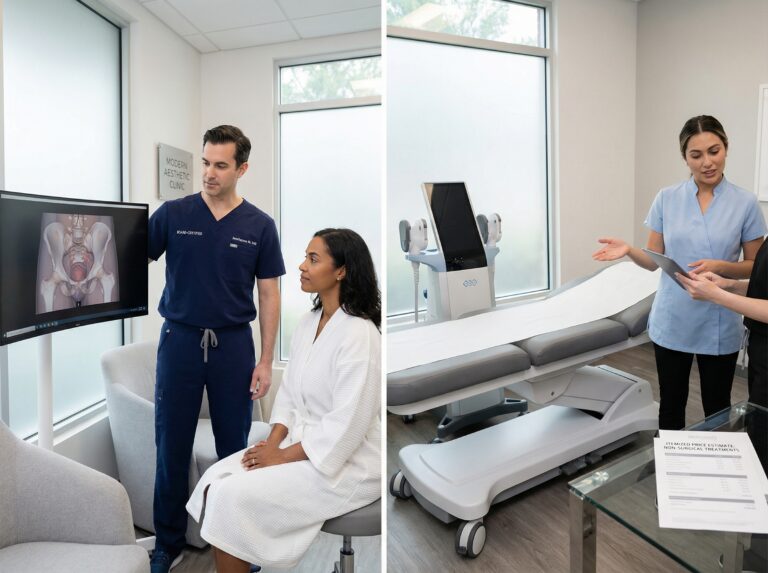
Choosing between liposuction and CoolSculpting is as much about cost as it is about results. This guide breaks down how clinics price surgical and non-surgical body contouring, details typical U.S. price ranges for 2025, and provides practical analysis so you can compare true value, avoid overpaying, and pick the right option for your goals and budget.
Understanding the procedures and expected outcomes
Liposuction is a surgical procedure that physically extracts fat from specific parts of the body. It is often used for the abdomen, hips, and thighs. The procedure involves a surgeon making small incisions in the skin and inserting a thin tube called a cannula to vacuum out fat cells. This is a definitive way to change the shape of the body in one session. It is an invasive method that requires a sterile operating room environment. Patients choose this when they want significant changes that non-surgical methods cannot provide.
Liposuction Techniques and Technology
There are several techniques used in modern liposuction to improve precision. Tumescent liposuction is the most frequent choice for safety. The surgeon injects a large amount of medicated fluid into the fat before removal. This fluid contains lidocaine for pain management and epinephrine to reduce bleeding. Traditional suction-assisted liposuction relies on the manual movement of the cannula to break up fat. Power-assisted liposuction uses a mechanical tip that vibrates, helping the surgeon remove fat more quickly and with less effort. Ultrasound-assisted liposuction uses sound waves to turn fat into liquid, which is helpful for areas with a lot of fibrous tissue like the upper back. Laser-assisted liposuction uses thermal energy to melt fat cells. This can sometimes help the skin tighten after the procedure by stimulating collagen. Each of these methods has different associated costs and benefits for the patient.
Anesthesia and Recovery for Surgery
Anesthesia for liposuction depends on the scope of the work and the number of areas treated. Small areas might only require local anesthesia where the patient stays awake. Larger procedures often need sedation or general anesthesia. Recovery takes a dedicated amount of time. Most patients need to rest for a few days immediately after the surgery and can usually return to work within one or two weeks. It takes several months for the final results to show because the body needs to heal. Swelling can hide the new contours for a long time. Patients must wear compression garments for several weeks to support the tissues and reduce fluid buildup. You can find more details on liposuction budgeting and recovery in 2025 to plan your finances accordingly.
CoolSculpting and Cryolipolysis
CoolSculpting is a non-invasive treatment that uses cryolipolysis technology. This process freezes fat cells without damaging the surrounding skin or nerves. The cold temperature causes the fat cells to die through a process called apoptosis. The body then eliminates these cells through its natural waste systems over several weeks. The procedure uses different applicators to target specific areas, including the chin, arms, stomach, and thighs. A single session lasts between 35 and 75 minutes per area. The CoolSculpting Elite device allows for two applicators to be used at the same time, reducing the total time spent in the clinic for patients treating symmetrical areas.
Sessions and Expected Timeline
Most people require one to three sessions per area to get the best results. You will not see changes immediately after leaving the clinic. It takes about four to twelve weeks for the body to process the dead fat cells. The most visible results usually appear after two or three months. Some people continue to see improvements for up to six months as the body continues to flush out the destroyed cells. Because it is non-invasive, there is no downtime. Patients can return to their normal activities immediately after the treatment. This makes it a popular choice for people with busy schedules who cannot afford time off work. You can check the average costs and session requirements for CoolSculpting to see how it fits your budget.
Outcome Benchmarks and Fat Reduction
The outcomes for these two procedures are quite different in scale. CoolSculpting typically results in a 20 to 25 percent reduction of fat in the treated area per session. It is best for small pockets of fat that you can easily pinch. Liposuction is much more powerful. It can remove a larger percentage of fat in one go. It is more effective for people who want a dramatic transformation or have larger volumes of fat to remove. A comparison of CoolSculpting and liposuction outcomes shows that surgery provides more immediate and noticeable contouring. However, the choice depends on how much fat needs to be removed to reach the goal.
Candidacy and Poor Candidates
A good candidate for either procedure is someone who is at a stable weight and has good skin elasticity. They should be within thirty pounds of their target weight. Liposuction is not a weight loss tool; it is a body shaping tool. Poor candidates for liposuction include people with serious medical issues or very loose skin. If the skin is too loose, it will not snap back after the fat is removed. Poor candidates for CoolSculpting include those with rare conditions triggered by cold, such as cryoglobulinemia, cold agglutinin disease, and paroxysmal cold hemoglobinuria. People with these conditions can have severe reactions to the cooling process.
Risks and Value Proposition
Risks and side effects vary between the two methods. Liposuction carries the risks of any surgery, such as infection, bruising, and contour irregularities. There is also the risk of reaction to anesthesia. CoolSculpting has fewer risks because it is not surgical. Common side effects are temporary redness, numbness, and swelling. A rare but serious side effect of CoolSculpting is paradoxical adipose hyperplasia (PAH). This causes the fat in the treated area to grow larger instead of smaller and requires surgery to fix. The value proposition depends on your goals. Liposuction is more expensive upfront and requires downtime but offers a significant change. CoolSculpting is less invasive and has no recovery time. Both procedures offer permanent results because the fat cells are physically removed or destroyed. You must maintain a stable weight to keep the results. If you gain weight, the remaining fat cells in your body can still expand and change your shape.
How clinics calculate prices and what drives cost variation
Understanding the final price of a body contouring procedure requires looking past the initial quote. Most clinics use a complex set of variables to determine what a patient actually pays. For liposuction, the total cost is rarely just the surgeon fee. It is a combination of several distinct charges that cover the medical team and the environment where the surgery happens. The surgeon fee reflects the expertise and time of the doctor. This is often the largest part of the bill. However, patients must also account for facility or hospital fees. These fees cover the use of the operating room, the nursing staff, and the medical equipment. A facility fee can range from $1,000 to $3,000 depending on the length of the procedure. Anesthesia charges are another major component. These fees pay for the anesthesiologist or nurse anesthetist as well as the medications used to keep you comfortable. Depending on whether you have local sedation or general anesthesia, these costs can add $500 to $2,000 to your total.
Beyond the operating room, there are smaller but necessary expenses. Preoperative testing often includes blood work or an EKG to ensure you are healthy enough for surgery. Some clinics include these in a flat rate while others send you to a third-party lab. After the procedure, you will need compression garments to help with swelling and skin retraction. These garments typically cost between $50 and $200. You should also ask if post-treatment follow-up visits are included in the initial price. Most reputable surgeons include these visits in their package, but some may charge for extra consultations if complications arise.
How CoolSculpting Costs Are Calculated
CoolSculpting pricing follows a completely different logic because it is a branded technology. Clinics must pay the manufacturer for every cycle they run. A cycle refers to one placement of an applicator for a set amount of time. This means the clinic has a high direct cost for every treatment session. Most providers price their services per applicator or per cycle. If you want to treat your abdomen, you might need four or six cycles to cover the entire area. This is why a starting price of $799 can be misleading. That price usually covers only one small applicator. A full treatment course often requires multiple sessions to reach the 20 percent fat reduction goal. GoodRx reports that a full course of treatment averages around $3,200 in 2025. The type of applicator used also changes the price. Larger applicators or the newer Elite dual applicators might cost more per cycle but can treat two areas at once.
The person performing the treatment also affects the price. Some clinics have sessions performed by a physician. Others use trained technicians or medical assistants under physician oversight. Sessions led by a doctor usually command a higher price point. You are paying for their clinical judgment and experience in placing the applicators for the best contour. Many med spas offer lower rates by using technicians, which can be a way to save money if the facility has a strong reputation for results.
Market Factors and Pricing Models
Geography plays a massive role in what you will pay. Clinics in major metropolitan areas like New York, Los Angeles, or Miami have higher overhead costs. They pay more for rent, insurance, and staff. These costs are passed on to the patient. A procedure that costs $4,000 in a smaller city might cost $7,000 in Manhattan. Clinic reputation and board certification also drive demand and price. A surgeon who is board certified by the American Society of Plastic Surgeons will likely charge more than a general cosmetic surgeon. This higher fee often reflects a higher standard of safety and more consistent outcomes. According to industry budgeting guides, surgeon expertise is one of the most significant variables in 2025 pricing.
Clinics use various pricing models to attract different types of patients. Some offer package pricing where you get a discount for treating multiple areas at once. For example, bundling the abdomen and love handles into one surgical session is usually cheaper than doing them separately. Many clinics also allow you to combine body contouring with injectables in a single visit. You might be able to negotiate a bundle discount if you book Botox (typically $10–$20 per unit) or fillers ($600–$1,200 per syringe) alongside your CoolSculpting cycles. CoolSculpting providers often use tiered pricing where the more cycles you buy, the lower the price per cycle becomes. Membership plans are also becoming common in 2025. These plans allow patients to pay a monthly fee in exchange for discounted rates on treatments.
Hidden Fees and Financial Planning
It is important to watch for hidden fees that are not mentioned in the first consultation. For liposuction, ask about the cost of post-op drains or specialized medical supplies. Some surgeons might charge a revision fee if the initial result needs a touch-up. These fees can be a surprise if you have not budgeted for them. For non-surgical treatments, the most common hidden cost is the need for extra sessions. If the first round of CoolSculpting does not meet your expectations, you will have to pay for more cycles to see a difference. The American Society of Plastic Surgeons notes that the average cost for non-surgical fat reduction is around $1,157, but this often represents just a single session rather than a full transformation.
Insurance companies view both liposuction and CoolSculpting as elective cosmetic treatments and do not cover them. You will be responsible for the full amount, including the surgeon fee, facility fee, and device cycles. However, it is worth checking if your clinic accepts Health Savings Account (HSA) funds for related medical tests, such as preoperative blood work.
Financing and promotions can change the effective cost of these procedures. Many clinics offer medical credit cards like CareCredit or internal payment plans. These allow you to spread the cost over several months or years. While this makes the procedure more accessible, you must consider the interest rates. High interest rates can add hundreds of dollars to your final price, so calculate the total interest over the life of the loan before agreeing. Promotions are also frequent, especially for CoolSculpting. Clinics may offer seasonal discounts or “buy one get one” deals on cycles. Always check if these promotions require you to pay the full amount upfront. Understanding these pricing structures helps you compare clinics accurately and avoid overpaying for your results.
Direct cost comparison and typical 2025 US price ranges
Understanding the financial commitment for body contouring in 2025 requires looking at the total investment rather than just the initial quote. Liposuction and CoolSculpting use different pricing structures that make direct comparisons tricky. While one is a surgical procedure with multiple associated fees, the other is a device-based treatment billed by the number of applications used on the body.
Typical 2025 Liposuction Price Ranges
Liposuction costs in the United States have seen steady adjustments due to rising facility and staffing expenses. For a single treatment area, such as the chin or a small portion of the abdomen, the price typically falls into three tiers. The low range starts around $3,500. This often covers basic procedures in smaller markets or less complex areas. The mid range sits near $5,000, which is common for experienced surgeons in average-cost cities. The high range reaches $7,500 to $9,000 for single areas when performed by top-tier surgeons in major metropolitan hubs like New York or Los Angeles. According to Phoenix Liposuction, these 2025 variations depend heavily on the surgeon’s expertise and the specific technology used during the session.
When multiple areas are treated at once, the price increases but the cost per area often drops because you only pay for the facility and anesthesia once. A full 360-degree liposuction of the trunk, which includes the entire abdomen and the flanks, generally ranges from $8,000 to $20,000. The complexity of the case and the volume of fat removed dictate where a patient falls on that spectrum.
The total bill for liposuction is composed of several distinct parts. You must account for the surgeon fee, which is the payment for the doctor’s time and skill. The facility fee covers the use of the accredited operating room and the surgical staff. Anesthesia fees pay for the anesthesiologist or nurse anesthetist and the medications used. Patients also need to budget for preoperative lab tests and postoperative compression garments. These garments usually cost between $50 and $200. Some clinics include these in a package, while others bill them separately.
| Procedure Type | Low Range (2025) | Mid Range (2025) | High Range (2025) |
|---|---|---|---|
| Single Area (e.g., Chin) | $3,500 | $5,000 | $7,500 |
| Abdomen Only | $4,500 | $6,500 | $9,000 |
| Full 360 Lipo | $8,000 | $12,000 | $20,000 |
CoolSculpting Costs and Cycle Logic
CoolSculpting pricing is based on cycles. A cycle refers to a single application of the cooling paddle to one specific spot for a set amount of time. In 2025, the price per cycle generally ranges from $600 to $1,500. Most treatment areas require more than one cycle to achieve a visible result. For example, treating the abdomen might require two to six cycles depending on the size of the area. The love handles usually require two to four cycles total to cover both sides. The average cost for a full treatment course is approximately $3,200 as reported by GoodRx.
Clinics often use the CoolSculpting Elite system, which features dual applicators. This allows the technician to treat two areas at the same time. While this does not necessarily lower the price per cycle, it reduces the time you spend in the office. Many practices offer tiered pricing where the cost per cycle decreases as you purchase more of them in a single package.
- Abdomen: Typically 2 to 6 cycles, costing $1,500 to $4,000 total.
- Love Handles: Typically 2 to 4 cycles, costing $1,200 to $3,000 total.
- Arms: Typically 2 cycles, costing $1,300 to $2,000 total.
- Chin: Typically 1 to 2 cycles, costing $1,000 to $1,500 total.
Contextual Pricing for Aesthetic Services
To understand how a clinic positions itself in the market, it helps to look at their prices for common injectables. Botox and dermal fillers are often used as benchmarks for overall clinic pricing. In 2025, Botox typically costs between $10 and $20 per unit. Dermal fillers like Juvederm or Restylane generally range from $600 to $1,200 per syringe. If you notice a clinic is at the highest end for these services, you can expect their body contouring quotes to follow that same pattern. High-end clinics often justify these prices with luxury amenities, board-certified staff, and prime locations in expensive cities.
Sample Cost Scenarios
Comparing the two methods for the same body part helps clarify the financial outlay. Consider a patient wanting to treat their love handles. If they choose CoolSculpting, they might need two cycles per side for a total of four cycles. At a mid-range price of $800 per cycle, the total cost is $3,200. This procedure requires no anesthesia and has no facility fees. The patient can return to work immediately.
If that same patient chooses liposuction for the love handles, the math changes. The surgeon fee might be $3,500. The facility fee could be $1,200 and the anesthesia fee might be $800. Adding $100 for a compression garment brings the total to $5,600. While the surgical option is $2,400 more expensive, it is a one-time procedure that physically removes the fat in a single session. The CoolSculpting patient might find they need a second round of treatments months later to reach their goal, which would double their initial cost.
Prices vary significantly by city. A procedure in Manhattan or Beverly Hills will almost always cost more than the same service in a smaller suburban market. It is vital to verify local 2025 price data by checking reputable clinic websites or looking at recent industry reports from the American Society of Plastic Surgeons. Always ask for an itemized quote during a consultation to ensure there are no hidden fees for follow-up visits or surgical supplies.
Measuring cost effectiveness and longer term financial impact
The sticker price of a cosmetic procedure rarely tells the whole story. When you look at a quote for fat reduction, you are seeing the entry price for a specific result. To find the true value, you need to look at the long-term financial impact and the actual cost of the physical change. Smart patients use specific metrics to compare these options instead of just looking at the total on a credit card statement.
Calculating the Cost of Actual Results
One of the most effective ways to measure value is the cost per percentage of fat reduction. Liposuction is a definitive surgical event. It typically removes between 20 percent and 30 percent of the fat in a treated area during one session. If you pay $5,000 for the procedure, your cost is roughly $166 for every 1 percent of fat removed. CoolSculpting often requires multiple sessions to reach a similar level of change. A single session might remove 20 percent of the fat in a small pocket, but achieving a dramatic contour change usually takes two or three rounds. If a full course costs $3,200 as noted by GoodRx, and you achieve a 20 percent reduction, your cost is $160 per percentage point. The numbers look similar until you realize that liposuction can often remove a much higher total volume of fat in that single session.
You can also calculate the cost per centimeter of circumference reduction. This is a practical metric for the abdomen or thighs. You measure the area before the treatment and again three months after the final session. Dividing the total price by the number of centimeters lost gives you a clear picture of what you paid for each inch of progress. For large areas like the full trunk, surgery almost always wins this calculation because it can reshape the entire midsection at once.
Factoring in Downtime and Hidden Risks
The real cost of any procedure includes the time you spend away from work. Liposuction requires a recovery period. Most people need one to two weeks off for a moderate procedure. If you earn $1,500 a week and take two weeks off, you must add $3,000 to the surgical quote to see the true financial impact. This is where CoolSculpting vs Liposuction comparisons shift in favor of the non-invasive option. CoolSculpting has almost zero downtime. Most patients return to work the same day or the next morning. There are no lost wages to account for in the budget.
Risk adjustment is another financial factor. Every procedure has a probability of complications. Liposuction carries a small risk of contour irregularities or infections that might require a revision surgery. Some surgeons include a touch-up policy in their initial fee, but others charge for the operating room and anesthesia again. CoolSculpting has a rare risk called paradoxical adipose hyperplasia. This condition causes the fat to expand rather than shrink. Fixing this issue usually requires surgical liposuction, which means you end up paying for both procedures. While these events are rare, a truly comprehensive cost analysis weighs these potential expenses against the initial price.
Maintenance and Longevity of the Investment
Longevity is where the two treatments diverge significantly. Liposuction is a one-time investment for most people. Once the fat cells are physically suctioned out, they do not grow back. Your results will last as long as you maintain a stable weight. CoolSculpting results are also considered permanent for the cells that are destroyed, but the process is staged. You might pay for a session today and realize in six months that you need another $1,500 treatment to get the look you wanted. This creates a recurring cost that can eventually exceed the price of a single surgery.
Comparing Two Realistic Scenarios
To see how these numbers work in the real world, consider a patient wanting to treat their abdomen and flanks. This is a common goal for many people looking at budgeting for liposuction or non-surgical alternatives.
| Factor | One-Time Liposuction | Multiple CoolSculpting Sessions |
|---|---|---|
| Upfront Clinic Price | $6,500 (All-inclusive) | $4,000 (4-6 cycles) |
| Lost Wages (2 weeks) | $3,000 | $0 |
| Number of Visits | 1 Surgery + 3 Follow-ups | 2-3 Treatment sessions |
| Fat Removal | Immediate 25-30% | Gradual 20% over 4 months |
| Total Financial Impact | $9,500 | $4,000 |
In this example, CoolSculpting is much cheaper even with multiple sessions. However, if the patient has a significant amount of fat, the 20 percent reduction from CoolSculpting might not be enough to satisfy them. They might end up booking a second round a year later, bringing their total spend to $8,000 without ever achieving the dramatic contour a surgeon could provide in one morning.
Weighing Subjective Factors
Cost effectiveness is not just about dollars. It is also about your comfort and anxiety levels. Some people have a severe fear of anesthesia or surgery. For these individuals, paying more for multiple CoolSculpting sessions is a rational choice because it avoids the mental “cost” of surgical stress. Others are bothered by the idea of small scars. Liposuction requires tiny incisions that usually fade, but they are still permanent marks. If avoiding any sign of a procedure is your priority, the non-invasive route has a higher subjective value. Conversely, if you want the fat gone immediately and do not want to wait months for results to appear, the efficiency of surgery makes it the more valuable choice despite the higher price and recovery time.
Final results and recommendations
Deciding between surgical fat removal and non-invasive freezing requires a clear look at the total investment versus the expected change. By late 2025, the market has shifted toward transparent pricing, yet the gap between a quote and the final bill remains a common hurdle for many patients. The data shows that while CoolSculpting often has a lower entry price per session, the cumulative cost for a full transformation can sometimes rival a surgical procedure. Understanding where your specific body profile fits into these pricing models is the first step toward making a smart financial choice.
Value Profiles for Typical Patients
The financial logic changes depending on how much fat you want to remove. Small localized pockets often favor non-invasive methods. If you have a tiny bulge under the chin or a small spot on the outer thigh, a few cycles of CoolSculpting might cost between $1,000 and $2,000. This represents excellent value because it avoids the high fixed costs of an operating room. You pay for the device time and the technician. There is no anesthesia fee. There is no facility charge. For these small areas, the CoolSculpting vs Liposuction debate usually ends with the non-invasive option winning on price and convenience.
Moderate contouring needs a more careful calculation. A typical abdomen treatment with CoolSculpting often requires four to six cycles to see a 20 percent to 25 percent reduction. At an average of $600 to $1,500 per cycle, the total bill frequently lands between $3,200 and $4,000. In 2025, a single area of liposuction in many U.S. markets starts around $3,500. When the costs are this close, the value of liposuction increases because the results are more dramatic and immediate. You get a more significant reduction in one day than you would get in three months of freezing sessions.
Large volume reduction almost always points toward surgery as the most cost-effective path. If you are looking for a full 360-degree trunk transformation, CoolSculpting becomes prohibitively expensive. Treating the front, sides, and back with enough cycles to see a difference could cost over $8,000. Surgical liposuction for the same areas might range from $8,000 to $20,000. While the surgical price is higher, the cost per liter of fat removed is significantly lower. You achieve a result in one surgery that non-invasive tools simply cannot match regardless of how many sessions you book.
The Essential Clinic Comparison Checklist
Comparing quotes between different clinics is difficult because every office bundles their fees differently. Some provide an all-inclusive price, while others list only the surgeon fee. Use this checklist to ensure you are looking at the true total cost before you sign any contracts.
| Checklist Item | What to Verify |
|---|---|
| Itemized Fee List | Ensure the quote includes the surgeon fee, facility fee, and anesthesia. Ask if preoperative labs or post-op garments are extra. |
| Provider Identity | Confirm if a board-certified surgeon or a technician will perform the work. Verify board certification on the American Board of Plastic Surgery website. |
| Before and After Results | Request photos specifically from the person who will treat you. Do not rely on manufacturer stock photos. |
| Follow Up Policy | Ask if the price covers all post-procedure visits for the first year. Some clinics charge for every checkup. |
| Revision Policy | Find out the cost if you need a touch-up. Ask specifically about the policy for treating rare complications like PAH. |
| Package Inclusions | Ask exactly how many cycles are included in your CoolSculpting package price before you sign. |
Gathering Local 2025 Pricing Data
Prices vary wildly by geography. A clinic in Manhattan will charge significantly more than one in a smaller suburb. To get an accurate picture of your local market, you should seek at least three consultations. Many offices offer free virtual assessments for CoolSculpting. Surgical consultations for liposuction often require a fee that ranges from $100 to $300. This fee is usually applied to the cost of your procedure if you book it. When you call, ask for the average patient investment for your specific area of interest and request a quote specific to your zip code. This gives you a more realistic number than the “starting at” prices seen in advertisements.
You should also research how to budget for liposuction in 2025 to understand the current financing landscape. Many clinics offer medical credit cards like CareCredit. These can make the upfront cost of surgery more manageable. However, you must calculate the total interest over the life of the loan. A $5,000 procedure can quickly become a $7,000 expense if you carry the balance for several years.
Making the Final Decision
Your choice should balance your budget with your tolerance for downtime and your desire for permanence. CoolSculpting is ideal if you cannot afford to take a week off work. You can return to your routine immediately. It is a slower process, requiring patience to see the final result at the three-month mark. If you have a major event like a wedding, you should schedule your treatment at least four months in advance. Liposuction is the choice for those who want a definitive change. It requires one to two weeks of recovery and involves more risk, but the results are permanent as long as you maintain a stable weight. If you find that the cost of multiple CoolSculpting sessions is approaching the price of one surgery, the surgical route usually provides better long-term value. Focus on the outcome you want rather than just the lowest price on the page.
Sources
- CoolSculpting vs Liposuction: Differences and Comparison — On average, the cost of CoolSculpting ranges from $2,000 to $4,000 for a complete treatment plan. Since CoolSculpting is a less invasive and …
- Laser Lipo Vs Coolsculpting: Which One Should You Choose? — At SpaMedica, Coolsculpting begins at $799, while laser liposuction begins at $6,999. Side Effects Differences. Because Coolsculpting is a non- …
- Liposuction vs CoolSculpting – NuBody Concepts — According to Healthline, the average cost of one CoolSculpting treatment was $1,500 in 2017. Smaller areas, such as arms, cost less, $650 per arm on average.
- Liposuction vs Non-Surgical Fat Reduction: Cost and Effectiveness — By comparison, non-surgical fat reduction treatments, like CoolSculpting or SculpSure are typically between $600 and $1,200 per cycle. That's …
- CoolSculpting: How It Works and Average Costs – GoodRx — Fat reduction procedure costs ; CoolSculpting. Averages $3,200 for a full treatment course, which typically includes multiple sessions ; Liposuction. $4,300-$ …
- CoolSculpting Price Guide: How Much Does Each Session Cost? — When you compare the coolsculpting cost per session to liposuction (which typically runs $3,500-$9,000 in 2025), you need to factor in that liposuction …
- How Much is Body Sculpting? Costs, Packages & Options — The average cost of arm liposuction is around $3,000, while a full arm lift surgery (brachioplasty) typically costs about $6,200 in the U.S..
- How to Budget for Liposuction in 2025: Costs and Financing — In 2025, liposuction costs will range between $3,500 and $7,500, with variations based on treatment areas, surgeon expertise, geographic …
- Nonsurgical Fat Reduction Cost — The average cost of nonsurgical fat reduction is $1,157, according to the latest statistics from the American Society of Plastic Surgeons. This average cost is …