Preventative Botox in your 20s and 30s is increasingly popular, but prices and clinic practices vary widely. This article explains typical costs for Botox, fillers, and CoolSculpting in the U.S., how clinics set prices, and practical strategies to compare providers, avoid overpaying, and budget for maintenance. Read on for sample budgets, pricing examples, negotiation tips, and a FAQ.
Understanding Preventative Botox and Typical Costs
Preventative Botox works differently than the treatments your mother might get. The goal is not to freeze the face or fix deep grooves that have been there for a decade. The aim is to stop those grooves from forming in the first place. We call this “prejuvenation” in the industry. You inject small amounts of a neuromodulator into specific muscles. This limits their movement just enough to prevent the skin from folding repeatedly in the same spot.
If you stop the folding, the collagen does not break down as fast. The static line never etches into the skin. This approach usually starts in the early 20s to mid-30s. The exact timing depends on your genetics and how expressive your face is. If you see faint lines lingering after you stop smiling or frowning, that is usually the signal to start.
The Unit Economy: How Pricing Actually Works
Most clinics in the United States price Botox and similar products by the “unit.” Think of a unit like a milliliter of gas. You pay for exactly what goes into the tank. The size of the tank depends on your muscle strength and your aesthetic goals.
In 2025, the price per unit varies significantly based on where you live and who holds the needle. In 2025, the average price per Botox unit ranges between $11 and $25. This gap is wide. A high-end dermatology office in Manhattan or Los Angeles will charge closer to that $25 mark. A medical spa in a smaller market might charge $11 or $12.
Per-Unit vs. Per-Area Pricing
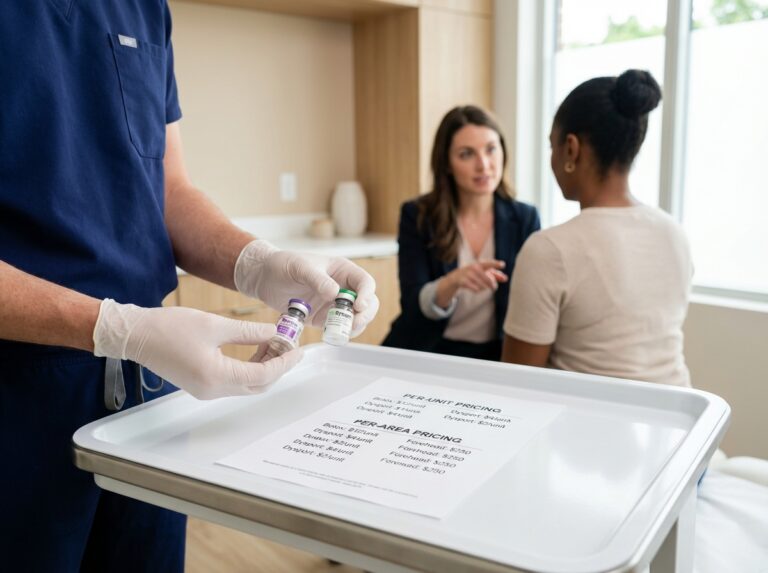
While per-unit pricing is the industry standard and most transparent method, some clinics offer “per area” pricing. They charge a flat fee for the forehead or the glabella. This can be good if you have strong muscles that need a lot of product. However, it is often bad for preventative patients. You might only need 10 units for a preventative forehead treatment. If the flat fee is $300, you are effectively paying $30 per unit—a steep overpayment. Always do the math on per-unit costs before agreeing to a flat fee.
Typical Dosing for Prevention vs. Correction
Preventative dosing is often lighter than corrective dosing. We often refer to this as “Baby Botox.” You get the smoothing effect without the heavy, frozen feeling.
Here is a breakdown of typical unit counts for a standard session versus a preventative session.
| Treatment Area | Standard Correction Units | Preventative / Baby Botox Units |
|---|---|---|
| Horizontal Forehead Lines | 10 to 20 units | 6 to 12 units |
| Glabella (11s between brows) | 20 to 30 units | 12 to 18 units |
| Crow’s Feet (around eyes) | 12 to 24 units (total both sides) | 8 to 12 units (total both sides) |
These numbers are estimates. Your injector will adjust based on your anatomy. Men often require higher doses because their facial muscles are stronger.
Real-World Budgeting Scenarios
To budget effectively, you need to look at the total cost per year. Neuromodulators are temporary. The body metabolizes the protein. The effect typically wears off after 3 to 4 months. Preventative doses are lower, so they might wear off slightly faster than heavy doses.
Let us look at two specific examples to help you plan.
Scenario 1: The 25-Year-Old Starter (Micro-Dose)
You are 25. You want to treat the horizontal lines on your forehead. You live in a mid-sized city where the average price is $14 per unit.
- Treatment: Baby Botox for forehead only.
- Units Needed: 10 to 12 units.
- Cost Per Session: ~$140 to $168.
- Frequency: 3 times a year.
- Annual Total: ~$420 to $500.
- Strategy: Avoid flat-fee clinics. Look for a reputable medspa with RN injectors rather than a celebrity plastic surgeon to keep costs down while maintaining safety.
This is a very manageable entry point for many young professionals.
Scenario 2: The 30-Something Maintenance (Standard Prevention)
You are 32. You have some stress lines between the brows and early crow’s feet. You live in a major urban center where the price is $20 per unit.
- Treatment: Glabella and light Crow’s Feet.
- Units Needed: 20 units for glabella + 10 units for eyes = 30 units total.
- Cost Per Session: $600.
- Frequency: 3 to 4 times a year.
- Annual Total: $1,800 to $2,400.
- Strategy: A clinic membership makes sense here. Paying a monthly fee to lock in a lower rate (e.g., $18/unit) could save hundreds over a year.
According to RealSelf, the average cost of Botox treatment is about $583 per session across the U.S., which aligns closely with this moderate maintenance scenario.
Factors That Change the Price
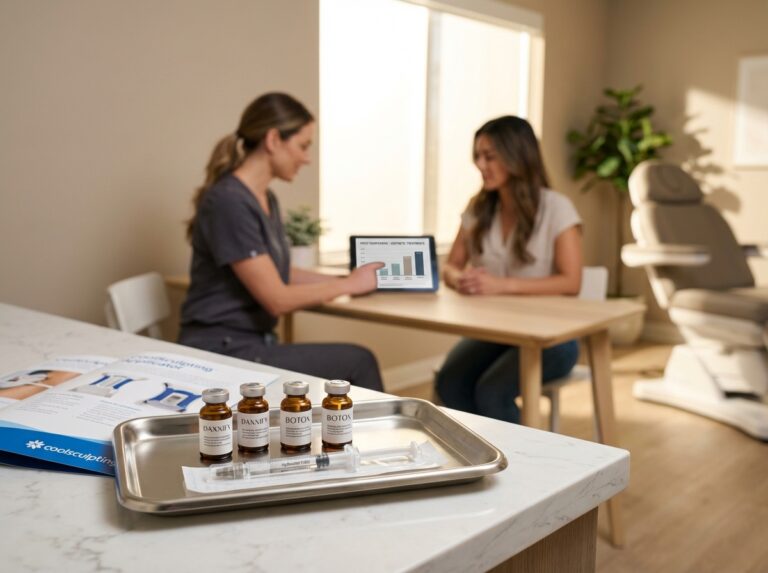
The brand of neuromodulator affects the bottom line. Botox (onabotulinumtoxinA) is the most famous brand and often commands the highest price. Dysport (abobotulinumtoxinA) spreads a bit more and is sometimes cheaper per unit. However, unit measurements differ between brands. You typically need 3 units of Dysport to equal the strength of 1 unit of Botox. Most clinics adjust the pricing so the final cost is similar, but always ask. Xeomin (incobotulinumtoxinA) is a “naked” toxin without complexing proteins. It can be a good option if you stop responding to other brands.
Metabolism is another hidden cost factor. If you are very active, have a high metabolism, or are under extreme stress, the product may wear off faster. You might need to come in every 3 months instead of every 4 or 5. That adds one full session to your annual budget.
Comparing Costs: Fillers and CoolSculpting
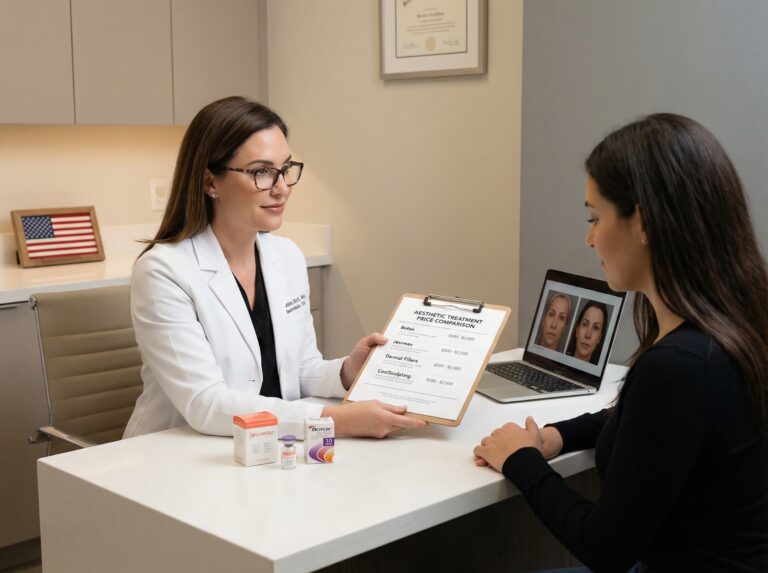
Botox is usually the cheapest entry point into medical aesthetics. Other non-surgical treatments have much higher price tags. It is helpful to understand these differences so you do not get sticker shock during a consultation.
Dermal Fillers
Fillers use hyaluronic acid to restore volume. They are priced per syringe. You cannot usually buy “half a syringe.” If you only need a tiny touch-up, you still buy the full vial.
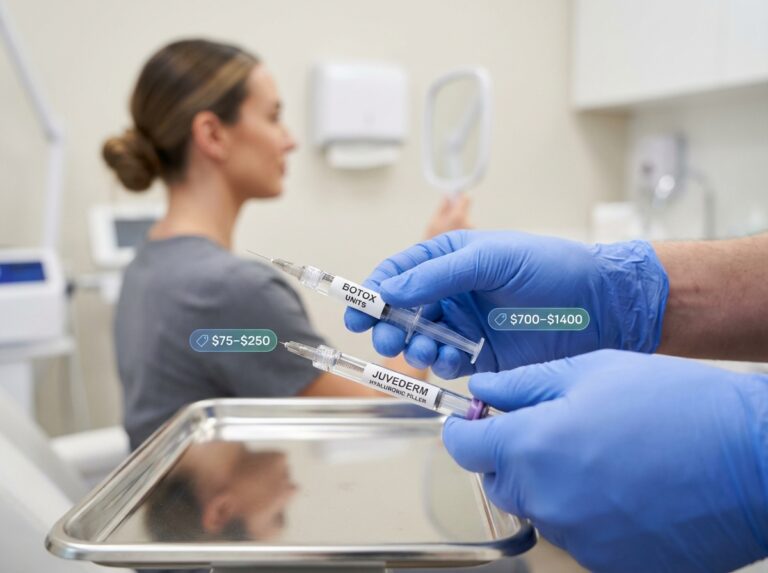
- Typical Cost: $650 to $1,200 per syringe depending on density and longevity.
- Usage: Lips might take one syringe. Cheeks often require two.
- Longevity: 9 to 18 months.
While the upfront cost is higher than Botox, you do it less often.
CoolSculpting
This is a body contouring treatment that freezes fat. Pricing is per “cycle” or applicator placement.
- Typical Cost: $600 to $800 per cycle.
- Usage: Treating a stomach might take 4 cycles.
- Total: A single session can easily cost $2,400 to $3,200.
Comparing these to preventative Botox highlights why neuromodulators are so popular for younger demographics. In 2025, the average cost of a Botox session in the U.S. is around $475. That is significantly less risk to your wallet than body contouring or full facial balancing with filler.
How to Verify Local Pricing and Script Your Call
Prices on the internet are averages. You need to know what the clinic down the street charges today. Calling clinics can be intimidating, as front desk staff are trained to get you in the door rather than give financial breakdowns. You need to be specific to get useful data.
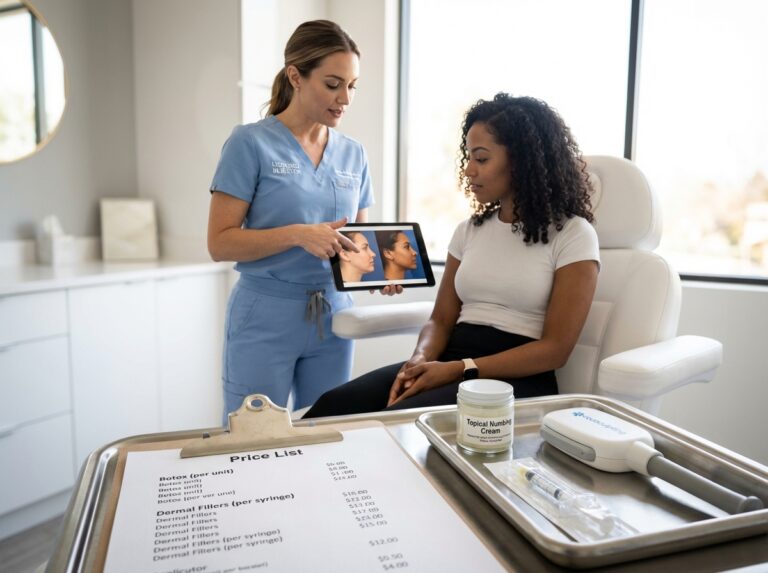
Start by checking the clinic’s website. Transparent providers often list their price per unit. If they do not list it, call them and use this checklist to compare apples to apples:
- Ask about the unit price: “What is your current price per unit for Botox? Do you have different pricing for Dysport or Daxxify?”
- Ask about the injector: “Who would be performing the injection? Is it a nurse, a nurse practitioner, or a physician?” Generally, you pay for the initials after the provider’s name. A board-certified dermatologist will charge a premium for their years of anatomical study compared to an RN injector.
- Ask about minimums: “Do you have a minimum unit requirement or a minimum spend for an appointment?” Some clinics require you to buy at least 20 units. This is a red flag if you only want a light preventative dose.
- Ask about “banking” units: “If I buy a package, can I bank the units I don’t use for a future visit?”
Look for “bank your Botox” memberships. Many clinics allow you to pay a monthly fee that goes into a wallet for your treatments. These memberships often unlock a lower price per unit, sometimes saving you $2 to $4 per unit.
Always ask about dilution. Botox comes as a powder and must be mixed with saline. Standard dilution ensures you get the potency you pay for. If a price seems too good to be true, like $8 per unit in a big city, the product might be over-diluted. You are saving money upfront but buying water. The results will not last, and you will end up spending more in the long run.
Your budget for preventative treatments should be viewed as an annual expense rather than a one-time purchase. Plan for maintenance. If you cannot afford to maintain the results, it might be better to wait until your budget allows for a consistent schedule. Consistency yields the best long-term prevention.
How Clinics Set Prices and Practical Ways to Avoid Overpaying
You might see an advertisement for $10 per unit on Instagram, call a clinic down the street that quotes $16, and then visit a board-certified dermatologist who charges $25. It is confusing. It feels arbitrary. But the price tag on aesthetic treatments is rarely random. Understanding how these numbers are calculated is the only way to budget effectively in your 20s and 30s without compromising your safety.
Clinics operate like any other business, but with higher stakes because they are dealing with your face. The final quote you receive is a sum of tangible costs and intangible value. The biggest factor is usually the person holding the needle. In the United States, scope of practice laws vary by state. In some places, a Registered Nurse (RN) can inject under the supervision of a medical director who might not even be in the building. In other states, strict regulations require a Nurse Practitioner (NP), Physician Assistant (PA), or a Doctor (MD/DO) to perform the procedure.
Overhead is the second invisible cost. A clinic located in a high-rent district like SoHo or Beverly Hills passes that rent to you. They also pay for malpractice insurance, medical supplies, and support staff. If a clinic looks like a five-star hotel with marble floors and offers you champagne, that luxury is built into your per-unit price.
The “Baby Botox” Pricing Trap
“Baby Botox” is a marketing term, not a medical one. It refers to using micro-doses to maintain movement while softening lines. Because this is popular with the under-30 crowd, some clinics create “Baby Botox Packages.” Be careful here.
If a package costs $250, do the math. If they are only giving you 10 units total, that is $25 per unit—a very high price. Always ask exactly how many units are included in any package deal. A bundled price is only a deal if the per-unit breakdown is lower than the standard rate.
Negotiation and Saving Strategies
You generally cannot haggle with a medical professional like you would at a car dealership. However, there are smart ways to lower the bill without insulting the provider.
Membership Programs
Many clinics now offer monthly memberships. You might pay $150 a month, which goes into a “wallet” to use on services, often unlocking a lower per-unit rate (e.g., $12 instead of $15). If you are committed to maintenance three times a year, this math often works in your favor.
Manufacturer Rewards
Never pay for treatment without using the manufacturer’s rewards program. Allergan (makers of Botox) has Allē, and Galderma (makers of Dysport) has Aspire. These are free apps. You earn points for every treatment that translate into cash coupons—usually $20 to $60 off—for your next visit. It is essentially free money.
Model Calls
Clinics often need models for training new staff or for social media content. If you are comfortable having your face on their Instagram or being injected by a trainee under supervision, you can often get treatment at cost or significantly discounted.
Red Flags: When Low Prices Are Dangerous
If a deal looks too good to be true, it is. A price of $8 per unit in a major city in 2025 is a red flag. The wholesale cost of the drug is high. To charge that little, a clinic has to cut corners.
Over-Dilution
Botox comes as a powder and must be reconstituted with saline. Unethical providers can add too much saline. You think you are getting 20 units, but you might be getting 10 units of effective medicine and a lot of salt water. The result will wear off in weeks instead of months.
Counterfeit Product
“Generic” Botox does not exist. If a clinic offers “neurotoxin” without specifying the brand, ask to see the vial. FDA-approved brands are Botox, Dysport, Xeomin, Jeuveau, and Daxxify. Anything else is unsafe.
Pressure Tactics
If a consultant pushes you to buy 50 units when you came in for a preventative consult, or tries to upsell you on fillers you didn’t ask for, leave. Ethical injectors will often tell you “no” if they think you don’t need something.
Frequently Asked Questions
Is preventative Botox actually safe to start in my 20s?
The short answer is yes, provided you actually have a concern to treat. The FDA approves cosmetic botulinum toxin for patients 18 and older, but safety isn’t just about medical reactions; it is about aesthetic outcomes. The goal of preventative treatment is to retrain muscles so deep static lines never form. However, starting too early or using doses meant for older skin can lead to a “frozen” or unnatural appearance that ages you rather than preserving your youth.
There is also a risk of muscle atrophy. If you aggressively paralyze a muscle for a decade starting at age 23, that muscle may thin out, potentially changing the volume and contour of your forehead or brows. A safe approach in your 20s usually involves “baby Botox” or micro-dosing. This maintains some movement while preventing the skin from folding deeply.
Action Step: During your consultation, ask the provider to assess your dynamic wrinkles (lines that appear when you move). If you have no lines at rest and faint lines when you frown, you are a candidate for conservative dosing. If you have no lines even when you frown, save your money.
How much does Botox cost per unit and per area in 2025?
Pricing structures confuse many first-time patients because they vary by city and provider expertise. In 2025, the average price per unit typically falls between $11 and $25. Highly experienced injectors in major metros like New York or Los Angeles often charge at the top of that range, sometimes reaching $30 per unit for specialty work.
Most patients care more about the total bill than the unit price. Here are typical unit ranges and estimated costs for common areas based on current pricing:
- Glabella (11s between brows): 20–30 units. Estimated cost: $300–$600.
- Horizontal Forehead Lines: 10–20 units. Estimated cost: $150–$400.
- Crow’s Feet (around eyes): 10–15 units per side (20–30 total). Estimated cost: $300–$600.
Keep in mind that some clinics charge by the “area” rather than the unit. A flat fee of $350 for the forehead might be a deal if you need a strong dose, but it is overpaying if you only need a sprinkle. In 2025, the average price per Botox unit ranges between $11 and $25, so use that as your baseline calculator.
Action Step: Ask for a quote based on the number of units, not just the area. If a clinic quotes a flat fee, ask how many units that fee guarantees.
What is “Baby Botox” and is it cheaper?
Baby Botox refers to using smaller-than-average doses of neuromodulators to achieve a subtle reduction in muscle movement without total paralysis. It is popular among patients in their 20s who want to retain facial expression. Because you are using fewer units—perhaps 20 units for the whole upper face instead of 40—the upfront cost is significantly lower. You might pay $250 to $350 for a session rather than $600.
However, there is a trade-off. Lower doses wear off faster. While a standard dose might last 3 to 4 months, baby Botox often requires a touch-up every 2 to 2.5 months. Over the course of a year, the total spend might be similar, but the payments are broken into smaller, more frequent chunks.
Action Step: If you choose this route, clarify with your injector that you understand the longevity will be shorter. This prevents disappointment when movement returns in eight weeks.
How long do results last and how often do I need to go?
Most neuromodulators (Botox, Dysport, Xeomin, Daxxify) last between 3 and 4 months. First-time patients often notice the effects wearing off slightly faster as their muscles are strong and haven’t been “trained” to relax yet. Conversely, consistent users in their 30s often find they can stretch appointments to every 4 to 6 months because the treated muscles have weakened over time.
Metabolism and lifestyle play a role. High-intensity athletes often metabolize the product faster. In 2025, the average cost of a Botox session in the U.S. is around $475. If you need treatment three times a year, you are looking at an annual budget of roughly $1,425. If you choose a longer-lasting product like Daxxify, the price per session is usually higher, but the frequency drops to twice a year.
Action Step: Schedule your next appointment before you leave the clinic, but set it for 4 months out. You can always move it up if movement returns sooner.
Does insurance ever cover cosmetic injectables?
For the vast majority of aesthetic patients, the answer is no. Insurance considers treating wrinkles, lip augmentation, or facial contouring as elective cosmetic procedures. You will pay 100% out of pocket.
Exceptions exist only for FDA-approved medical indications, such as chronic migraines, severe TMJ (jaw tension), or hyperhidrosis (excessive sweating). Even then, the criteria for coverage are strict. You typically must prove you have failed other therapies first. Furthermore, the injection sites for migraines differ from those for cosmetic brow lifts, so getting “medical Botox” doesn’t automatically mean you get a free forehead smoothing.
Action Step: If you suffer from migraines or teeth grinding, consult a neurologist or dentist first. They can navigate the insurance authorization process better than a med spa.
Can I combine Botox with fillers or CoolSculpting?
Yes, clinics often perform these treatments in the same visit, which can save you time. Botox and dermal fillers are frequently paired; Botox relaxes the muscle, and filler restores lost volume. This is often called a “liquid facelift.”
CoolSculpting or other energy devices can also be done on the same day, provided they are treating different areas. For example, freezing fat under the chin while getting Botox in the forehead is standard. However, if you are treating the same area (like laser resurfacing on the forehead and Botox on the forehead), most providers wait 1 to 2 weeks between treatments to avoid spreading the toxin or increasing swelling.
Action Step: Ask about “multi-modality” package pricing. Some clinics offer a 10% discount if you book a filler and toxin appointment together, as it saves them administrative and room turnover time.
What are the risks and common side effects I should budget for?
While generally safe, injectables have risks that can impact your wallet and social calendar. Common side effects include bruising and mild swelling, which resolve in a few days. You might need to buy high-coverage concealer or arnica gel.
A specific risk to be aware of is ptosis (drooping eyelid or eyebrow), which happens if the toxin migrates. It occurs in less than 5% of cases but can last several weeks. There is no “antidote” for Botox; you have to wait for it to wear off. However, prescription eye drops (like Upneeq) can help open the eye, costing around $150–$200 for a supply.
Action Step: Never schedule your first treatment right before a major event like a wedding. Budget a 4-week buffer zone to allow for settling and any necessary corrections.
What if I am unhappy with the results? Do I get a refund?
In the aesthetic industry, refunds for services rendered are almost non-existent. You are paying for the provider’s time and the medical product, which cannot be returned. If the Botox “didn’t work,” it is often a dosing issue (too little was used) rather than a bad batch.
Most reputable clinics want you to be happy and will offer a touch-up. However, expect to pay for the additional units needed to correct the issue. If the problem is a bad result (like Spock brows), they can often fix it with a few strategically placed units for free or at a low cost. If the result is a droop, you simply have to wait.
Action Step: Wait full 14 days before judging the result. Botox takes time to kick in. Calling on day 3 to complain that you still have wrinkles is premature.
How can I finance these treatments if I don’t have the cash upfront?
Many clinics partner with medical financing companies like CareCredit, Cherry, or PatientFi. These allow you to split the cost into monthly payments, often interest-free for 6 or 12 months if paid on time. This can make a $600 treatment feel more manageable at $100 a month.
However, be careful. If you miss a payment, interest rates can skyrocket to over 25%. Using credit to pay for a temporary beauty treatment requires strict discipline. Another option is clinic “memberships” or “banks,” where you pay a monthly fee (e.g., $150) that accumulates as credit in your account, giving you VIP pricing when you come in.
Action Step: Read the fine print on memberships. Ensure your credits roll over if you don’t use them and that you can cancel without a massive penalty.
Final Takeaways and Budgeting Steps
We have covered a lot of ground regarding pricing structures, safety protocols, and the nuances of preventative treatments. You now have the data needed to distinguish between a fair price and a red flag. The goal is not just finding the lowest number on a price list. It is about securing a safe outcome that fits your financial reality.
Here are the core takeaways to keep in mind before you book any appointment.
- Safety is the priority expense. Never compromise on provider credentials to save money. The cost of correcting a botched procedure far exceeds the price of a premium initial treatment.
- Geography dictates the baseline. Expect to pay 20% to 30% more in major metropolitan hubs like New York or Los Angeles compared to smaller markets.
- Experience costs more. A board-certified dermatologist or plastic surgeon charges more per unit than a general nurse injector. You are paying for their anatomical knowledge.
- Preventative dosing is lower. Starting in your 20s often requires fewer units per session than starting in your 40s. This keeps per-treatment costs down.
- Maintenance is not optional. Neurotoxins wear off. You must budget for 3 to 4 visits annually to maintain results.
- Consultations are vetting opportunities. Use the consultation to gauge the clinic’s transparency regarding costs and safety protocols.
- Hidden costs exist. Ask about booking fees, cancellation policies, and costs for potential touch-ups before committing.
Sample Budget: Comprehensive Preventative Approach (Age 20s-30s)
This profile fits someone looking to stop deep lines from forming across multiple areas (forehead and glabella). The dosing is conservative but covers the full upper face.
Assumptions: 25 units per session at $16 per unit. Frequency is 3 times per year.
| Expense Category | Estimated Cost | Notes |
|---|---|---|
| Per Session Cost | $400 | Based on 25 units. Average 2025 pricing ranges from $11 to $25 per unit depending on the clinic. |
| Annual Maintenance | $1,200 | Three sessions spaced 4 months apart. |
| Skincare Support | $300 | Annual budget for medical-grade SPF and retinol to support the injections. |
| Emergency Fund | $150 | Set aside for a potential touch-up if the initial dose is too light. |
| Total Annual Budget | $1,650 | Roughly $137 per month. |
Sample Budget: Moderate Maintenance (Age 30s+)
This profile addresses visible static lines and early volume loss. The treatment area often expands to include crow’s feet and the full forehead. This budget also includes one syringe of hyaluronic acid filler for lip hydration or cheek support, which is common in this demographic.
Assumptions: 45 units of Botox per session at $16 per unit. Frequency is 3 times per year. One syringe of filler annually.
| Expense Category | Estimated Cost | Notes |
|---|---|---|
| Botox Per Session | $720 | Based on 45 units covering multiple areas. |
| Botox Annual Total | $2,160 | Three sessions spaced 4 months apart. |
| Dermal Filler | $850 | One syringe. Prices typically range from $650 to $1,000 depending on the product brand. |
| Emergency/Touch-up | $200 | Buffer for asymmetry correction or additional units. |
| Total Annual Budget | $3,210 | Roughly $267 per month. |
Step-by-Step Budgeting Checklist
Financial planning for aesthetics prevents sticker shock. Follow this sequence to build a reliable budget.
1. Research Local Market Rates
Do not rely on national averages. Look at three to five reputable clinics in your specific zip code. Check their websites or call the front desk. Ask for the current price per unit for Botox and the price per syringe for fillers. Prices in 2025 generally fall between $11 and $25 per unit, but local variance is significant.
2. Schedule Two Consultations
Never book treatment on the first visit unless you are 100% sure. See two different providers. Compare their treatment plans. One might suggest 20 units while another suggests 40. This discrepancy affects your budget and your results.
3. Request Itemized Quotes
Ask for a written breakdown during your consultation. Ensure the quote includes the cost of the product, the injector’s fee (if separate), and any facility fees. This document prevents surprise charges at checkout.
4. Decide on Conservative Dosing
If you are new to this, start with the lower end of the recommended unit range. You can always add more later. You cannot remove it once injected. This approach also keeps your initial outlay lower while you test the results.
5. Establish an Aesthetics Fund
Treat this like a utility bill. Set up a separate savings bucket. Transfer the monthly equivalent (e.g., $137 or $267) automatically. This ensures the money is there when your 4-month appointment arrives.
6. Plan for Touch-Ups
Budget for a follow-up appointment two weeks after your first session. Sometimes a “top-up” of 2 to 4 units is needed to correct asymmetry or stubborn lines. This is rarely free.
7. Revisit the Budget Annually
Clinic prices increase. Your facial anatomy changes. Review your spending at the end of the year. Adjust your monthly savings rate to match current pricing and your evolving aesthetic goals.
Final Practical Reminders
Prioritize Safety Over Sales
Discount days and “Botox parties” often cut corners on safety or product dilution. If a deal looks too good, it usually involves a compromise you do not want to make. Stick to clinical environments.
Manage Expectations
Preventative treatments slow down aging signs. They do not freeze time completely. The average session cost in the U.S. is around $475, but that number guarantees improvement, not perfection. Understand what the needle can and cannot do.
Document Your Results
Take clear photos in good lighting before your appointment and two weeks after. Keep a log of how many units you received and in which areas. This record helps you and your provider refine the dosage in future visits. It prevents you from paying for units that did not yield results previously.
Smart budgeting allows you to incorporate these treatments into your life without financial stress. You control the pace and the price. Make informed choices and keep your long-term financial health as smooth as your forehead.
References
- How Much Does Botox Cost in 2025? – Queen Aesthetics — In 2025, the average price per Botox unit ranges between $11 and $25, depending on the region and injector expertise. Here's how Botox unit …
- How Much Does Botox Cost In 2025? – Aesthetics Medical Training — In major cities (like New York or LA): expect higher costs—around $15 to $25 per unit of Botox; In smaller towns or rural areas: Botox may cost …
- Botox Cost in New Jersey vs NYC, Miami & LA: 2025 Pricing Guide — According to RealSelf, the average cost of Botox treatment is about $583, with a range from approximately $168 to $2,000 depending on areas …
- How Much Does Botox Cost in 2025 – Plantation Med Spa — In the United States, prices range from \$11 to \$25 per unit, with the total cost of treatment depending on the number of units needed.
- How Much Does Botox Cost? Average Cost by Location and Brand — In 2025, the average cost of a Botox session in the U.S. is around $475, with total prices ranging from $225 to $1,300 depending on the …
- How Much Does Botox Cost? (2025) – Denefits — According to the most recent pricing data from the ASPS, an average Botox (dosage of 30-40 units) typically costs around $300 to $600.
- Botox Pricing Guide 2025 | Understanding the Costs – Aesthetx — Typically requires 12-24 units per side for comprehensive treatment · Estimated Cost: $120 to $480 · Softens fine lines and wrinkles around the outer corners of …
- Botox Statistics 2025-2024 Facts, Trends, Types, Costs and More! — Botox Stats by the Numbers: A Statistical Overview. Yearly Botox injections increased by 459% in 2024-2025; USD 3.2 billion worth of Botox was sold …
- Botulinum Toxin Cost – American Society of Plastic Surgeons — The average cost of botulinum toxin injections is $435, according to the latest statistics from the American Society of Plastic Surgeons.
Legal Disclaimers & Brand Notices
The information provided in this article is for informational and educational purposes only and does not constitute professional medical advice, diagnosis, or treatment. Always seek the advice of a qualified physician or other licensed healthcare provider with any questions you may have regarding a medical procedure, clinical risks, or recovery. Never disregard professional medical advice or delay in seeking it because of something you have read in this content.
All product names, logos, and brands are the property of their respective owners. All company, product, and service names used in this article—including but not limited to Botox, Dysport, and CoolSculpting—are for identification purposes only. Use of these names, trademarks, and brands does not imply endorsement, affiliation, or certification by the trademark holders.