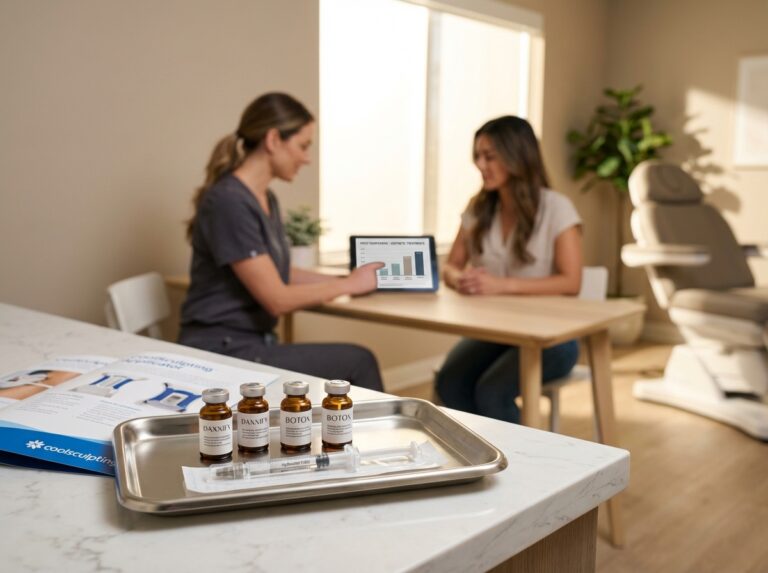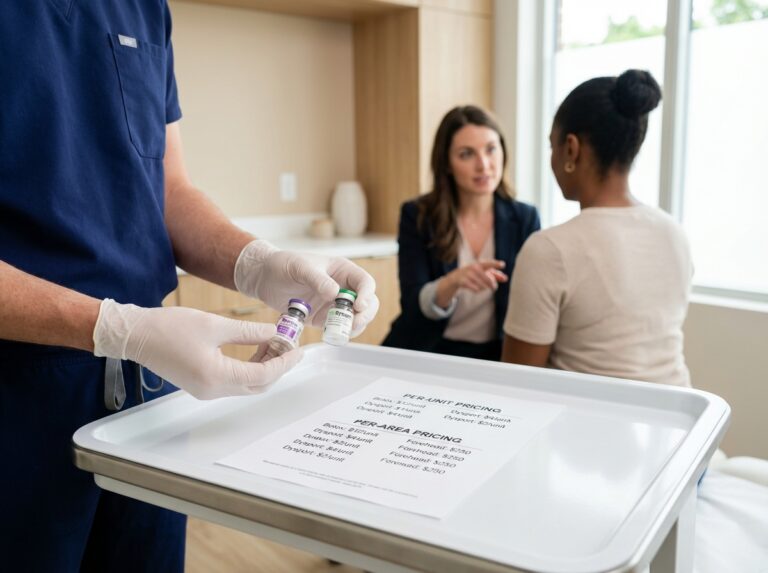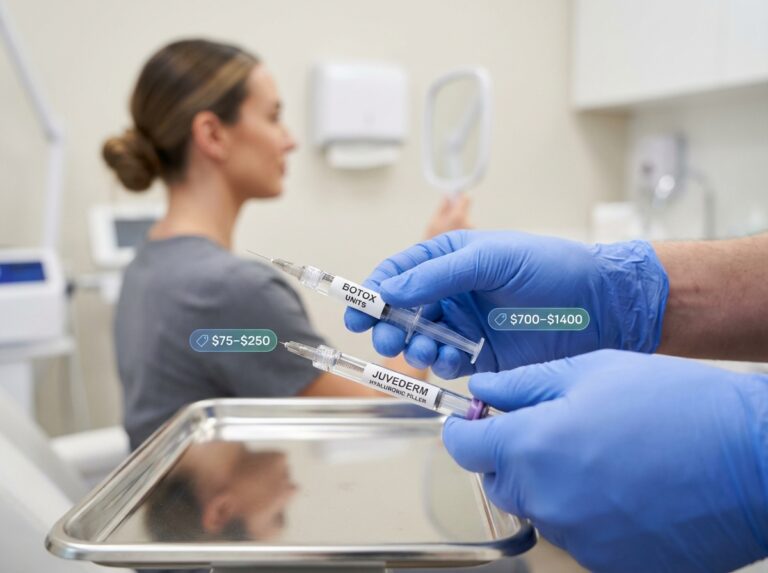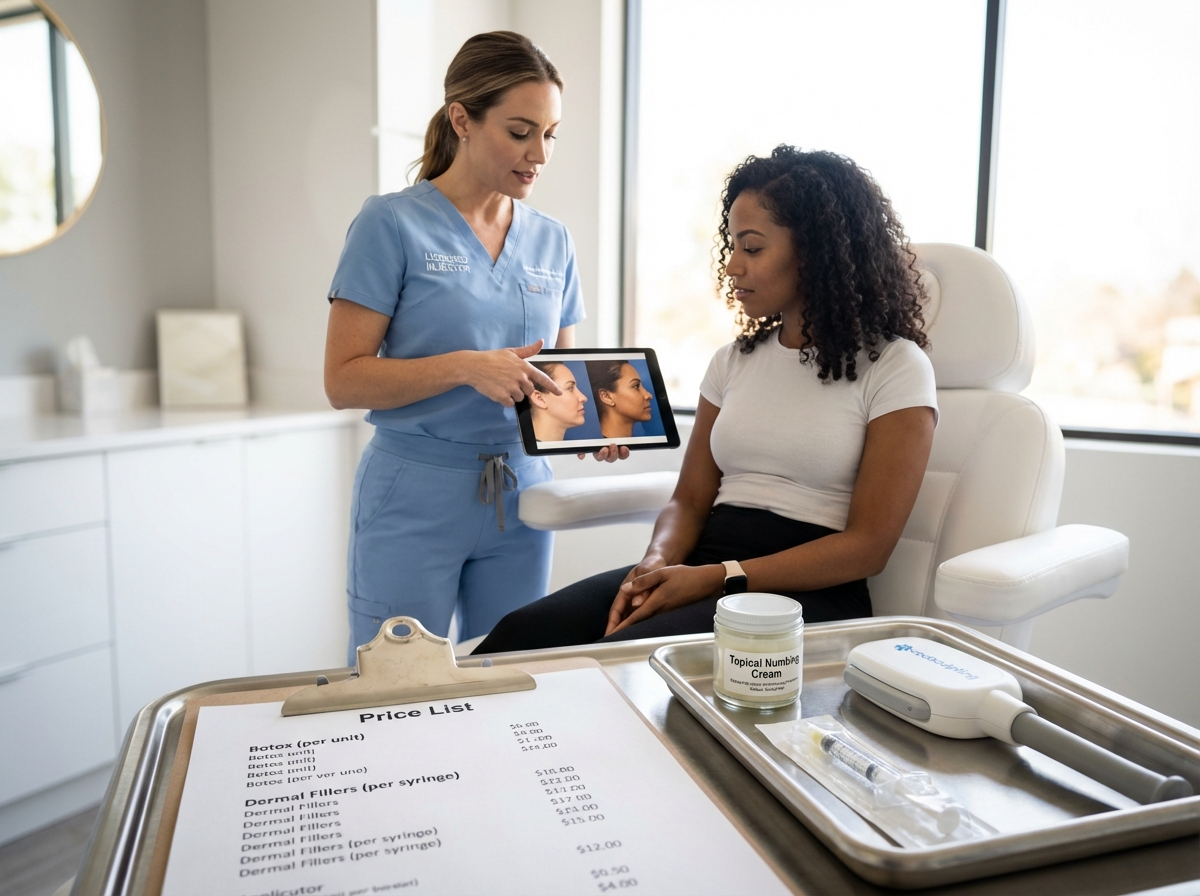
Considering masseter Botox for jaw slimming or TMJ relief and unsure what to pay? This guide breaks down typical US price ranges, how clinics set fees for Botox, fillers, and CoolSculpting, what affects costs, and practical steps to compare quotes so you can book confidently without overpaying.
Understanding Masseter Botox and Pricing Drivers
Masseter Botox has become a popular treatment for more than just wrinkles. It addresses both aesthetic concerns like jawline slimming and medical issues such as TMJ pain and teeth grinding. However, costs can vary significantly between clinics. Understanding the components of the price is the first step to securing a fair rate for safe, effective treatment.
This procedure involves injecting a neuromodulator—such as Botox, Dysport, or Xeomin—directly into the masseter muscles, the powerful chewing muscles at the angle of the jaw. When these muscles are overactive or enlarged, they can create a wide, square-shaped jawline. For many, this overactivity also leads to chronic teeth grinding (bruxism), jaw clenching, headaches, and temporomandibular joint (TMJ) disorder pain. The neuromodulator temporarily blocks nerve signals to the muscle, causing it to relax. Over time, this relaxation causes the muscle to atrophy (shrink) from disuse, resulting in a softer, slimmer jawline and relief from tension.
The primary cost driver is the number of “units” used. The masseter is a large, strong muscle requiring a higher dose than the delicate muscles around the eyes or forehead. A typical treatment involves injecting 20 to 30 units per side, for a total of 40 to 60 units per session. Men or individuals with particularly strong muscles (hypertrophy) may require significantly more, sometimes up to 80 units total, which directly impacts the final bill.
Clinics in the US typically price masseter Botox in one of two ways:
- Per Unit: This is the most transparent method. The price per unit generally ranges from $10 to $25. The national average often sits around $12 to $18 per unit. A typical treatment calculation might look like this: 50 total units x $15/unit = $750.
- Flat Fee or Per Area: Some clinics charge a flat rate for the entire procedure, usually ranging from $400 to $1,200 per session. While simple, it is critical to ask how many units are included in this fee to ensure you receive an adequate dose for your muscle size.
Geography plays a substantial role in pricing. Clinics in major metropolitan areas like New York City or Los Angeles face higher overhead costs, often resulting in prices at the higher end of the spectrum—sometimes between $20 and $35 per unit. In smaller cities or suburban areas, prices are more likely to align with the lower end of the national average.
Results are not permanent. The muscle relaxation and slimming effect typically lasts for 3 to 6 months. To maintain results, follow-up treatments are necessary two to three times a year. If a single session costs $750, the annual maintenance cost could range from $1,500 to $2,250.
Beyond the product and location, several other factors influence the final price:
Injector’s Expertise: The provider’s qualifications matter immensely. A board-certified dermatologist or plastic surgeon with extensive experience in facial anatomy will charge more than a registered nurse or physician assistant at a medspa. This premium covers their skill, precision, and ability to minimize risks such as asymmetrical smiles or chewing difficulties.
Medical vs. Cosmetic: If treating a diagnosed medical condition like TMJ disorder, health insurance may cover a portion of the cost, though this is rare. Coverage typically requires extensive documentation, a referral, and pre-authorization. Clinics may also use diagnostic tools like an EMG to measure muscle activity, adding to the initial cost. Cosmetic jaw slimming is almost never covered by insurance.
Clinic Overheads: Pricing includes the clinic’s operational costs, including rent, staff salaries, insurance, and marketing. High-end clinics with luxurious amenities will naturally have higher fees than streamlined medical practices.
Included Services: It is vital to confirm if the quoted price includes the initial consultation, follow-up appointments, or “touch-ups.” Some clinics charge separately for these visits.
When receiving a quote, ensure it is itemized and transparent. It should include:
- The specific brand of neuromodulator (e.g., Botox, Dysport, Xeomin).
- The exact number of units per side.
- The total cost of the treatment.
- Inclusions (consultation, follow-up, etc.).
- Any potential additional fees.
Getting this information upfront allows for an accurate comparison of providers based on value and safety rather than price alone.
How Clinics Price Botox, Fillers, and CoolSculpting
Understanding the business behind aesthetic pricing helps in evaluating whether a quote is fair. The final number is a calculation based on operational costs, product acquisition, and provider expertise.
The most significant variable is the provider. A board-certified surgeon with decades of experience commands a higher price than a less experienced injector. This cost reflects their anatomical knowledge and ability to manage complications, serving as insurance against poor outcomes.
Operational costs also weigh heavily. A clinic in a high-rent district with a full support staff and luxury branding has higher overheads built into every service fee compared to a modest facility. Furthermore, the technology itself is expensive. Devices like CoolSculpting machines or Fraxel lasers can cost clinics over $100,000. Clinics recoup this investment through “amortization,” factoring a portion of the machine’s cost into each treatment price.
Product costs are fixed by manufacturers. Allergan (Botox, Juvéderm) and Galderma (Dysport, Restylane) sell products to clinics at wholesale rates. Robust fillers for cheek augmentation (e.g., Juvéderm Voluma) cost the clinic more than softer fillers for lips, a difference passed on to the patient.
Typical Prices for Common Procedures in Late 2025
While variance is expected, these are typical US price ranges:
- Neuromodulators (Botox, Dysport, Xeomin): Usually priced per unit, ranging from $10 to $25 per unit. Major cities may see prices up to $35 per unit. Area-based pricing might run $300–$650 for glabellar lines (“11s”) or $400–$800 for the forehead.
- Hyaluronic Acid Fillers (Juvéderm, Restylane): Almost always priced per syringe (1.0 mL). Standard costs range from $700 to $1,200. Structural fillers for jawlines or cheeks are typically at the higher end of this range.
- CoolSculpting: Priced per applicator or “cycle,” usually $600 to $1,000. A complete treatment for an area like the abdomen often requires multiple applicators, bringing the total to $2,000–$4,000.
- Lasers and Microneedling: Microneedling sessions range from $300 to $700. Intensive laser resurfacing can cost between $1,000 and $2,500 per session depending on the technology used.
Decoding Your Quote: Pricing Models and What to Ask
Clinics use different billing models. Understanding them is key to comparing offers.
- Per Unit / Per Syringe: The most transparent method for injectables; you pay only for the product used.
- Per Session / Per Area: A flat fee for a zone. Simple, but potentially less cost-effective if you require fewer units than average.
- Package Deals: Discounted rates for purchasing a series of treatments (common for lasers or microneedling).
- Memberships: Monthly fees in exchange for discounted treatments or “banked” credit.
- Promotions and Financing: Look for seasonal specials and third-party financing options like CareCredit, but scrutinize deals that seem unrealistic.
Always ask for a detailed breakdown. Does the price include numbing cream, aftercare, and follow-ups? Confirm the brand and quantity—a quote for “one syringe” is ambiguous compared to “one 1.0 mL syringe of Juvéderm Ultra XC.”
Be wary of unusually low prices, which may indicate diluted product, inexperienced staff, or counterfeit goods. Verify credentials and request to see the injector’s specific portfolio of before-and-after photos.
Frequently Asked Questions
Can insurance cover Botox for TMJ, and what documentation is required?
Yes, but it is difficult. Insurance may cover Botox for TMJ disorder if deemed medically necessary for conditions like severe bruxism or jaw pain. Coverage is never provided for cosmetic slimming. You typically need a formal diagnosis, documentation of failure with conservative treatments (night guards, physical therapy), and pre-authorization. The clinic must submit detailed records to justify the procedure. Action step: Contact your insurance provider for their specific criteria regarding therapeutic botulinum toxin injections.
How do different Botox brands and unit conversions affect the price?
FDA-approved neuromodulators like Dysport, Xeomin, and Daxxify are not interchangeable unit-for-unit with Botox. For example, Dysport typically requires 2.5 to 3 units to equal the effect of 1 unit of Botox. A clinic advertising a low “per-unit” price for Dysport can be misleading if you do not account for this conversion ratio. Xeomin and Botox are generally a 1:1 ratio. Action step: Confirm the brand and ask how its dosage compares to standard Botox units.
How long until I see results, and how often will I need re-treatment?
For TMJ pain, relief may begin within one to two weeks. For cosmetic slimming, results are gradual; it takes four to six weeks for the muscle to atrophy and the jawline to slim. Maintenance treatments are typically required every 3 to 6 months. With consistent treatment, the muscle may weaken sufficiently to allow for longer intervals between sessions. Action step: Schedule your next appointment before leaving the clinic to prevent muscle mass from returning.
What are the typical costs for follow-up appointments or touch-ups?
Reputable clinics often include a complimentary follow-up two weeks post-injection to assess symmetry. However, if a “touch-up” (additional product) is needed because one side is stronger, you are usually charged for the extra units. Free touch-ups are rare and should not be expected unless specified. Action step: Clarify the clinic’s policy on touch-up costs before booking.
Can jaw slimming with Botox be permanent?
No, the effects are temporary. If treatments cease, the muscle will regain strength and size, returning the jawline to its original appearance. However, years of consistent treatment can lead to long-term muscle atrophy, potentially allowing for significantly longer intervals between maintenance sessions. Action step: Discuss a long-term maintenance schedule with your provider.
How does pricing for fillers or CoolSculpting compare, and when are combined treatments cost-effective?
Masseter Botox relaxes muscle, whereas dermal fillers ($700–$1,200/syringe) add volume to chin or cheeks to structure the jawline, and CoolSculpting ($600–$1,000/cycle) reduces fat under the chin. Combining treatments can be cost-effective for comprehensive contouring. For example, slimming the masseters while defining the chin with filler can yield a more balanced result. Action step: Ask if package pricing is available for combined treatments.
What specific questions should I ask during a consultation to compare prices accurately?
To ensure an “apples-to-apples” comparison, ask:
- What is the total price for the recommended treatment?
- How many units of which specific brand does that price include?
- Is the consultation fee separate or applied to the treatment cost?
- What are the costs for follow-up visits and potential touch-ups?
- Are there additional fees for numbing or credit card processing?
Action step: Keep this checklist on your phone for every consultation.
How can I verify a provider’s credentials and see their real patient results?
Ensure your injector is a licensed medical professional (MD, DO, NP, PA) with specific cosmetic training. Verify their license via your state medical board website. Review their portfolio for consistent lighting and angles in before-and-after photos, ensuring they are actual patients and not manufacturer stock images. Action step: Request photos of patients with facial structures similar to yours.
What are common hidden fees to watch out for?
The quoted price may not be the final bill. Watch for separate consultation fees (if you don’t book), charges for topical numbing, “cannula fees” for filler, credit card processing surcharges, or costs for mandatory post-procedure skincare. Transparent clinics disclose all potential costs upfront. Action step: Request a fully itemized written quote before agreeing to the procedure.
When is a surgeon a better choice than a cosmetic injector for changing my jawline?
If your wide jawline is caused by bone structure (mandible) rather than muscle, Botox will be ineffective. In such cases, a consultation with a plastic or oral surgeon is necessary to discuss surgical options like jaw reduction or V-line surgery. These are permanent, invasive, and significantly more costly. Action step: Ask your injector to assess if your jaw width is primarily muscular or skeletal.
Final Takeaways and Actionable Next Steps
Navigating aesthetic treatments requires balancing cost, safety, and results. With an understanding of pricing drivers—units, brands, expertise, and location—you can now move from research to booking with confidence. The goal is to find the best value, defined by a fair price for a skilled provider and a safe outcome.
Your Action Plan for Comparing Clinics and Avoiding Overpayment
Follow this checklist to ensure a financially sound decision:
- Establish a Local Baseline. Research “masseter Botox cost” for your specific city to identify the standard market rate. This helps you spot outliers that are suspiciously cheap or unreasonably expensive.
- Request an Itemized Quote. Never settle for a verbal estimate. Demand a written quote detailing the brand, total units, and price per unit. This is the only way to accurately compare different clinics.
- Verify Credentials and Results. Confirm the injector’s medical license and ask specifically how many masseter treatments they have performed. Review their personal portfolio of patient results to ensure their aesthetic style matches your goals.
- Calculate the Total Long-Term Cost. Remember that masseter Botox requires maintenance every 3 to 6 months. Calculate the annual cost rather than just the single-session price. A slightly more expensive provider who delivers longer-lasting results may be cheaper annually.
- Clarify Policies on Complications. Ask about the protocol for unexpected side effects or asymmetry. A reputable clinic will have a clear, supportive plan for managing complications.
- Beware of Unusually Low Offers. Extremely low prices are a red flag for diluted product, grey-market sourcing, or inexperienced injectors building a portfolio. Prioritize safety over the lowest possible bid.
Advanced Strategies for Smart Consumers
Consider the clinic’s payment models to maximize value. Memberships can offer savings for regular clients, though they require a commitment. Compare this to pay-per-visit models which offer flexibility but often higher rates.
For TMJ sufferers, investigating insurance claims is worthwhile despite the difficulty. Success requires a formal diagnosis of temporomandibular disorder (TMD) and proof of failed conservative treatments. Always secure pre-authorization.
Finally, while per-unit prices are rarely negotiable, inquire about package deals. Pre-paying for a series of treatments is a common and ethical way to secure a lower rate for your long-term maintenance plan.
You are now equipped to navigate the market. By focusing on transparency and verifying the full scope of costs, you can schedule your consultation as an empowered consumer, ensuring your investment delivers the results you desire.
Sources
- Masseter Botox: Cost, Benefits And Payment Plans In 2025 — Masseter Botox costs $400 to over $1000 per treatment. In a session, 40–60 units of Botox are used, and the per-unit cost is typically between $10 and $25.
- Masseter Botox 101: Benefits, Costs and More — The average Masseter Botox Cost ranges from $400-$900. However, it varies based on the number of units used, geographic location, and other factors.
- Discovering the Cost: Masseter Botox in Korea vs. USA, Mexico … — With costs ranging from $85 to $255, depending on various factors such as clinic location and practitioner expertise, it's a compelling option for many.
- How Much Do Botox Injections Cost? | InjectCo — In the United States, the average cost of Botox injections is $10–15 per unit or $450 per session. However, the actual cost of Botox ranges …
- How Much Will My Botox Treatment Cost? How to Budget for Your … — You can generally expect to pay at least $11-15 per unit for injections from an experienced, appropriately qualified provider in the US.
- Botox Cost NYC | What You Can Expect To Pay — In New York City, the cost per unit of Botox can range widely, typically falling between $20 and $35 per unit or between $500-650 per treatment area.
- Best Places to Get Botox on Your Face – Coastal Health & Medical Spa — Masseter Botox in Jacksonville costs $600-1,200 per treatment due to the high unit requirement. Some insurance plans may cover treatments for medically …
Legal Disclaimers & Brand Notices
This content is for informational purposes only and does not constitute medical advice. The information provided is not intended to be a substitute for professional medical advice, diagnosis, or treatment. Always seek the advice of your physician or other qualified health provider with any questions you may have regarding a medical condition. Never disregard professional medical advice or delay in seeking it because of something you have read in this article.
All product names, logos, and brands are property of their respective owners. All company, product and service names used in this article are for identification purposes only. Use of these names, logos, and brands does not imply endorsement. The following are registered trademarks:
- Botox®, Juvéderm®, and CoolSculpting® are registered trademarks of Allergan, an AbbVie company.
- Dysport® and Restylane® are registered trademarks of Galderma.