When choosing between Dysport and Botox, price matters—but so does value. This article breaks down how neuromodulators work, common U.S. pricing models and sample ranges, what drives cost differences, and practical tips to compare clinic quotes and avoid overpaying. Use this guide to understand unit conversion, provider factors, and when a lower sticker price isn’t a better deal.
How neuromodulators work and key differences between Dysport and Botox
Botulinum toxin type A neuromodulators have changed the way we approach aging. These treatments target the very root of dynamic wrinkles. To understand why they work, we have to look at the neuromuscular junction. This is the tiny space where a nerve meets a muscle. Under normal conditions, nerves send signals to muscles using a chemical messenger called acetylcholine. This chemical tells the muscle to contract. When we frown or squint, these contractions pull the skin into folds. Over time, those folds become permanent lines.
Neuromodulators interrupt this communication. The toxin enters the nerve ending and targets a specific protein called SNAP-25. This protein acts like a key that allows acetylcholine to exit the nerve. The toxin cuts this protein. Without a functional SNAP-25 protein, the nerve cannot release its messenger. The muscle never receives the signal to move. It stays in a relaxed state. As the muscle relaxes, the skin above it smooths out. This is the fundamental mechanism behind both Botox and Dysport. It is a temporary process. The body eventually creates new nerve endings or repairs the old ones. This is why the effects wear off after several months.
The Major Players and Their Origins
Two companies dominate this market. Allergan, which is now part of AbbVie, produces Botox. It was the first to gain FDA approval for cosmetic use in 2002. It has become a household name. Ipsen manufactures Dysport. Galderma handles its distribution in the United States. Dysport received its FDA approval for aesthetic use in 2009. While both products use the same active toxin, their manufacturing processes differ. These differences lead to unique characteristics in how they behave once injected into the skin.
As of 2025, the FDA has cleared both products for several key areas. They are approved for glabellar lines, which are the vertical frown lines between the eyebrows. They are also cleared for forehead lines and lateral canthal lines, commonly known as crow’s feet. Beyond these aesthetic uses, both have approvals for medical conditions. These include cervical dystonia and upper limb spasticity. Botox has additional clearances for chronic migraine and overactive bladder.
Clinical Performance and Timing
Patients often ask which product works faster. Clinical studies generally show that Dysport has a quicker onset. Many people notice their muscles softening within two to three days. Botox typically takes a bit longer. Most patients see the full effect of Botox between five and seven days. There are cases where it takes up to two weeks for the final result to settle. If you have a last-minute event, the speed of Dysport might be an advantage.
The duration of the effect is similar for both. Most clinical data suggests a window of three to four months. Some studies indicate that Dysport might last slightly longer in certain patients, but this is not a universal rule. Longevity depends on the dose used and the metabolism of the patient. Highly active individuals or those with very strong facial muscles might find the product wears off sooner. It is a very individual experience.
Practical Differences in Formulation
The physical makeup of these products affects how they move in the tissue. Botox is formulated with protective proteins that make the molecule relatively heavy. This helps the product stay exactly where the injector places it. It is ideal for precise work. Dysport has a different protein structure and a lower protein load. This allows it to diffuse or spread more easily from the injection site. This spread is often called the field of effect. A wider spread can be beneficial when treating a large area like the forehead. It can create a very natural and soft look. However, it requires an injector who understands how to control that spread to avoid unwanted muscle weakness in nearby areas.
Excipients also differ. Botox uses human serum albumin and sodium chloride. Dysport uses human serum albumin and lactose. Patients with a known, severe allergy to cow’s milk protein should discuss this with their provider before choosing Dysport. While the amount of lactose is tiny, safety is the priority.
The Unit Conversion Challenge
One of the most confusing aspects of comparing these two is the unit measurement. A unit of Botox is not equal to a unit of Dysport. They are measured using different assays. In clinical practice, a conversion ratio is necessary to achieve similar results. The most common ratio is one unit of Botox to three units of Dysport. Some providers use a ratio of one to two and a half. For example, if a patient usually receives twenty units of Botox for frown lines, they would likely need sixty units of Dysport for the same effect. You can find more detail on these ratios in this guide on Dysport vs Botox: Key Differences, Pros, Cons & Costs.
This ratio is why Dysport often looks much cheaper on a price list. If Botox is fifteen dollars per unit and Dysport is five dollars per unit, the total cost for the treatment is often identical. It is important to compare the total price for the area rather than the price per unit. Understanding this helps you determine Botox vs. Dysport vs. Daxxify: Which Wrinkle Relaxer Is Right for You? based on your budget and goals.
Off-Label Versatility and Safety
Injectors frequently use these products in ways not specifically listed on the FDA label. This is called off-label use. It is a standard part of aesthetic medicine. Common examples include:
- Chemical brow lifts to slightly raise the eyebrows.
- Masseter injections to slim the jawline or treat teeth grinding.
- The lip flip to create the appearance of a fuller upper lip.
- Treating the platysmal bands in the neck for a smoother profile.
- Hyperhidrosis treatments for underarm sweating.
Safety profiles for both are excellent when administered by a professional. Side effects are usually mild and temporary. Bruising at the injection site is the most common issue. Some patients get a headache for a day or two. More significant risks include ptosis, which is a drooping of the eyelid or brow. This happens if the toxin migrates to the wrong muscle. Choosing a provider with a deep understanding of facial anatomy is the best way to avoid these complications. The units are product specific. They are not interchangeable. A provider must never use Botox dosing logic when injecting Dysport.
How clinics price neuromodulator treatments and typical US cost ranges
The way aesthetic clinics price neuromodulator treatments in the US can feel confusing. You need to understand the different models used before you can accurately compare quotes.
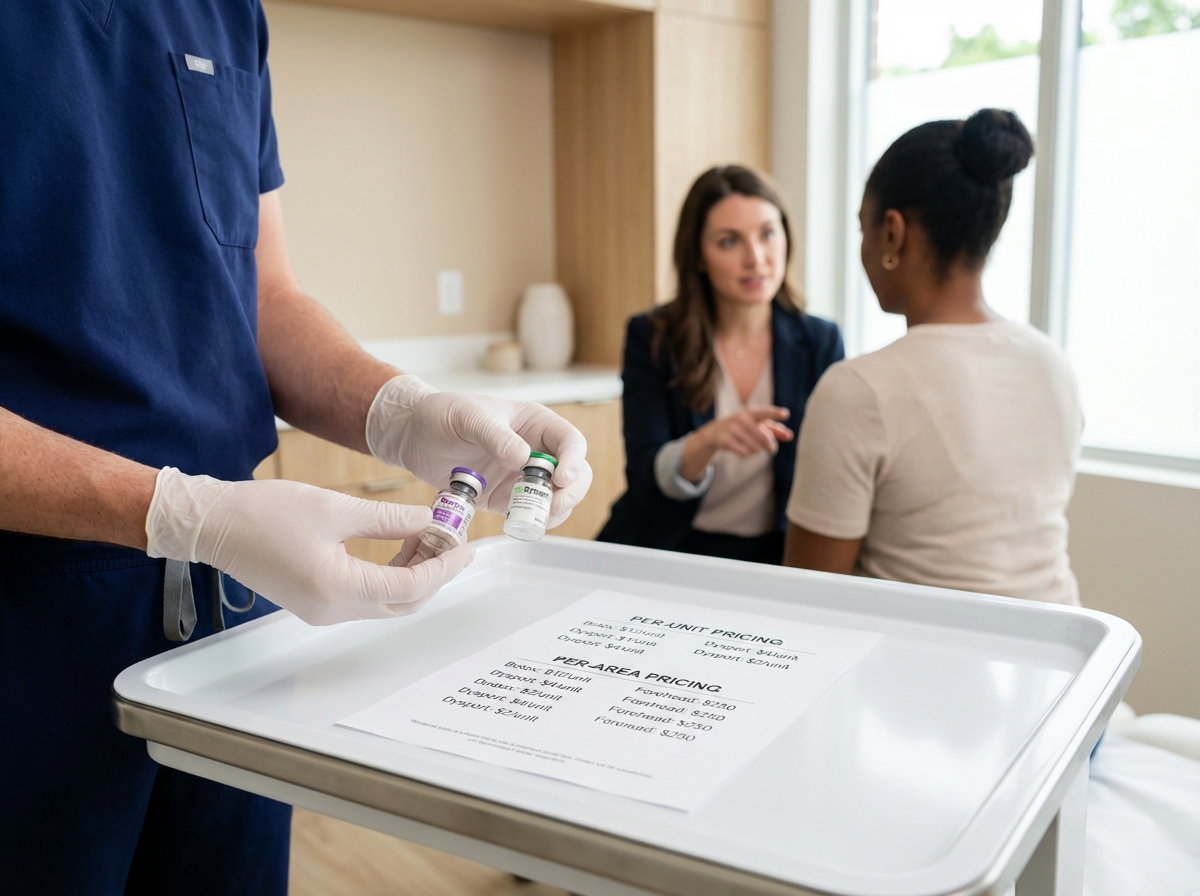
The three main pricing structures you will encounter are per unit pricing, flat fee per area, and package or membership tiers.
- Per Unit Pricing: This is the most transparent method. The clinic charges a fixed dollar amount for every unit injected. This is the industry standard for both Botox and Dysport.
- Flat Fee Per Area: The clinic charges one price for treating a specific zone, like the glabella (frown lines) or the crow’s feet. This model is convenient for the patient but makes it impossible to know exactly how many units you received. If you need more units than average, this might save you money. If you need fewer, you might overpay.
- Package or Membership Tiers: Many medspas and larger practices offer loyalty programs. You might pay a monthly fee for discounted unit rates or buy a package of 100 units upfront at a lower price per unit. These plans reward volume and repeat business.
Typical US Cost Ranges 2024–2025
The price of neuromodulators varies widely based on location and provider type. However, we can establish realistic ranges for the US market in 2025.
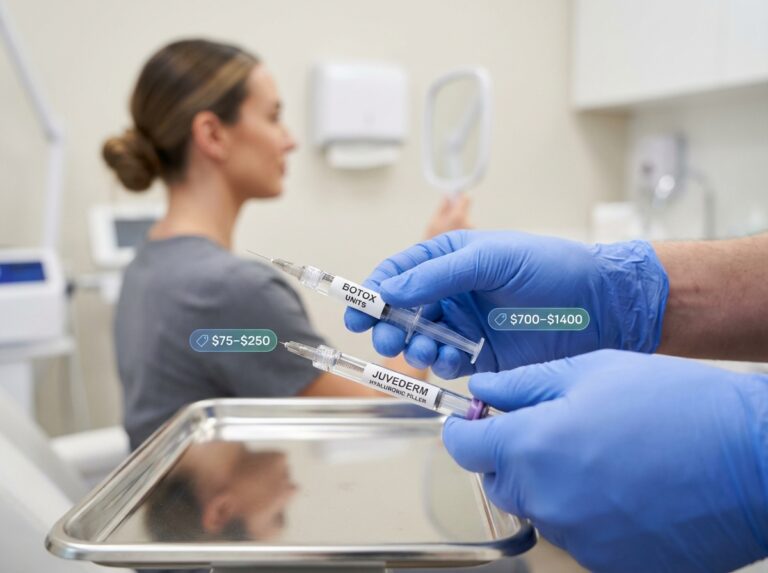
For Botox, the typical per-unit price ranges from $12 to $20. In highly competitive or smaller markets, you might see prices dip to $10. In exclusive practices in major metropolitan areas like Manhattan or Beverly Hills, prices can exceed $20 per unit.
For Dysport, the typical per-unit price ranges from $4 to $8.
At first glance, Dysport appears significantly cheaper. But this is where the conversion ratio becomes critical. As we discussed earlier, Dysport units are smaller and less potent than Botox units. The standard clinical conversion is approximately 2.5 to 3 units of Dysport for every 1 unit of Botox.
If a clinic prices both products correctly based on this conversion, the final treatment cost should be nearly identical.
Let us use a 3:1 conversion ratio for a simple example. If a clinic charges $15 per unit for Botox, they should charge $5 per unit for Dysport to offer equivalent value.
| Product | Price Per Unit (Example) | Units Needed (Glabella) | Total Cost |
| Botox | $15.00 | 20 units | $300.00 |
| Dysport Equivalent | $5.00 | 60 units (20 x 3) | $300.00 |
If a clinic offers Dysport at $4 per unit but charges $15 for Botox, Dysport is the better value. If they offer Dysport at $6 per unit and Botox at $15, Botox is the better value. You must always calculate the equivalent cost to determine which neuromodulator truly offers better value.
Sample Per-Area Costs and Unit Counts
When clinics quote prices per area, they are usually basing the price on the average units required. Every face is different, but there are standard ranges that injectors use to plan your treatment.
- Glabella (Frown Lines): Requires 20 to 30 units of Botox or 60 to 90 units of Dysport. Typical cost range: $250 to $600.
- Crow’s Feet: Requires 12 to 24 units of Botox (6 to 12 units per side) or 36 to 72 units of Dysport. Typical cost range: $150 to $450.
- Forehead Lines: Requires 10 to 20 units of Botox or 30 to 60 units of Dysport. Typical cost range: $150 to $400.
- Lip Flip: Requires 4 to 6 units of Botox or 10 to 15 units of Dysport. Typical cost range: $80 to $150.
These ranges show that the final price is driven by the total units used, not just the per-unit price.
Factors Influencing Price Variability
Several factors determine why one clinic charges $12 per unit and another charges $18.
- Geography and Overhead: Clinics in high-cost-of-living areas like New York City, Miami, or San Francisco have higher rent and staff costs, which are passed on to the patient.
- Provider Type and Experience: A board-certified dermatologist or plastic surgeon often charges a premium for their expertise and training. A nurse injector (RN) or physician assistant (PA) working under supervision at a high-volume medspa may charge less. You are paying for the injector’s skill and safety record.
- Clinic Demand: Highly sought-after injectors with long waitlists can command higher prices.
- Product Sourcing and Handling: Reputable clinics purchase authentic product directly from the manufacturer and maintain the strict cold-chain handling required. This ensures product efficacy but adds to the overhead cost. Be wary of prices that seem too low, as they might indicate gray market product sourcing or improper storage.
Insurance Coverage
It is important to note that insurance does not cover Dysport or Botox when used for cosmetic purposes like smoothing wrinkles. However, if you are seeking treatment for medical conditions such as chronic migraines, severe underarm sweating (hyperhidrosis), or cervical dystonia, insurance may cover the cost. You will need a formal diagnosis from a specialist and often a history of trying other treatments first. For aesthetic goals, expect to pay the full market rate out of pocket.
Hidden Costs and Misleading Pricing
The biggest trap for consumers is the advertised low per-unit price. A clinic might advertise Botox at $10 per unit, which sounds like a great deal. However, they might only use 10 units for an area that truly requires 20 units, resulting in a poor or short-lived result. You end up paying $100 for an ineffective treatment and needing a touch-up sooner.
Even worse, extremely low prices can sometimes signal over-dilution. Neuromodulators are shipped as a powder and must be reconstituted with saline. If a provider uses too much saline, the product is diluted, and you receive less active toxin per unit injected. This is a safety concern and a waste of money. Always ask about the number of units planned for your treatment area.
Also, remember ancillary fees. While many clinics waive the initial consultation fee if you proceed with treatment, some charge $50 to $150 just for the consult. Ask if follow-up visits or touch-ups (usually needed within two weeks of the initial injection) are included in the price or if they incur an extra charge.
Finally, note that treatments for medical indications like chronic migraine or severe hyperhidrosis (excessive sweating) require significantly higher unit counts, often 150 to 200 units per session, leading to much higher session costs than cosmetic treatments.
Promotional structures like first-time patient discounts or seasonal specials can offer genuine savings, but always ensure the discount is applied to the standard unit price and not an inflated rate. You can learn more about the typical price ranges for both products here: How Much Does Dysport® Cost? (See Prices Near You) | AEDIT.
How to compare quotes and practical steps to avoid overpaying
Comparing quotes for cosmetic injections requires a systematic approach to ensure you are getting the best value for your money. Many clinics advertise low prices to get patients through the door, but the final bill often depends on how they calculate units and which brand they use. To make a true comparison, you need to look past the marketing and ask for specific data points before you book an appointment.
A Step by Step Checklist for Comparing Clinic Quotes
When you call or visit a clinic for a quote, use this checklist to gather the necessary information. Having these details in writing allows you to compare different providers without confusion.
- Identify the brand. Ask exactly which neuromodulator the injector will use. Some clinics use Botox and Dysport interchangeably but charge different rates. You need to know which one is being quoted because the unit requirements differ significantly.
- Request unit counts per area. Ask how many units the injector plans to use for each specific zone. A quote for the forehead should specify the exact number of units rather than a vague range.
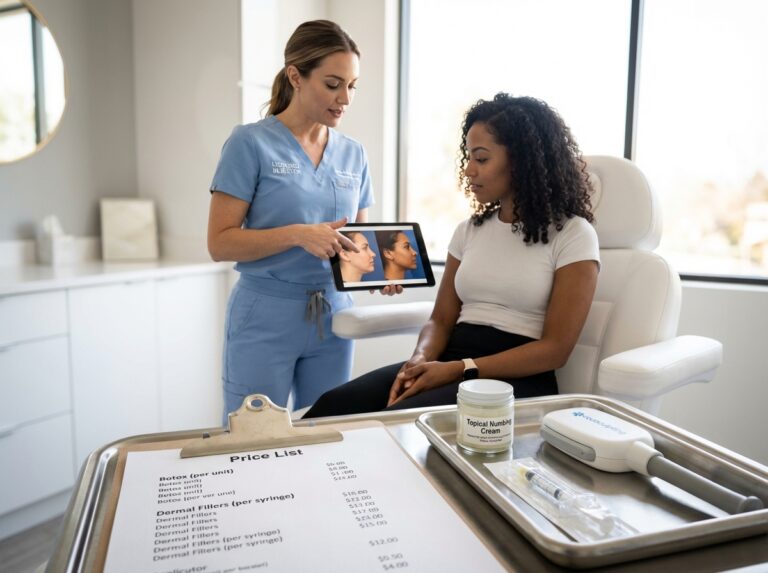
- Get the price per unit and price per area. Some clinics charge a flat fee for an area like the glabella, while others charge by the unit. Knowing both numbers helps you see if a flat fee is actually a good deal.
- Ask for a written breakdown. A reputable clinic will provide a printed or digital estimate that lists the product, the units, and the total cost. This prevents surprise fees at checkout.
- Inquire about follow up visits. Ask if the clinic offers a two week follow up or correction visit. You should know if these touch ups are included in the initial price or if they cost extra.
- Verify the injector portfolio. Request to see before and after photos of actual patients treated by that specific injector. Stock photos from the manufacturer do not reflect the skill of the person holding the needle.
- Check for product authenticity. You have the right to ask for the lot number or the receipt of the product on the day of your visit. This ensures the product is genuine and sourced through official channels.
Questions to Ask During Your Consultation
Beyond the price, the quality of the consultation determines the value of the service. Ensure you ask the following:
- Which brand do you recommend for my specific muscle strength and skin type?
- How many units of this specific brand do you plan to use for each area?
- Is your pricing based on the number of units or a flat fee per area?
- What is your policy for touch ups if the results are asymmetrical after two weeks?
- How many years of experience do you have with this specific neuromodulator?
- Can I see before and after photos of your actual patients who had similar concerns?
How to Convert Dysport Pricing to Botox Equivalents
The most common mistake patients make is comparing the per unit price of Dysport directly to Botox. Dysport units are much smaller and less concentrated. You generally need 2.5 to 3 units of Dysport to achieve the same muscle relaxation as 1 unit of Botox. To compare quotes fairly, you should multiply the Botox units by 3 to see how much Dysport you would need. According to industry data, 3 units of Dysport are roughly equal to 1 unit of Botox. If the total cost for the Dysport treatment is lower than the Botox total after this conversion, it offers better value.
| Treatment Area | Botox Units (Example) | Dysport Equivalent (3 to 1 Ratio) | Botox Cost at $15 per unit | Dysport Cost at $5 per unit |
|---|---|---|---|---|
| Glabella (Frown Lines) | 20 units | 60 units | $300 | $300 |
| Forehead and Crow’s Feet | 40 units | 120 units | $600 | $600 |
In these examples, the total price remains the same even though the Dysport unit price looks much cheaper. If a clinic offers Dysport at $4 per unit, the total for the glabella would drop to $240, making it a better financial choice than Botox at $15 per unit. Always calculate the total price for the entire treatment area rather than focusing on the single unit cost.
Red Flags to Watch For
Low prices can sometimes hide risks that compromise your safety or the quality of your results. Be cautious if you encounter any of the following situations.
- Vague unit counts. If an injector refuses to tell you exactly how many units they are using, they might be under dosing the area. This leads to results that wear off too quickly.
- Extremely low prices. Prices that fall well below the market average of Dysport units typically cost $4 to $8 each might indicate diluted product or grey market sourcing.
- Lack of a supervising physician. In many states, a nurse or physician assistant must work under the supervision of a board certified doctor. If there is no doctor associated with the clinic, it is a major safety risk.
- No visible portfolio. An injector who cannot show you their own work might lack experience.
- Pressure to prepay. Be wary of clinics that push you to buy large packages or prepay for multiple sessions before you have even had your first treatment.
Legitimate Ways to Save Money
You do not always have to pay full price to get high quality care. Many reputable clinics offer ways to reduce the cost of your injections legally and safely.
Loyalty programs are the most common way to save. Programs like Alle for Botox or ASPIRE for Dysport allow you to earn points on every treatment. These points turn into cash discounts for your next visit. Some clinics also offer reputable discounts during certain times of the year or for first time patients. Group rates can also be a factor if you and a friend book together at a clinic where experienced injectors perform the service. These discounts are based on business volume rather than cutting corners on product quality.
Negotiation and Safety Reminders
You can often negotiate the price by asking for a unit breakdown or bundling services. If you are getting dermal fillers at the same time, ask if the clinic offers a discount for combining treatments. You can also request a satisfaction guarantee. While no medical procedure has guaranteed results, a good clinic will stand by their work and offer a free or discounted touch up if the initial dose was insufficient.
Safety should always come before savings. Ensure the clinic follows strict cold chain handling procedures. Neuromodulators must stay refrigerated from the moment they leave the factory until they are injected. If the product is not handled correctly, it loses its potency. Choosing an experienced injector who understands facial anatomy is worth a higher price. A skilled professional uses fewer units to get a better result, which often saves you money in the long run compared to a cheap injector who uses too much product or places it incorrectly.
Final takeaways and making the best value choice
Finding the best value in the world of cosmetic injectables requires looking past the initial price tag. You might see a low price per unit and think you are getting a bargain. This is often a mistake. The true cost of your treatment depends on how many units you need and how long those results last. Botox and Dysport are both excellent tools. They just work in slightly different ways. You should focus on the total price for the result you want instead of the price for a single drop of product.
The Math of Modern Neuromodulators
The most important thing to remember is the conversion rate. You generally need three units of Dysport to match the strength of one unit of Botox. In 2025, Dysport units typically cost $4 to $8 each. This range is standard across most major American cities. Botox usually sits between ten and twenty dollars per unit. When you do the math, the total bill for a forehead treatment often lands in the same place. You can expect to pay between three hundred and six hundred dollars per area regardless of the brand you choose.
When Dysport Offers Better Value
Dysport can be the better financial choice for larger areas. It has a tendency to spread more than Botox. This characteristic is helpful when you want to treat a broad forehead or a wide set of crow’s feet. Because it spreads, an injector might be able to use slightly less product to cover a larger surface. This can lead to a softer and more natural look. It also tends to kick in faster. Many patients see their skin smoothing out within two or three days. If you have a big event coming up soon, the speed of Dysport provides extra value that you cannot measure in dollars. It is also a great option if you have developed a resistance to Botox. Sometimes the body stops responding to one brand. Switching to Dysport can give you the results you used to get without increasing your dose.
When Botox Remains the Standard
Botox is often the better choice for precision work. It stays exactly where the injector puts it. This makes it ideal for lifting the tail of the eyebrow or treating tiny lines around the mouth. If you want a very specific change, the predictable nature of Botox is worth the price. It has the longest track record of safety and efficacy in the United States. Many injectors have spent decades mastering this specific formula. Their comfort level with the product means you are less likely to experience side effects like a drooping eyelid. You are paying for that predictability. In 2025, the average cost of a Botox session in the U.S. is around $475. This price reflects the reliability of the brand and the expertise required to use it correctly.
The Role of Injector Skill
The person holding the syringe matters more than the brand of the liquid inside it. A highly skilled injector knows how to map your facial muscles. They can achieve a great result with fewer units. A less experienced injector might use too much product or put it in the wrong spot. This leads to a frozen look or a heavy brow. You might save fifty dollars on the unit price at a discount clinic but end up unhappy with your face for four months. That is not a good value. You should look for board certified dermatologists or plastic surgeons. Many talented nurse injectors also provide excellent results. You should check their portfolio of work. Look for faces that look like yours. If their previous patients look natural and refreshed, you are in good hands.
Your Pre Booking Checklist
Before you schedule an appointment, you should go through a few steps to protect your wallet and your face. These steps ensure transparency and safety.
- Ask for the total price for the specific area you want to treat.
- Confirm the brand name of the product they will use.
- Request the number of units in writing before the injection starts.
- Verify that the injector is a licensed medical professional.
- Check recent reviews from the last six months to see current patient satisfaction.
- Inquire about the cost of a follow up or touch up if the results are uneven.
You should never feel pressured to buy more units than you want. A good clinic will be honest about the 3 to 1 ratio between Dysport and Botox. They will explain why they recommend one over the other for your specific muscle strength. Transparency is the hallmark of a reputable provider. If a clinic is vague about their pricing or the brand they use, you should walk away. There are too many high quality options available to settle for a shady experience.
Prioritizing Predictable Outcomes
The goal of any cosmetic treatment is to feel better about your appearance. The lowest headline price rarely leads to the best outcome. If you choose a clinic based only on a coupon, you might end up with diluted product or an unskilled injector. This can lead to results that fade in six weeks instead of four months. You will end up spending more money over the course of a year because you have to go back more often. True value comes from a treatment that lasts as long as it should and looks exactly how you imagined. You should invest in a provider who understands your goals. A predictable and safe result is the only way to ensure you are not overpaying for your beauty routine. Focus on the quality of the work and the honesty of the clinic. This approach will always lead to the best value in the long run.
References
- Dysport vs Botox: Key Differences, Pros, Cons & Costs — Per-Unit Price (US Avg.) $14–$20 per unit, Approx. $4–$8 per unit. Conversion Rate, —, Approx. 3 units Dysport ≈ 1 unit Botox.
- Botox vs Dysport: Which Injectable Works Better? — Pricing and Cost. The New Laser Light Skin Clinic offers Botox and Dysport at $8.88 per unit, a competitive rate compared to market averages of …
- Botox vs. Dysport: Finding the Right Option For You — Dysport typically costs about $4-$6 per unit. While this seems cheaper, Botox is about three times stronger per unit. This means the final cost …
- How Much Does Dysport® Cost? (See Prices Near You) | AEDIT — In the United States, Dysport® units typically cost $4 to $8 each. This is less expensive than Botox®, which ranges from $10 to $20 per unit.
- Botox vs. Dysport vs. Daxxify: Which Wrinkle Relaxer Is Right for You? — Quick Comparison ; Cost Range, $250–$600/area, $250–$600/area, Higher upfront ; Spread Pattern, Concentrated, Wider spread, Similar to Botox.
- How Much Do Botox Injections Cost? | InjectCo — In the United States, the average cost of Botox injections is $10–15 per unit or $450 per session. However, the actual cost of Botox ranges …
- How Much Does Dysport® Cost in 2025? | Boston & Wellesley Hills — At Krauss Dermatology, Dysport® begins at under $500 for a single area (such as frown lines between brows, or crows feet), with additional areas added at a …
- How Much Does Botox Cost? Average Cost by Location and Brand — In 2025, the average cost of a Botox session in the U.S. is around $475, with total prices ranging from $225 to $1,300 depending on the provider …