Choosing between a lip flip and lip filler starts with price, but true cost includes longevity, touch ups and provider expertise. This article breaks down typical US pricing for both procedures, explains how clinics set fees, and gives practical tips to compare quotes so you can make an informed, budget-smart decision before booking.
How Lip Flip and Lip Filler Work and What You Pay For
Knowing the science behind the needle is only half the equation. You need to know exactly what hits your credit card before you sit in the chair. Prices in late 2025 have shifted upward compared to previous years. We see distinct price brackets depending on where you live, the product used, and who holds the syringe.
Current 2025 Price Ranges for Lip Flips
The lip flip remains the budget-friendly option for a single visit, involving the injection of a small amount of neuromodulator (like Botox or Dysport) into the orbicularis oris muscle. Most clinics price this service in one of two ways:
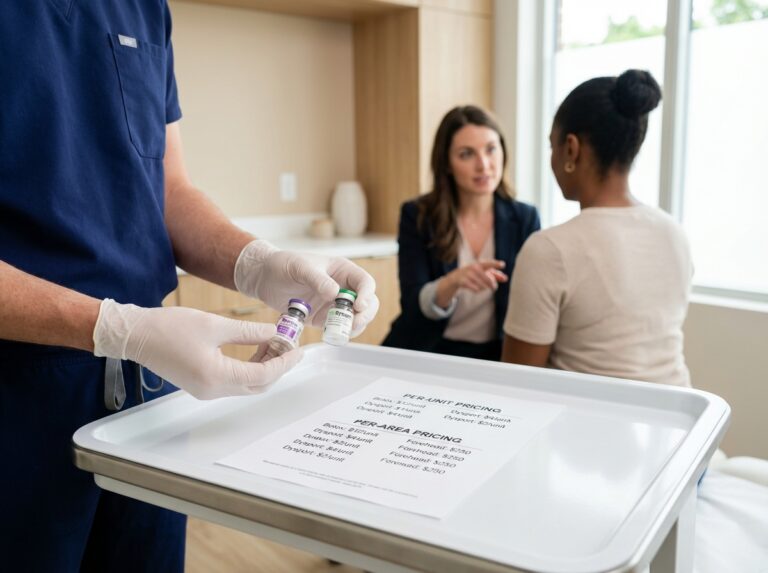
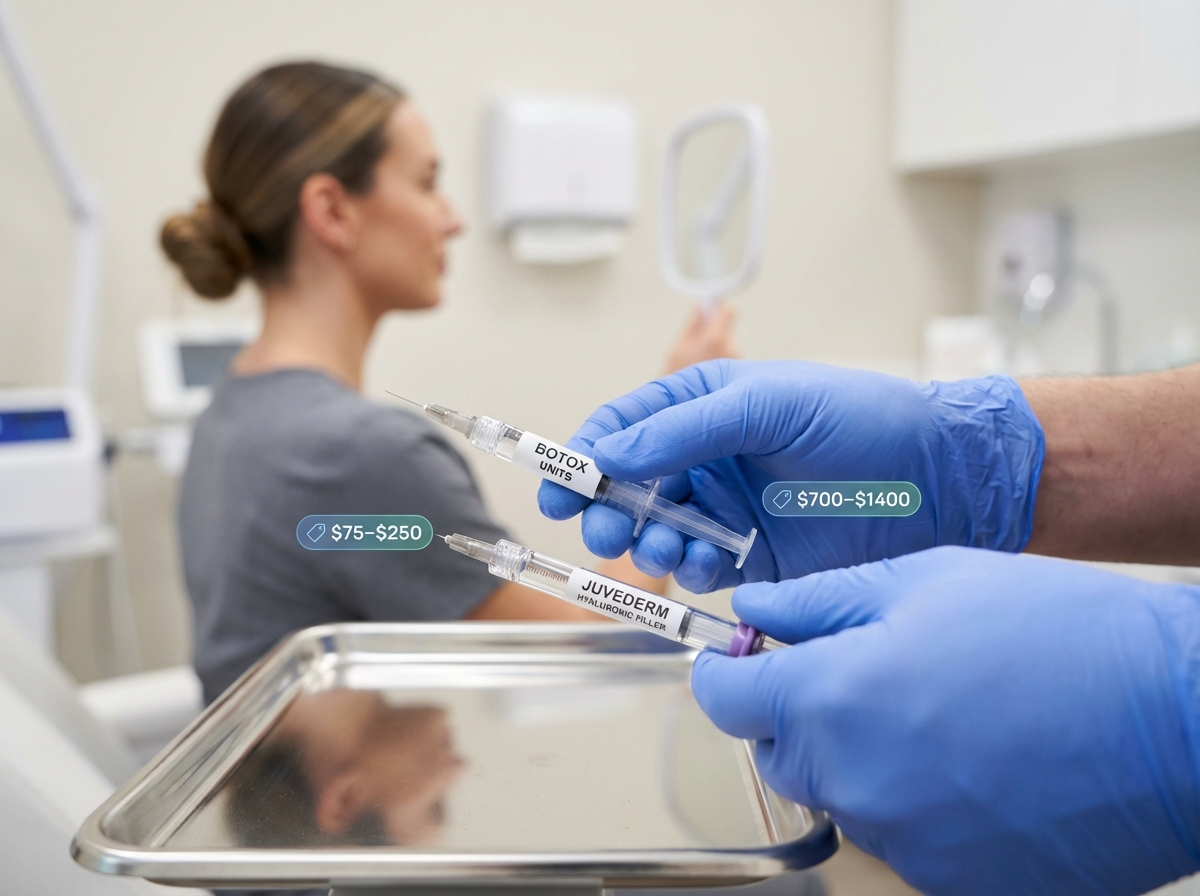
- Per Unit Pricing: You pay only for what you use. In 2025, the average consumer charge for Botox is $12 to $22 per unit. Since a lip flip requires very few units (typically 4 to 8), the raw cost of the product is low. However, clinics often have a minimum spend to cover their time. You might see a “minimum 10 units” policy even if you only need 6 for your lip.
- Flat Procedure Fee: This model is common in high-volume medical spas and high-end clinics that do not open a sterile setup for less than a set amount. You typically pay a flat fee between $50 and $300 per treatment. This covers the consultation, the sterile setup, and the required units.
Current 2025 Price Ranges for Lip Fillers
Lip fillers involve a significantly higher upfront investment because they physically add volume using hyaluronic acid gel. The price is almost always per syringe.
- Standard 1.0 mL Syringe: The national average for a standard hyaluronic acid filler like Juvederm or Restylane sits between $500 and $1,500 per syringe. This covers the product and the service.
- Premium and Specialty Fillers: Newer designer fillers or specific formulations for flexible movement (like the RHA collection) often command higher prices, ranging from $800 to $1,200.
- Half Syringes (0.5 mL): These typically cost $350 to $650. The savings are minimal compared to the volume loss, as the fixed costs of the sterile setup and injector’s time remain the same. Consequently, providers often recommend the full syringe to allow for touch-ups later.
In premium urban markets, top-tier board-certified plastic surgeons may charge upwards of $1,600 to $2,500 per syringe. This price includes the premium product and the advanced technique required for complex reshaping.
Geographic Price Variations
Your zip code dictates your invoice. Overhead costs in major cities drive up service fees. We analyzed data from clinics across the country to show you the spread in late 2025.
| Region / City | Lip Flip Range (Per Visit) | Lip Filler Range (Per Syringe) |
|---|---|---|
| New York City, NY | $150 – $350 | $750 – $1,200+ |
| Los Angeles, CA | $120 – $300 | $700 – $1,100+ |
| Chicago, IL | $100 – $250 | $550 – $850 |
| Dallas, TX | $80 – $200 | $550 – $900 |
| Rural / Mid-Market | $50 – $150 | $450 – $700 |
State averages show interesting outliers. Ohio and Massachusetts currently average higher than California for fillers, hovering around $870 to $890 per syringe. Utah and Illinois remain more affordable, with averages closer to $500.
Annualized Cost Scenarios
A single receipt does not tell the whole story. You must calculate the yearly maintenance. Lip flips wear off quickly (8 to 12 weeks), while fillers typically last 9 to 12 months. Here is the math for the first year of treatment based on 2025 averages.
Scenario A: Lip Flip Only
You want a subtle enhancement. You pay $125 per treatment. The effect fades after 3 months. You return 4 times in a year.
Calculation: $125 x 4 visits.
Total First-Year Cost: $500.
Scenario B: 0.5 mL Filler (The “Mini” Plump)
You want volume but are nervous. You buy a half-syringe. This size is less common and costs about 75% of a full syringe due to the waste of the remaining product. You pay $450. It lasts 6 to 9 months.
Calculation: $450 initial + $0 maintenance (if you let it fade).
Total First-Year Cost: $450.
Scenario C: 1.0 mL Filler (Standard Volumizing)
You want noticeable shape and hydration. You pay the national average of $750. The product lasts 12 months.
Calculation: $750 initial.
Note: Roughly 30% of first-time patients request a minor touch-up or “top-off” within the first 3 months, which could add $150–$300 to this total.
Total First-Year Cost: $750 – $1,050.
Scenario D: The Combo (Flip + Filler)
You want volume and a relaxed upper lip to hide a gummy smile. You pay $750 for the filler and $100 for the flip add-on. The filler lasts all year. The flip needs refreshing every 3 months.
Calculation: $850 initial visit + ($100 x 3 follow-up flip visits).
Total First-Year Cost: $1,150.
Lip Flip Vs Lip Filler | What’s The Difference? helps explain why you might choose one over the other, but financially, the lip flip is not always the “budget” option if you maintain it strictly. The annual cost often comes surprisingly close to a full syringe of filler.
What Drives the Price Difference
You might wonder why one clinic charges $600 while the one down the street charges $1,200. Several main factors influence the final quote.
Injector Credentials
This is the biggest variable. A registered nurse (RN) or physician assistant (PA) typically charges less than a board-certified dermatologist or plastic surgeon. You pay for their years of education and their understanding of facial anatomy. A surgeon might charge a consultation fee of $200 that applies toward the treatment, whereas a nurse injector at a medical spa often waives this fee.
Product Brand
Not all hyaluronic acid is equal. Basic fillers cost the clinic less. Premium lines like the RHA collection or specific Juvederm Vycross products have higher manufacturing costs. These products often integrate better with tissue and last longer. Clinics pass this cost to you.
Facility Type
A luxury medical spa with marble floors and a concierge in Beverly Hills has massive overhead. A functional dermatology clinic in a suburban strip mall has lower rent. You pay a premium for the “experience” and the location.
Hidden Add-On Fees
Always ask for an itemized quote. Some clinics include everything in the syringe price, while others add separate charges for:
- Consultation: $50–$150 (often credited toward treatment).
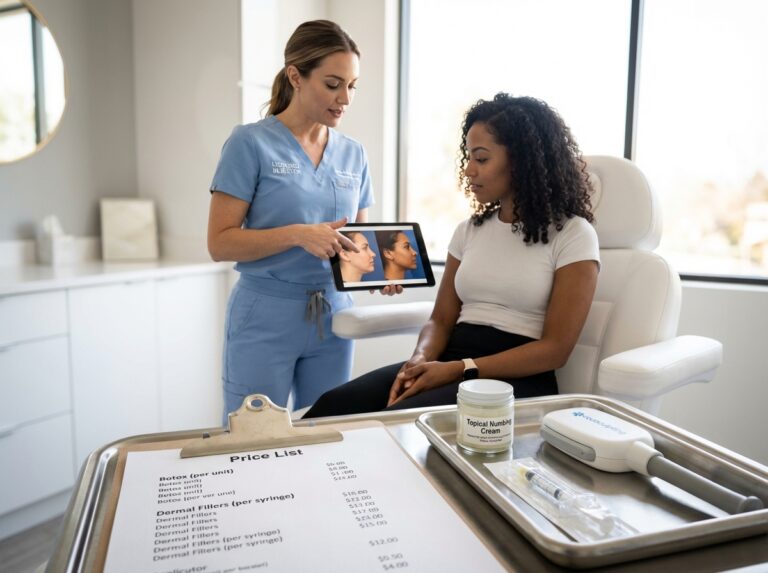
- Numbing: $25–$50 for dental blocks or premium topical anesthetic.
- Facility Fees: Common in surgical centers (“tray fees” or “consumables fees”).
When to Pay More vs. Red Flags
Higher prices are often justified for safety and results. You should pay the premium if you have complex anatomy or previous filler migration that needs correction. An expert injector knows how to dissolve old filler and rebuild the lip safely. This expertise prevents vascular occlusions and botched results.
Lip Filler 2025: Trends, Cost & Safe Results Explained highlights that safety protocols like ultrasound mapping are becoming standard in premium clinics. This technology adds to the cost but ensures the needle never hits an artery.
Pricing Red Flags
Be wary of prices that seem too good to be true.
- The $300 Syringe: A price of $300 for a full syringe of “Juvederm” is a major red flag. The wholesale cost of the product is often higher than that. These clinics may be using gray-market imports, diluted product, or counterfeit fillers.
- “Shared” Syringes: Never accept a partial syringe left over from another patient, even if the price is unbeatable. This is a severe infection risk.
- Unclear Units: If a clinic quotes a “lip flip” for $40 but does not specify the units, you might receive a sub-therapeutic dose that wears off in two weeks. Always ask to see the vial and verify the number of units being injected.
- Groupon Deals: Extreme discounts often indicate a provider is desperate for practice or the product is nearing expiration.
Comparing quotes requires looking at the total package. Ask if the price includes a follow-up visit. Many reputable clinics offer a complimentary two-week check-up to massage out lumps or correct minor asymmetry. If a cheaper clinic charges $150 for every minor adjustment, the “bargain” price quickly becomes expensive.
Frequently Asked Questions
Which option is cheaper upfront versus long term?
The lip flip is significantly cheaper for a single appointment. You will typically pay between $50 and $150 for a lip flip because it uses a very small amount of neurotoxin. Lip filler requires a much higher upfront investment. A full syringe of hyaluronic acid filler usually costs between $500 and $1,000 depending on your location and the brand used.
However, the long-term math changes when you factor in maintenance. A lip flip wears off quickly. You might need to return every 8 to 10 weeks to maintain the look. That means you could pay for that $100 treatment five or six times a year. Lip filler lasts much longer. A single syringe can last 9 to 12 months. Over the course of a year, the total spend often ends up being quite similar. You are essentially choosing between a low monthly maintenance cost or a higher one-time annual expense.
Why do clinics charge per unit for flips but per syringe for filler?
This comes down to how the manufacturers package the products. Botox and Dysport come in vials that the injector reconstitutes into liquid units. A lip flip only requires a tiny fraction of a vial. It makes sense for the clinic to charge you only for the 4 to 6 units you actually use. They can use the rest of the vial for other patients that same day.
Dermal fillers come in pre-filled, sterile syringes of gel. Once a syringe is opened for you, it cannot be used on anyone else. Even if you only need a small amount of volume, the clinic has to open a full syringe that costs them hundreds of dollars to stock. This is why you are charged for the full syringe regardless of whether you use 0.8 mL or the full 1.0 mL. Some clinics offer half-syringes, but the price is rarely 50% of the full cost due to the overhead involved in the setup.
How many units are typically needed for a lip flip?
Most patients require between 4 and 6 units of Botox or a similar neuromodulator for a standard lip flip. This is a very small amount compared to treating a forehead, which might take 20 units. The injector places these units precisely into the orbicularis oris muscle just above the lip border. If a clinic quotes you for 10 or more units for a simple lip flip, ask for clarification. Unless you are treating a very strong gummy smile or combining areas, that dosage is higher than the standard norm.
How many syringes of filler will I need?
One syringe (1.0 mL) is the standard dose for most first-time patients. This amount provides a noticeable but natural enhancement. It is roughly the volume of a blueberry. It is enough to add hydration and structure without looking overfilled. Patients wanting a very dramatic look might eventually need two syringes, but reputable injectors rarely do this in one sitting. They will usually inject one syringe and have you come back in a month to assess if you really need more. Building volume slowly is the safest way to avoid migration.
How long does each treatment actually last?
Lip flips have a very short lifespan. The muscle activity in your mouth is constant because you talk, eat, and smile all day. This metabolizes the neurotoxin faster than in other parts of the face. You can expect the results to peak around two weeks and start fading by week eight. Most people feel their lip flip is gone by the three-month mark.
Hyaluronic acid fillers are much more durable. Modern fillers like Juvéderm Volbella or Restylane Kysse are designed to move with the lip tissue and typically last between 9 and 12 months. Some patients metabolize filler faster and need a touch-up at six months. Others find their filler lasts well over a year. Longevity depends heavily on your personal metabolism and lifestyle factors like exercise frequency.
Can I combine both treatments and is it cost-effective?
Yes, combining a lip flip with filler is a very common strategy. The filler provides the physical volume and structure, while the lip flip relaxes the muscle to show more of the pink lip when you smile. This is often called a “combo lip.”
From a cost perspective, it is an add-on expense. You will pay the full price of the syringe plus the cost of the Botox units. Since the lip flip portion is relatively cheap (around $100), many patients find it worth the extra cost to maximize the look of their filler. However, you will still need to maintain the lip flip portion every few months even while the filler remains intact.
Is there a safety difference between injector types that affects price?
Pricing often correlates with the level of the provider. Board-certified plastic surgeons and dermatologists generally charge the highest fees. They have the most extensive anatomical training. Registered Nurses (RNs), Nurse Practitioners (NPs), and Physician Assistants (PAs) often charge slightly less, though experienced aesthetic injectors in these roles can command high prices too.
Safety is not strictly about the title but about specific training in injectables. A surgeon who rarely does lips might be less skilled than a nurse who injects lips all day. However, extremely low prices often indicate a lack of experience or supervision. If a provider charges significantly below the local market rate, they may be cutting corners on safety protocols or using gray-market products.
Can filler be dissolved and what does that cost?
Hyaluronic acid filler is reversible, but fixing it is not free. If you dislike your results or experience migration, you need an enzyme called hyaluronidase to dissolve the filler. This is a separate medical procedure.
Clinics typically charge between $200 and $400 per session for dissolving. It can sometimes take more than one session to fully remove old filler. This means a “bad bargain” on filler can end up costing you double: the price of the bad filler plus the price to dissolve it. A lip flip cannot be dissolved. You simply have to wait 2 to 3 months for the Botox to wear off if you do not like the feeling.
How do promotions and memberships work?
Many clinics offer membership programs where you pay a monthly fee that goes into a “bank” for future treatments. These members often get a discounted rate per unit or per syringe. This can be a smart way to budget if you plan to maintain your results long-term.
Be cautious with one-off promotions on sites like Groupon. Check the fine print carefully. Sometimes the low price applies only to an “introductory” amount of product that is not enough for a full result, forcing you to buy more at full price once you are in the chair. Always ask if the promotion covers a specific brand of filler or a specific number of units.
Are consultations usually free?
It varies by clinic. Many high-end medical practices charge a consultation fee ranging from $50 to $150. This fee is almost always applied as a credit toward your treatment if you book the procedure. This policy prevents “no-shows” and ensures the injector’s time is valued.
Clinics that offer completely free consultations are common, but they may rely on higher pressure sales tactics to convert you into a paying customer during the appointment. If you pay a consult fee, you are paying for an unbiased assessment. Do not be afraid to pay for a consult and then choose not to book if you do not feel comfortable.
Do clinics add facility fees or hidden costs?
Most aesthetic quotes are all-inclusive, but there are exceptions. Some clinics charge a separate “consumables fee” or “tray fee” of $25 to $50 to cover needles, gauze, and gloves. Another common add-on is numbing cream. While standard numbing is usually included, some places charge extra for premium dental blocks or stronger topical anesthetics.
You should also ask about follow-up costs. A two-week follow-up appointment to check symmetry should be free. However, if you need a “top-up” of a few more units of Botox or a tiny bit more filler at that appointment, you will likely be charged for the additional product used.
How can I estimate my total ongoing cost?
To get a realistic annual budget, do not just look at the single appointment price. For a lip flip, multiply the single session cost by 4 or 5. If a session is $100, your annual cost is $400 to $500. For lip filler, take the cost of one syringe and add about 20% for potential maintenance or a mini-top-up at the six-month mark. If a syringe is $800, budget around $1,000 for the year to be safe.
Ask the clinic for a printed treatment plan. This document should list the exact product brand, the volume, and the price per unit or syringe. Having this itemized quote allows you to compare apples to apples with other local providers.
Where can I verify injector credentials and reviews?
Do not rely solely on Instagram photos, which can be edited or angled to look better. Go to the state medical board website for your state. You can search the provider’s name to confirm their license is active and see if they have any disciplinary actions against them.
For reviews, look at platforms like RealSelf or Google Reviews. Pay attention to how the clinic responds to negative reviews. A clinic that gets defensive or aggressive is a red flag. Look for reviews that specifically mention the longevity of the results and the billing process, as these are common friction points.
Final Takeaways and Booking Checklist
Making a financial decision between a lip flip and lip filler requires looking past the initial sticker price. You have to calculate the long-term value and how it fits your cash flow. A lip flip costs significantly less upfront ($50–$150), making it attractive for testing the waters, but the results fade within three months. Lip fillers require a higher upfront investment ($500–$1,000+), but the results last six to twelve months. If you only need one treatment a year, the annual cost of filler is often comparable to maintaining a lip flip.
Choosing the right procedure also depends on your aesthetic goals. A lip flip does not add volume; it relaxes the muscle to show more of your existing lip. Lip filler physically adds volume and structure. If you want to change the shape of your lips or increase their size, a lip flip will not achieve that result regardless of the price.
The Smart Booking Checklist
You can avoid hidden fees and poor results by asking the right questions before you book an appointment. Use this checklist when you call clinics or go in for a consultation.
- Request a fully itemized quote: Do not accept a flat rate without details. Ask the clinic to break down the cost. You need to know the price per unit if you are getting a lip flip, or the price per syringe if you are getting filler. Ask if the quote includes the consultation fee, facility fees, or numbing cream.
- Verify the product brand and expiry: Cheap quotes often mean cheaper products. Ask specifically which brand of neurotoxin or filler they use. FDA-approved brands like Botox, Dysport, Juvederm, and Restylane have set costs. If a clinic offers a price far below the local average, ask why. When you are in the chair, ask to see the box and check the expiration date.
- Confirm injector credentials and experience: The skill of the injector affects the price and safety. Board-certified surgeons generally charge more than nurse injectors. Both can be excellent, but you need to know who is holding the needle. Ask how many lip procedures they perform weekly. An experienced injector who charges $800 is often cheaper in the long run than a novice charging $500 who places the product poorly.
- Review specific before and after photos: Do not just look at the highlight reel on Instagram. Ask to see photos of patients who started with lips similar to yours. If you have thin lips, looking at results for someone who already had full lips is useless. You need to see proof that the injector can achieve your specific goal.
- Ask about touch-up and reversal policies: Clarify what happens if the results are uneven. About 30 percent of first-time filler patients need a touch-up. Ask if the clinic charges for a two-week follow-up appointment. Ask if minor corrections are complimentary. You also need to know the cost of dissolving filler (typically $200–$400). Knowing this risk expense upfront prevents panic later.
- Compare effective prices across three clinics: Call three different providers in your area. Ask for the price of 6 units of Botox and 1 syringe of Juvederm Ultra. This gives you a baseline market rate for your specific city. If one clinic is drastically cheaper, treat it as a red flag rather than a bargain.
- Factor maintenance into your total budget: Do not just book based on today’s bank balance. For a lip flip, ask if you can afford $100 every three months. For filler, ask if you can save $800 over the next year for your maintenance appointment.
- Clarify consultation fees: Many clinics charge a consultation fee between $50 and $150. Usually, they apply this fee toward your treatment cost. Ask if this fee is refundable if you decide not to proceed.
Recommendation Framework
Your budget and your desired look should dictate your final choice. Here is a simple framework to help you decide which path matches your situation.
Scenario A: The Subtle Refiner
You have a strict budget and want a minimal change. You are happy with your lip volume but want your upper lip to look more visible when you smile. You might want to fix a gummy smile.
Recommendation: Book a lip flip. The low cost of roughly $100 per session fits a tight budget. The results are temporary, so it is a low-risk way to try aesthetic treatments.
Scenario B: The Volume Seeker
You want noticeably fuller lips or need to correct asymmetry. You have a flexible budget and can afford a higher upfront payment. You want results that last most of the year.
Recommendation: Save for a high-quality hyaluronic acid filler. While the $700 to $1,000 price tag is higher, it is the only way to add actual volume. The longevity makes it a better investment for structural changes.
Scenario C: The Long-Term Planner
You want the best of both worlds. You want volume and a defined border. You are willing to invest in a complete look.
Recommendation: Discuss a combination approach. Some patients get filler once a year for volume and use a lip flip occasionally to enhance the shape. This is the most expensive route, often exceeding $1,000 initially, but it offers the most comprehensive result. Ensure you get a quote for both procedures as a package, as some clinics offer a slight discount when combining treatments.
References
- Lip Flip vs Lip Filler- 5 Differences | Aesthetica Med Spa — However, lip filler requires less frequent touch ups, whereas a Botox lip flip requires more. How Much Does a Lip Flip Cost? How Much Does Lip …
- Lip Flip Vs Lip Filler | What's The Difference? – Bloomtime Aesthetics — A lip flip is subtle, more affordable, and wears off in about three months. Lip filler is better for those wanting more shape and fullness, and …
- Lip Flip Vs. Lip Filler: Which Lip Enhancement Is Right For You? — Lip Flip is more affordable ($120 at LaterzaMD Aesthetic Center) compared to Lip Filler ($700) but requires more frequent touch-ups. Downtime …
- Heard about the BOTOX® lip flip? Here are the pros & cons. — While a full syringe of lip filler costs between $500 and $1000, the Botox lip flip typically requires only 4-6 units of Botox, which cost …
- Lip Filler 2025: Trends, Cost & Safe Results Explained — Lip Flip: Generally cheaper since it requires fewer Botox units. Lip Filler: More expensive, as filler syringes are costlier than Botox units.
- How Much Does Lip Filler Cost and How to Pay for It? – Denefits — According to the American Society of Plastic Surgeons, the average cost of lip augmentation with dermal fillers AKA lip fillers is $743.
- Lip Flip vs Lip Filler: Which Is Better for You (and Your Budget)? — Lip Flip Cost: Lower, usually under $150–$200 per session. Lip Filler Cost: Higher, usually $500–$700+ per syringe. Results: Lip flip = subtle, …
- How Much Does Lip Filler Cost? Factors That Affect the Price — Most patients spend between $500 and $1,000 per syringe for lip injections. Since the average person needs 1-2 syringes per session, your total …