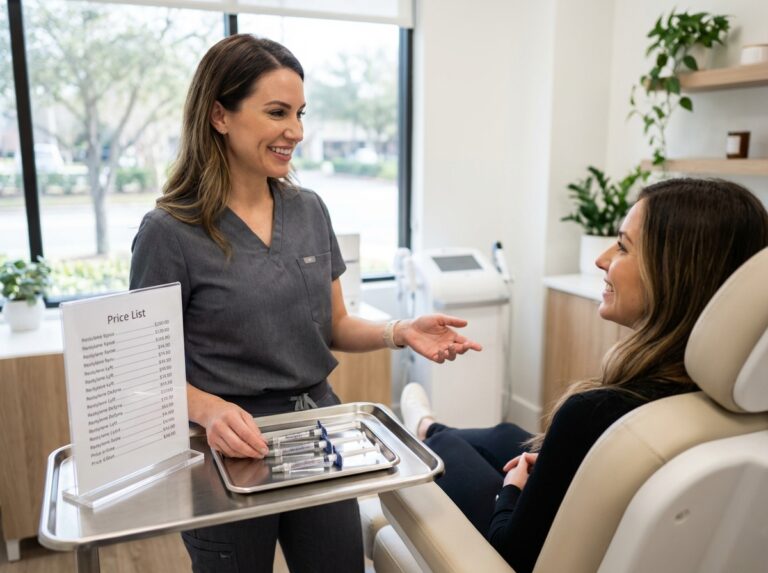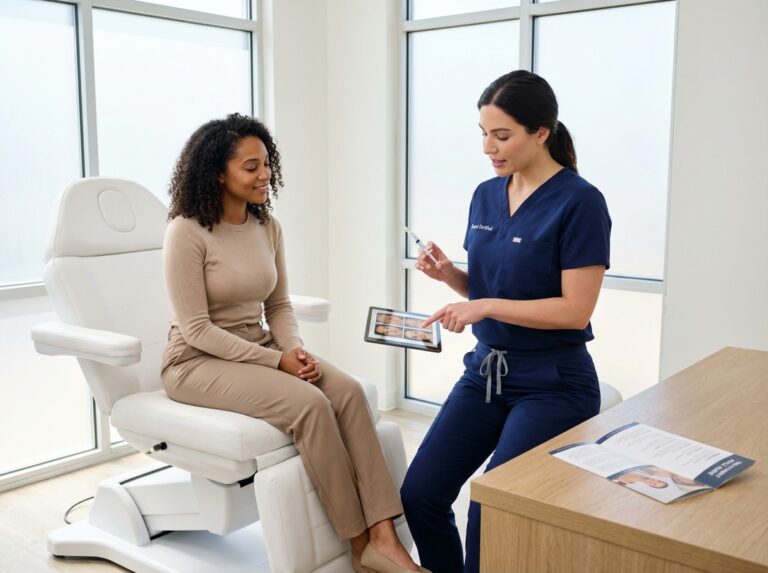
Thinking about a liquid rhinoplasty in the USA? This guide breaks down non-surgical nose job pricing alongside common clinic fees for Botox, fillers, and other aesthetic treatments. Learn what drives cost, typical price ranges, and practical strategies to compare clinics so you can choose a safe, transparent option and avoid overpaying.
What Liquid Rhinoplasty Is and Why Price Varies
Liquid rhinoplasty, often called a “15-minute nose job,” is a procedure where a provider injects dermal fillers into the nose to alter its shape. Unlike surgical rhinoplasty, which removes bone or cartilage to reduce size, liquid rhinoplasty is purely additive. It adds volume to camouflage irregularities.
The primary goal is usually to smooth out a dorsal hump (the bump on the bridge), lift a drooping tip, or correct asymmetry. By filling the depression above a bump, the nose appears straighter. It creates an optical illusion of a smaller, more balanced nose, even though the actual volume has increased slightly.
Providers almost exclusively use hyaluronic acid (HA) fillers for this area. Brands like Juvéderm (Voluma) or Restylane (Lyft) are standard because they are reversible. If the results are uneven, or in the rare event of a vascular complication, the provider can dissolve the filler immediately with an enzyme called hyaluronidase.
Results are temporary. You can expect the look to last between 12 and 18 months. Since the nose doesn’t move as much as the lips or cheeks, the filler metabolizes slower, but it does go away. This impacts your long-term financial planning. To maintain the result, you will need touch-ups every year or year and a half, meaning the “cheaper” upfront cost can eventually exceed the price of surgery over a decade.
The Main Cost Drivers
You will see prices ranging from $600 to over $3,000 for what looks like the same treatment. This variance isn’t random. It comes down to specific factors regarding safety, product, and location.
Injector Expertise and Safety
This is the single biggest factor in pricing. The nose is arguably the most dangerous area of the face to inject. It has a complex network of arteries that connect directly to the eyes. If an injector accidentally blocks a blood vessel (vascular occlusion), it can lead to skin necrosis or, in worst-case scenarios, blindness.
Because of this high risk, you are paying for the hand holding the needle, not just the product inside it.
- Board-Certified Plastic Surgeons: They typically charge the most, often between $1,500 and $2,500 per session. They understand the deep anatomy of the nose intimately.
- Dermatologists: Prices are usually comparable to plastic surgeons or slightly lower, ranging from $1,000 to $2,000.
- Nurse Injectors/Med Spas: These providers often offer lower rates, typically $600 to $1,000. While many are highly skilled, the lower price reflects a different level of formal surgical training.
Filler Brand and Quantity
The type of filler matters. The nose requires a structural filler with a high “G-prime” (lifting capacity). These are thicker gels like Juvéderm Voluma or Restylane Lyft, which are generally more expensive than the softer fillers used in lips.
Most liquid rhinoplasties require one syringe (1ml) or less—often just 0.5 ml to 0.8 ml. However, clinics rarely sell partial syringes. You buy the full unit. If your correction only takes 0.5ml, the rest is often discarded or used elsewhere on the face during the same appointment. Some high-end clinics charge a flat “procedure fee” rather than a per-syringe fee. For example, at The Naderi Center, primary rhinoplasty costs are structured around the complexity of the work, not just the fluid volume.
Geographic Location
Overhead costs in your city directly dictate the price floor. In 2025, the gap between metro and rural pricing is distinct.
| Region/State | Typical Price Range (Per Session) |
|---|---|
| National Average | $1,456 |
| New York / Los Angeles | $1,600 – $2,500 |
| Florida / Texas | $1,300 – $1,750 |
| Midwest (e.g., Ohio, Wisconsin) | $600 – $1,200 |
| Iowa (High State Avg) | ~$1,900 |
| Vermont (Lowest State Avg) | ~$1,023 |
Hidden Fees and Additional Costs
The sticker price often covers just the injection. When budgeting, you need to ask about the extras.
- Consultation Fee: Many specialists charge $50 to $200 just to see you. This is sometimes credited toward the procedure if you book it, but not always.
- Imaging: Clinics using 3D imaging tools (like Vectra) to simulate your results beforehand may build this technology cost into their fee.
- Numbing Charges: Basic topical numbing is usually included. Stronger numbing agents or dental blocks might incur an extra $50 to $100 charge.
- Facility Fees: Some practices add a facility or “tray fee” to cover sterile supplies and room usage.
- Touch-ups: Unlike Botox, where a two-week touch-up is often free, filler touch-ups usually cost money. If you need “just a little more” a month later, you might have to buy another full syringe.
- Dissolving: If you hate the result or have a complication, hyaluronidase injections cost extra, usually starting around $200-$500 per session.
Typical 2025 Price Ranges
To give you a realistic baseline before you book, here is what you should expect to pay in the US market right now.
The “Bargain” Range: $600 – $900
You will mostly find these prices in rural areas or at med-spas running aggressive promotions. Be very careful here. Ensure the provider has specific training in nasal anatomy. If the price seems too low, check if they are using an off-brand filler or if the injector is inexperienced.
The Standard Range: $1,000 – $1,600
This is the sweet spot for experienced nurse injectors and some doctors in non-coastal cities. It typically includes one syringe of a premium filler like Juvéderm Voluma. The national average cost for a liquid rhinoplasty sits right in the middle of this bracket at roughly $1,456.
The Expert Range: $1,800 – $3,000
This is what you pay for a board-certified facial plastic surgeon, particularly in hubs like NYC, Beverly Hills, or Miami. You are paying for the safety net of having a surgeon who can manage severe complications and who understands the aesthetics of the nose better than anyone else. Some high-demand expert injectors may charge upwards of $5,500, though this is an outlier.
When comparing quotes, always ask if the price is “per syringe” or “per area.” A per-area price is often safer for you, as it incentivizes the injector to use the right amount for the result, rather than using up a syringe just because you paid for it.
How Clinics Set Prices for Non Surgical Aesthetic Services
Understanding the price tag on a non-surgical nose job requires looking past the final dollar figure. Clinics use specific math to reach those totals. You need to know exactly what you are paying for before you sit in the chair. The pricing structure for aesthetic treatments in the USA often varies by the type of product and the provider’s business model.
Common Pricing Models
Clinics generally use one of four methods to calculate your bill. Knowing which one your provider uses helps you compare quotes accurately.
Per Syringe Pricing
This is the most common model for dermal fillers used in liquid rhinoplasty. You pay a set price for each syringe of product opened for you. If a syringe of Juvéderm Voluma costs $900 and your nose requires very little product, you still pay the full $900. The clinic cannot save the rest for another patient. This model is straightforward but can incentivize using more product than necessary.
Flat Procedure Fee
Specialists who focus heavily on liquid rhinoplasty often charge a flat fee. This covers the result rather than the amount of product. A surgeon might charge $2,500 for the procedure regardless of whether they use 0.5 cc or 1.5 cc of filler. This aligns the cost with the expert’s skill and time rather than the wholesale cost of the gel. It removes the pressure to “use up” a syringe.
Per Unit Pricing
You will see this mostly for neuromodulators like Botox or Dysport. If your liquid rhinoplasty involves a “tinkerbell lift” to raise the nasal tip, the injector uses a small amount of Botox to relax the muscle pulling the nose down. They charge a specific dollar amount for every unit injected. Since this area is small, you might only need 2 to 5 units. At an average price of $12–$18 per unit, this adds roughly $30 to $90 to your total bill.
Hourly or Tiered Pricing
Some high-end practices charge based on the provider’s level. A Master Injector or a Board-Certified Plastic Surgeon commands a higher rate than a nurse practitioner or physician assistant. You are paying a premium for their years of education and lower complication rates.
Bundles and Memberships
Clinics frequently offer ways to lower the per-visit cost through loyalty programs.
Membership Plans
These operate like a gym subscription. You pay a monthly fee that goes into a “wallet” for future treatments. Members usually get 10% to 20% off standard rates. This works well for maintenance treatments like Botox but requires math to see if it benefits a once-a-year liquid nose job.
Package Deals
You might see offers combining lip filler with a non-surgical nose job. Be careful here. Treating multiple areas at once increases swelling and complexity. Only buy a package if you intended to get both treatments anyway.
Financing and Insurance
Aesthetic procedures are rarely covered by insurance. Insurance companies view liquid rhinoplasty as aesthetic, not functional. Unlike surgical rhinoplasty (septorhinoplasty), which might be partially covered if you have a deviated septum affecting your breathing, liquid fillers do not fix breathing issues. In fact, adding volume to the nose can sometimes make the airway feel tighter if not placed correctly. You will be paying 100% out of pocket.
Third-Party Financing
Services like CareCredit or Cherry are standard in the industry. They allow you to pay over 6, 12, or 24 months. Many offer 0% interest if paid within a promotional period. If you miss that window, the interest rates often jump to over 25%.
In-House Payment Plans
Some clinics allow you to pay a deposit and split the remainder over two or three months directly with them. This is less common but avoids the hard credit check associated with external lenders.
Cancellation and Refund Policies
Aesthetic clinics run on tight schedules. Their time is their inventory.
Deposits
Expect to pay a non-refundable deposit of $50 to $500 when booking. This secures your spot.
Late Cancellations
Canceling within 24 or 48 hours usually forfeits your deposit. Some clinics charge 50% of the scheduled service fee.
Refunds
You generally cannot get a refund on services rendered. If you are unhappy with the aesthetic result, you still pay for the product and the provider’s time. This is why clarifying the revision policy is vital.
Reading the Quote
How a clinic presents the price tells you a lot about their transparency.
Lump Sum Quotes
A quote that says “Nose Enhancement: $1,500” is insufficient. It hides variables. You do not know what product is being used or how much.
Itemized Breakdowns
Always request a written breakdown. It should list the specific brand of filler (e.g., Restylane Lyft vs. Juvéderm Voluma), the number of syringes or units estimated, and the injector’s fee. It should also state clearly if a follow-up appointment is included in that price.
Liquid Rhinoplasty (Non-Surgical) Cost and Procedure Guide notes that geographic location heavily influences these base costs. A breakdown helps you see if you are paying for the product or the postcode.
Spotting Opaque Pricing
Be wary of prices that seem too good to be true. A “nose job for $300” usually means they are using a cheaper, thinner filler not suited for the nose, or they are splitting one syringe among multiple patients. This is a major safety violation.
Watch out for “up to” pricing. An ad might say “Liquid Rhinoplasty starting at $600.” That likely covers half a syringe of a basic filler. The actual cost for a complete correction often lands closer to double that amount once you sit down.
Ask specifically about the “touch-up” policy. Liquid rhinoplasty often requires a second small session two weeks later to perfect the shape once swelling goes down. Some clinics include this in the initial flat fee. Others charge a full syringe price even if you only need a tiny drop.
How Much Does a Liquid Rhinoplasty Cost in California? highlights that provider expertise is a massive variable. If a quote is low, check if the injector is a trainee.
Comparison Table: Pricing Structures
| Pricing Model | Typical Use Case | Pros | Cons |
|---|---|---|---|
| Per Syringe | Most MedSpas | You pay for what is opened. | Incentivizes over-filling. |
| Flat Fee | Specialist Surgeons | Focuses on the result. | Higher upfront cost. |
| Per Unit | Botox/Dysport | Precise billing for muscle work. | Hard to estimate total before treatment. |
You are the one holding the credit card. You have the right to know where every dollar goes. A trustworthy clinic will never hesitate to explain their math. If they get defensive about a breakdown, take that as a sign to look elsewhere.
Smart Ways to Compare Prices and Avoid Overpaying
Finding a fair price for a liquid rhinoplasty requires more than calling three clinics and picking the lowest number. You need to normalize the data to see what you are actually buying. A quote of $800 might seem better than $1,200 until you realize the first covers only half a syringe of a generic product while the second covers a full syringe of a premium filler like Voluma or Restylane Lyft.
Standardizing Your Quotes
Clinics quote differently. Some give you a flat fee for the “nose result” while others charge strictly by the syringe. To compare them accurately you must break everything down to a common unit.
Follow this process to normalize your options.
- Ask for the price per syringe. Even if they quote a flat fee, ask how many syringes that fee covers.
- Confirm the syringe volume. Most US syringes are 1.0 ml but some products come in 0.55 ml or 0.8 ml sizes.
- Identify the specific product. A syringe of Juvederm Voluma costs the clinic more to buy than a syringe of basic Juvederm Ultra. You should pay more for the premium product because it holds its shape better and lasts longer in the nose.
You can calculate the “price per cc” to see the real value. If Clinic A charges $700 for 0.55 ml and Clinic B charges $1,000 for 1.0 ml, Clinic B is actually cheaper per unit of volume.
The Consultation Interview
The consultation is your opportunity to vet the safety protocols that justify the price. High-quality providers charge more because they invest in training and emergency supplies.
Ask these specific questions to verify you are paying for expertise rather than just markup.
- What exact brand and product line will you use? You want a firm G-prime filler that mimics bone. Ask to see the box before they inject.
- What is your protocol for vascular occlusions? This is the most critical safety question. The injector must have hyaluronidase (dissolver) immediately available in the room. If they say they do not keep it in stock or have to order it, leave immediately.
- How many non-surgical nose jobs have you performed this year? The nose is the most dangerous area of the face to inject. You want someone who does this daily, not occasionally.
- Is a touch-up visit included in this price? Liquid rhinoplasty often requires a second small session two weeks later to perfect the shape once swelling goes down. Some clinics include this in the initial fee while others charge a full syringe price for it.
Analyzing the Safety Premium
You will find providers offering liquid rhinoplasty for $500 or $600. The national average sits around $1,456 for a reason. Extremely low prices are a major red flag.
Clinics offering rock-bottom rates often cut costs in dangerous ways. They might use gray-market fillers imported illegally from overseas. These products lack FDA regulation and can contain impurities. They might also employ inexperienced injectors who lack the anatomical knowledge to avoid hitting arteries.
Correcting a botched liquid rhinoplasty is painful and expensive. You will pay for the dissolver, wait for the tissue to heal, and then pay a senior specialist a premium rate to rebuild the nose. It is always cheaper to pay $1,500 once than to pay $600 initially and $3,000 to fix it later.
Timing and Travel Considerations
Clinics run promotions during slower months like January or August. You can save 10% to 20% by booking during these windows. However, be wary of “flash sales” that pressure you into immediate treatment.
Traveling for a cheaper rate is rarely worth the savings for this specific procedure. If you live in New York where the average is higher and fly to a cheaper market, you lose your safety net. Vascular complications can appear 24 to 48 hours after injection. If you are on a plane or back home in another state, you cannot get back to your injector for emergency treatment. The cost of an emergency room visit or a local specialist to dissolve the filler will erase any savings from the flight.
Long-Term Cost Calculation
Liquid rhinoplasty is a subscription service. The results are temporary. To understand the real financial impact you must project the cost over ten years and compare it to surgery.
Most patients need a top-up every 12 to 18 months. Over a decade that adds up significantly.
| Expense Category | Liquid Rhinoplasty Strategy | Surgical Rhinoplasty Strategy |
|---|---|---|
| Initial Procedure | $1,500 (Average) | $15,000 – $50,000 |
| Maintenance Frequency | Every 12-18 months | None (Permanent) |
| 10-Year Maintenance Cost | $10,500 (approx. 7 sessions) | $0 |
| Total 10-Year Investment | $12,000 | $15,000 – $50,000 |
The math shows that liquid rhinoplasty remains cheaper than surgery for about the first ten to twelve years. If you plan to maintain the result for the rest of your life, surgical rhinoplasty eventually becomes the more economical choice.
However, the liquid option allows you to “rent” the nose before you buy it. This value is hard to quantify but important. Many patients spend the $1,500 to ensure they like the aesthetic change before committing the larger sum and recovery time to surgery.
When you review your quotes, look for transparency. A trustworthy clinic provides a written breakdown listing the injector’s name, the product brand, the volume, and the policy on touch-ups. If a clinic hesitates to give you these details in writing, move on to the next provider on your list.
Conclusions and Next Steps
We have looked at the specific numbers, the regional differences, and the common questions regarding liquid rhinoplasty. But knowing the average price in your state doesn’t automatically tell you which clinic to trust with your face. The gap between a $600 Groupon offer and a $2,500 procedure at a board-certified plastic surgeon’s office usually comes down to safety, product quality, and recourse if something goes wrong.
Before you commit to a provider, you need to synthesize this pricing data into a plan. The goal isn’t just to find the lowest number; it is to find the highest value that ensures you walk out looking better than you walked in, without compromising your health.
The Main Takeaways on Pricing
If you take nothing else from the data we analyzed, remember that liquid rhinoplasty is not a commodity. You are not buying a syringe of filler; you are buying the expertise of the hand injecting it. The nose is a high-risk area for vascular occlusion (blocking a blood vessel), which can lead to skin necrosis or even blindness. This is why the “bargain” options are often the most dangerous.
Three main factors will dictate the final quote you receive:
- Geography: As we saw, getting this done in New York or Los Angeles will cost significantly more than in the Midwest. If you live in a high-cost area, expect to pay between $1,500 and $2,500 for a top-tier injector.
- Provider Credentials: A board-certified facial plastic surgeon or a dermatologist will charge a premium over a nurse injector at a general med-spa. That premium covers their extensive anatomical training.
- Product Volume and Type: Most liquid nose jobs do not require a full syringe (1.0 ml). However, many clinics charge for the full syringe regardless of how much is used, while others might charge per unit or “per area.” You need to know exactly how they bill.
Your Pre-Booking Checklist
Do not book an appointment based on an Instagram photo alone. Social media portfolios are easily edited. Follow this step-by-step protocol to vet your provider and understand the true cost before you sit in the chair.
1. Research Three Distinct Clinics
Don’t settle for the first place you find. Pick three providers in your area: one high-end plastic surgery center, one reputable dermatology clinic, and one well-rated medical spa. This gives you a realistic baseline for the market rate in your specific zip code. If one quote is significantly lower than the other two, treat it as a red flag, not a deal.
2. Request Itemized Quotes
When you call for pricing, ask for a breakdown. A flat fee is common, but you need to know what it includes. Does the price cover the consultation fee? Is the follow-up appointment included? Some clinics charge a separate “booking fee” or “facility fee” that doesn’t appear on the website.
3. Confirm the Product Brand and Quantity
Ask specifically which filler they use. For the nose, hyaluronic acid fillers like Restylane or Juvéderm are standard because they are reversible. Avoid permanent fillers (like Bellafill) or semi-permanent ones (like Radiesse) for the nose unless you fully understand the higher risks and inability to dissolve them. Ask if you are paying for a full syringe or just the amount used. If you pay for a full syringe and only use half, ask if they bank the rest for a touch-up later (though many reputable surgeons advise against banking open filler for long periods due to contamination risks).
4. Verify Credentials and Insurance
Check the medical license of the specific person doing the injection, not just the medical director of the spa. You can usually verify this on your state’s medical board website. Also, ask if the facility is insured to handle complications.
5. Ask About the “Worst Case” Protocol
This is the most important financial question you can ask: “If I have a complication or hate the result, what is the policy?” You need to know if dissolving the filler costs extra. Hyaluronidase (the dissolving agent) is not free. Some clinics cover this if the error is theirs; others charge $200–$500 per session to fix it.
Balancing Cost vs. Longevity
Liquid rhinoplasty is a temporary fix. The results typically last 6 to 18 months. When you look at the price tag, you have to calculate the lifetime value. If you are paying $1,500 every year to maintain the look, you will have spent $15,000 over a decade.
At that point, the math starts to overlap with surgical options. In 2025, surgical rhinoplasty in the U.S. typically ranges from $15,000 to $50,000. While the upfront cost of surgery is massive compared to a single filler session, it is a one-time expense (assuming no revision is needed).
If you are using liquid rhinoplasty to “test drive” a new nose, the cost is justified. It allows you to see if you like the aesthetic change without the permanent commitment. However, if you have been getting fillers in your nose for three or four years, you are likely approaching a tipping point where surgery might be the more financially sound decision—and safer, as repeated injections increase the risk of scar tissue and vascular issues.
Ultimately, your face is the one place where you should never prioritize cost over quality. If a quote seems too good to be true, it almost certainly is. Pay for the safety, the sterile environment, and the experienced hand. The few hundred dollars you save on a discount treatment will seem insignificant if you end up paying thousands to correct a botched procedure.
References
- How Much Does Rhinoplasty Surgery Cost in 2025? — In 2025, surgical rhinoplasty in the U.S. typically ranges from $15,000 to $50,000. · At The Naderi Center, primary rhinoplasty costs $16,000 to $27,000+.
- Liquid Rhinoplasty (Non-Surgical) Cost and Procedure Guide — The national average cost* for a liquid rhinoplasty is $1,456, but the cost ranges between $500 and $5,500.6 Geographic location, surgeon fees …
- How Much Does a Liquid Rhinoplasty Cost in California? — Key Points · Liquid rhinoplasty in California typically ranges from $600 to $1,500, depending on provider expertise, location, and filler type.
- Before your rhinoplasty – costs, before & after, liquid nose job vs … — Costs of a rhinoplasty nose job? The average cost of rhinoplasty is $5,483, according to 2020 statistics from the American Society of Plastic Surgeons. This …
- How Much Does Nonsurgical Nose Job Cost? – RealSelf.com — A nonsurgical nose job or liquid rhinoplasty costs $1,245 on average, but the price can range from just $495 to as much as $2,200, according to …
- Non-surgical nose job price: 7 Shocking Cost Factors 2025 — Typically ranging from $600 to $1,500 per session, liquid rhinoplasty offers a much more accessible entry point compared to surgical rhinoplasty's $3,000-$12, …
- Nose Job vs Non-Surgical Options: 21 Statistics That Compare Results — Cost-wise, surgical rhinoplasty starts at approximately $6,000, while liquid rhinoplasty costs $600-$1,500 per treatment session.
- How Much is a Non-Surgical Nose Job? 2026 Prices & Costs — A non-surgical nose job (liquid rhinoplasty) typically costs between $500 and $3,000 USD, depending on factors such as filler type and amount, …
- Rhinoplasty Cost Guide 2025: Complete Pricing Breakdown for … — The surgeon's fee, typically ranging from $6,000 to $9,500, reflects the skill, training, and artistic vision required for successful nose …