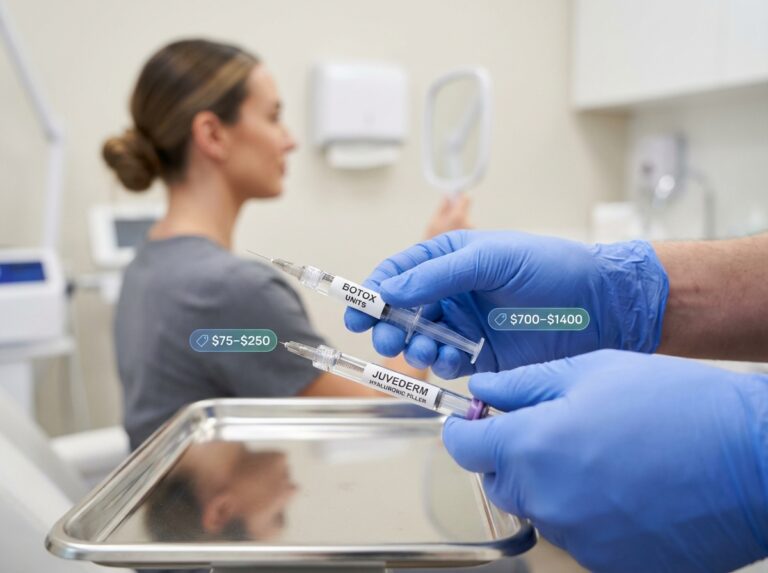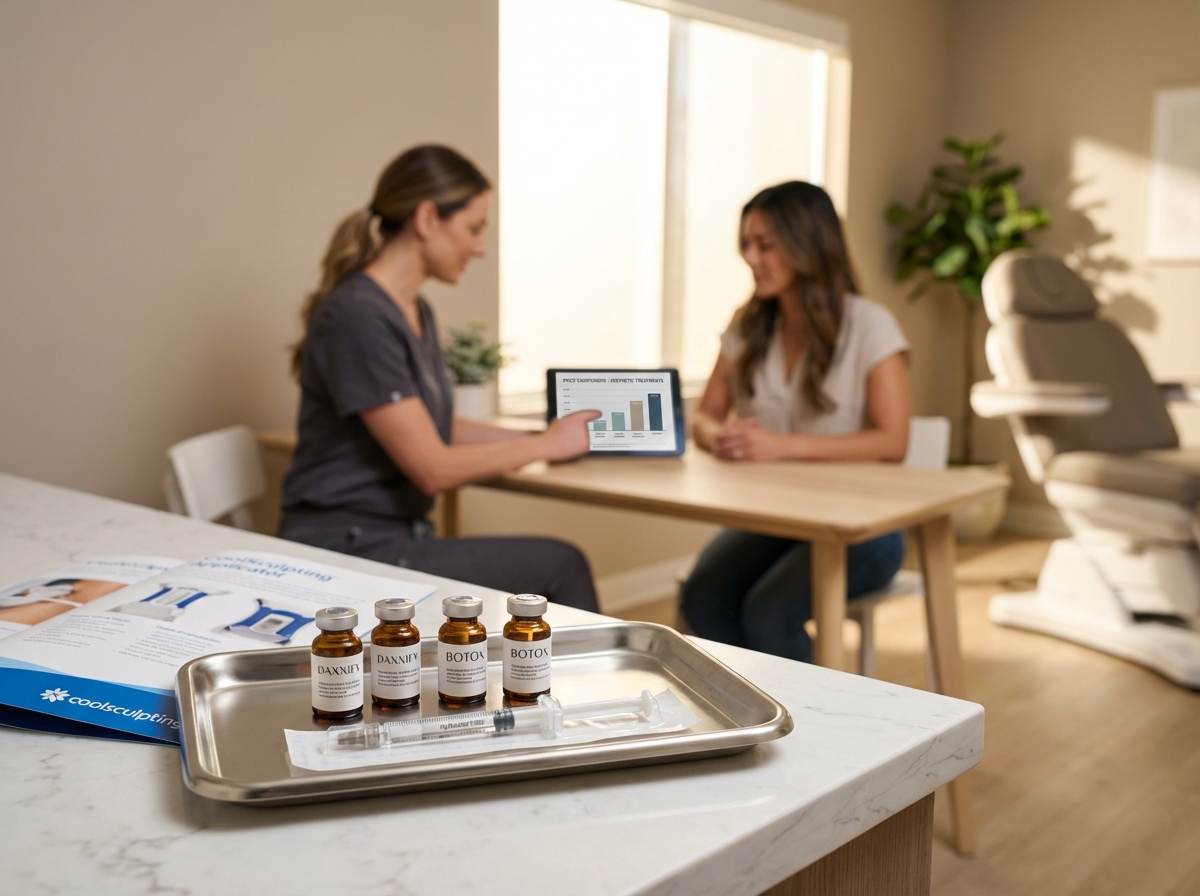
Daxxify launched as a longer-lasting neuromodulator, promising fewer visits but a higher price tag. This guide walks U.S. patients through typical clinic pricing for Daxxify vs. Botox and other non-surgical options like fillers and CoolSculpting, explains how clinics set prices, and shows practical cost comparisons so you can decide whether longer duration justifies the higher cost.
What Daxxify Is and How It Differs from Other Neuromodulators
Daxxify arrived on the aesthetic scene with a singular, powerful promise: longer-lasting results. For anyone tired of scheduling neuromodulator appointments every three to four months, this was a significant development. But to understand if its higher price tag is justified, you first need to grasp what makes it different from predecessors like Botox, Dysport, and Jeuveau.
At its core, Daxxify uses the same active ingredient as the others: botulinum toxin type A. This is the purified protein that temporarily relaxes the muscles responsible for forming dynamic wrinkles, like the “eleven” lines between your brows. The real innovation lies in its formulation. While other neuromodulators use human serum albumin (a blood protein) or other complexing proteins to stabilize the toxin molecule, Daxxify uses a novel peptide technology. This peptide acts as a stabilizer, helping the botulinum toxin bind more effectively to the nerve receptors. In practical terms, this unique bond is the reason for its extended duration. It is also formulated without any human or animal byproducts.
As of late 2025, Daxxify holds FDA approval specifically for treating moderate to severe glabellar lines, the vertical frown lines between the eyebrows. It was first approved for this indication in September 2022. The clinical trials supporting this approval provided the data that sets Daxxify apart. The most compelling finding was its longevity. The median duration of effect was shown to be six months, with some patients in the studies maintaining results for as long as nine months. This is a substantial leap from the typical three-to-four-month duration seen with Botox and other competitors.
In terms of performance, Daxxify also has a relatively quick onset. Most patients begin to see results within two days, which is comparable to Dysport and slightly faster than the four to seven days often reported for Botox. Its safety profile is consistent with other neuromodulators on the market. The most common side effects reported in clinical trials were:
- Headache (reported by 6% of patients)
- Eyelid ptosis or drooping (reported by 2% of patients)
- Facial paresis or asymmetry (reported by 1% of patients)
These side effects are generally mild and temporary, resolving on their own.
One of the most critical things to understand when comparing prices is that dosing units are not interchangeable across different neuromodulator brands. A “unit” of Daxxify is not the same as a “unit” of Botox. Each manufacturer defines its unit based on its own potency testing. This is why a direct per-unit price comparison can be misleading. For example, the FDA-approved dose for treating frown lines is 40 units of Daxxify, whereas a typical treatment with Botox for the same area might use only 20 units. Even if a clinic prices both products at $15 per unit, the total treatment cost would be significantly higher for Daxxify ($600) compared to Botox ($300) due to the required dosage. You must always compare the total cost for the treatment area, not just the price per unit. You can learn more about how clinics price Daxxify versus Botox in this Daxxify vs Botox cost comparison.
So, who is the ideal candidate for Daxxify? The longer duration naturally appeals to several groups. It’s an excellent option for busy professionals, parents, or anyone who finds it difficult to schedule appointments three or four times a year. The convenience of just two treatments annually is a major draw. It’s also a strong choice for patients who feel they “burn through” other neuromodulators quickly and find their results fading closer to the three-month mark. By opting for Daxxify, they can achieve a more consistent, longer-lasting result. Finally, some people simply prefer the peace of mind that comes with fewer injections and clinic visits throughout the year, making the higher upfront cost a worthwhile investment for their lifestyle.
Typical U.S. Price Ranges and Clinic Pricing Models
Navigating the world of aesthetic pricing can feel like trying to read a map without a legend. Prices aren’t just numbers on a menu; they reflect a complex mix of product costs, provider expertise, and business models. Before you can decide if Daxxify’s longer duration is worth the investment, you need to understand the landscape of how clinics price their services. Based on aggregated data from U.S. clinics through 2025, here is a breakdown of what you can expect to pay and how to interpret those costs.
Typical U.S. Price Ranges (Late 2025)
Prices for non-surgical treatments vary significantly, but most fall within predictable ranges.
- Neuromodulators: This is where you’ll find Daxxify, Botox, Dysport, and Xeomin. Pricing is almost always per unit.
- Daxxify: Expect to pay between $15 and $20 per unit. For a standard treatment of frown lines (glabella), which the FDA recommends treating with 40 units, the total cost per session typically lands between $600 and $800.
- Botox & Xeomin: These are generally priced lower per unit, from $12 to $16. A similar frown line treatment might only require 20 units, putting a typical session in the $240 to $320 range, though many clinics quote a total treatment cost of $300 to $600 for the area.
- Dysport: The price per unit is much lower, around $4 to $8, but you need about 2.5 times more units than Botox for a similar result, so the final treatment cost is often comparable.
- Hyaluronic Acid (HA) Fillers: Products like Juvéderm and Restylane are sold by the syringe. A single syringe typically costs between $750 and $1,200, depending on the specific product in the brand’s family and the area being treated.
- CoolSculpting: This is priced per cycle or applicator. A single cycle usually costs $600 to $800. Most people need multiple cycles to treat an area effectively, so clinics almost always offer package deals that reduce the per-cycle cost.
- Laser and Skin Treatments: This category has the widest price variation. A single session of a light treatment like IPL (Intense Pulsed Light) might be $300 to $600, while a more intensive fractional laser resurfacing treatment for the full face could cost $1,500 to $3,000 or more.
Decoding Clinic Pricing Models
Clinics use several different methods to present their prices, and knowing the difference is key to comparing apples to apples.
- Per Unit: The most transparent model for neuromodulators. You pay for the exact amount of product used. This is the industry standard for Botox and Daxxify.
- Per Area: Some clinics simplify things by charging a flat fee for a specific area, like “crow’s feet” or “forehead lines.” This can be easier for new patients to understand but may not be the best value if you need fewer units than the average person.
- Per Syringe: The universal standard for dermal fillers. The price is for one full syringe of product.
- Per Cycle / Flat Fee: Used for device-based treatments like CoolSculpting (per cycle) or a HydraFacial (flat fee per treatment).
- Membership Plans: A growing trend where you pay a monthly fee that accrues as credit toward treatments. Members often get preferential pricing on services and products, like a lower per-unit cost on Botox.
- Promotional Discounts & Packages: Clinics frequently offer bundles, such as treating three areas with a neuromodulator for a set price or buying a package of three laser sessions at a discount. These can offer significant savings if you’re committed to the treatment plan.
Factors That Influence the Final Cost
You might see two clinics in the same city offering Botox for wildly different prices. Here’s why.
- Geography: A clinic on Park Avenue in Manhattan will have much higher rent and overhead than one in a suburban or rural area. Expect to pay a premium in major metropolitan centers.
- Provider Experience: You are paying for skill, not just product. A board-certified dermatologist or plastic surgeon with a decade of injecting experience will command a higher price than a newly trained registered nurse at a medspa. This premium reflects their advanced anatomical knowledge and ability to manage potential complications.
- Clinic Overhead: The cost of high-end laser equipment, a beautifully designed office, and a large support staff all get factored into treatment prices.
How to Compare Quotes and Avoid Surprises
When you get a price quote, the number itself is only part of the story. To make an informed decision, you need to ask the right questions.
- What brand of product are you using? This is especially important for fillers, where different products have different properties and costs.
- How many units/syringes do you estimate I will need for my desired result? This helps you calculate the total session cost.
- What is the total estimated price for this treatment plan? Get a single, all-in number.
- Does this price include a follow-up appointment? Some clinics include a two-week follow-up to assess results and provide free or low-cost touch-ups if needed. Others charge for any additional product.
By understanding these pricing structures and variables, you can move beyond the sticker price and evaluate the true value of a treatment, setting you up perfectly to compare the long-term costs of options like Daxxify and Botox.
Cost Versus Duration Practical Comparison and When Daxxify Makes Sense
The higher price tag on a Daxxify treatment can be intimidating at first. But to truly understand the value, you need to shift your thinking from cost-per-session to cost-per-month. A treatment that costs 30-40% more upfront but lasts nearly twice as long can result in significant savings over a year. The key is to run the numbers for your specific situation.
Let’s break down the math with a few common scenarios based on typical late 2025 U.S. clinic pricing for treating frown lines. We’ll use a conservative 3.5-month duration for Botox and a 6-month median duration for Daxxify, as established in clinical trials.
Scenario 1: Conservative Clinic Pricing
This might reflect pricing in a smaller city or a clinic running a promotion.
| Treatment | Cost Per Session | Median Duration | Treatments Per Year | Cost Per Month | Total Annual Cost |
| Botox | $350 | 3.5 months | ~3.4 | $100 | $1,190 |
| Daxxify | $500 | 6 months | 2 | ~$83 | $1,000 |
In this scenario, Daxxify saves you nearly $200 per year.
Scenario 2: Mid-Range Clinic Pricing
This is a common price point you might find in many suburban or metropolitan areas.
| Treatment | Cost Per Session | Median Duration | Treatments Per Year | Cost Per Month | Total Annual Cost |
| Botox | $450 | 3.5 months | ~3.4 | ~$129 | $1,530 |
| Daxxify | $600 | 6 months | 2 | $100 | $1,200 |
Here, the annual savings with Daxxify jump to over $300. This is a common break-even point where the value becomes very clear.
Scenario 3: Premium Clinic Pricing
This reflects pricing with a highly sought-after injector in a major city like New York or Los Angeles.
| Treatment | Cost Per Session | Median Duration | Treatments Per Year | Cost Per Month | Total Annual Cost |
| Botox | $600 | 3.5 months | ~3.4 | ~$171 | $2,040 |
| Daxxify | $800 | 6 months | 2 | ~$133 | $1,600 |
At the premium level, the savings are even more pronounced, exceeding $400 annually.
The financial break-even point is simple. If your Daxxify treatment lasts at least 50% longer than your Botox treatment, and the cost is less than 50% higher, you are saving money. But your budget is just one part of the equation. The best choice also depends on your lifestyle, preferences, and priorities.
Beyond the Numbers: Non-Financial Trade-Offs
Consider the hidden value in these factors:
- Fewer Appointments. For many, this is the biggest selling point. Two trips to the clinic per year versus three, four, or even five means less disruption to your life.
- Time and Travel Savings. Every appointment involves more than just the injection. It’s time off work, traffic, parking or transit costs, and time spent in the waiting room. These costs add up. Cutting your appointments in half can save you hours of time and real money each year.
- Continuity of Results. With a 6-month duration, you spend less time in the “wear-off” phase where wrinkles start to reappear before your next appointment. This provides a more consistent, smooth appearance year-round.
- Risk and Preference. Are you comfortable with a result that lasts six months or longer? If you’re new to neuromodulators, a shorter-acting option like Botox might feel safer. Conversely, if you love your results and wish they lasted longer, Daxxify is a perfect fit. Some people also enjoy the flexibility of tweaking their look every few months, making a shorter duration preferable.
When Paying More Upfront for Daxxify Makes Sense
Daxxify is likely a great choice for you if:
- You have a demanding career or busy family life and value minimizing appointments.
- You travel a long distance to see your preferred injector, making each trip a significant investment of time and money.
- You have a fear of needles (trypanophobia) and want to reduce the frequency of injections.
- You are an experienced neuromodulator user, you know the results you like, and you want them to last as long as possible.
- You prioritize a consistently smooth appearance without the “on-and-off” effect of treatments wearing off more often.
When a Shorter-Acting Neuromodulator Might Be Better
Sticking with a product like Botox could be the right move if:
- You are on a strict budget where the lower upfront cost of each session is the most important factor.
- You are new to neuromodulators and want to “test drive” the effects without a long-term commitment.
- You enjoy the process of checking in with your injector every few months to make small adjustments.
- Your body metabolizes neuromodulators very slowly, and you already get 4 to 5 months of results from Botox, which narrows the value gap significantly.
Your Personal Cost Comparison Checklist
Before you book, run your own numbers with this simple checklist.
- Get a Quote. Ask your provider for the total cost per session for both Daxxify and Botox to treat your desired areas.
- Review Your History. How many months do your Botox results realistically last? Be honest with yourself. Is it truly three months, or closer to four?
- Do the Math. Use this formula for each option: (Cost Per Session) ÷ (Months of Duration) = Cost Per Month.
- Calculate Annual Cost. For each option: (Cost Per Session) x (Number of Treatments Per Year) = Total Annual Cost.
- Factor in Your Time. Assign a dollar value to your time. How much is an afternoon off work or the travel time worth? Multiply that by the extra appointments Botox requires per year and add it to its total annual cost.
- Consider Your Comfort. Are fewer injections per year a major emotional or psychological plus for you? This non-financial benefit can easily be the deciding factor.
Frequently Asked Questions Common Patient Concerns Answered
Navigating the world of aesthetic treatments can feel overwhelming, especially with new options like Daxxify joining established names like Botox. After breaking down the cost-versus-duration math, you probably have more specific questions about the practical side of things. Here are answers to some of the most common concerns patients have when choosing a treatment.
How many units of Daxxify or Botox will I need?
This is one of the most personal aspects of treatment; there’s no universal answer. The exact number of units depends on the area being treated, the strength of your facial muscles, and your aesthetic goals. A skilled injector will perform a facial assessment and customize the dosage just for you.
- Action Step: During your consultation, ask the provider to create a “facial map” that details the exact number of units they recommend for each injection site.
- Action Step: Before agreeing to the procedure, request a written quote that clearly states the total number of units and the final price. Be cautious if a provider suggests a standard number of units without a personalized assessment.
Can units be compared across brands?
Absolutely not. This is a critical point of confusion for many patients. The “unit” measurement is specific to each neuromodulator’s unique formulation and potency. One unit of Botox does not equal one unit of Daxxify or Dysport. Comparing them directly is misleading and can result in improper dosing and unexpected costs. Focus on the total price per treatment session for your desired outcome, not just the price per unit.
- Action Step: Always frame your questions around the specific product. Ask, “For my goals, how many units of Daxxify will I need, and what will the total cost be?”
- Action Step: If you are switching from one brand to another, confirm your injector has extensive experience with both and ask them to explain the new dosing strategy.
Is Daxxify safer than Botox?
Both Daxxify and Botox have been rigorously tested and are FDA-approved, establishing them as safe and effective when administered by a qualified medical professional. Their safety profiles are very similar. The primary difference lies in their formulation; Daxxify is stabilized with a novel peptide technology, whereas Botox uses human serum albumin. Common side effects for both are mild and temporary, including potential bruising, swelling at the injection site, or a headache.
- Action Step: Be transparent about your complete medical history, including any neurological conditions or allergies, during your consultation.
- Action Step: Ask your injector about their specific experience with Daxxify. Given it’s a newer product on the market, you want someone confident in its use.
- Action Step: Carefully read the consent form, which outlines all potential risks. Revance Therapeutics, the maker of Daxxify, provides comprehensive patient safety information on its website.
What is the downtime?
For injectable neuromodulators, there is virtually no downtime. Most patients resume their normal activities, including work, immediately after their appointment. You may notice small, red bumps at the injection sites, but these typically fade within an hour. Minor swelling or bruising can occur, but it’s usually minimal and can be covered with makeup. Following your provider’s aftercare instructions is key to minimizing these effects.
- Action Step: Ask your provider for a list of medications and supplements to avoid before treatment, such as aspirin, ibuprofen, fish oil, and vitamin E, which can increase the risk of bruising.
- Action Step: Plan your treatment at least two weeks before any important social events to ensure any potential bruising has time to resolve completely.
What happens if I don’t like the results?
This is a crucial consideration, especially with a longer-lasting product like Daxxify. Unlike hyaluronic acid fillers, neuromodulator effects cannot be reversed. The product must be metabolized by your body over time. If you receive too much product or the placement isn’t quite right, you have to wait for it to wear off. With Botox, that’s typically 3 to 4 months. With Daxxify, it could be 6 months or more. Minor issues, like slight asymmetry, can sometimes be corrected with a few additional units at a follow-up appointment.
- Action Step: If you are new to neuromodulators or trying Daxxify for the first time, ask for a more conservative treatment. It’s always easier to add more at your two-week follow-up than to correct an over-treatment.
- Action Step: Before your injection, ask, “What is your policy if a corrective touch-up is needed?” and clarify if there is a cost associated with it.
Are repeat treatments covered or discounted?
Cosmetic procedures are not covered by health insurance. However, many aesthetic clinics value their loyal patients and offer ways to make ongoing treatments more affordable. Look for membership programs that provide a set discount on all treatments or package deals where you can purchase a year’s worth of treatments upfront at a reduced rate. Manufacturers also offer rewards programs you can join.
- Action Step: Ask the clinic’s patient coordinator if they offer loyalty programs, memberships, or package pricing for repeat Daxxify or Botox patients.
- Action Step: Inquire about manufacturer-sponsored rewards programs like Alle (for Botox) or the future program for Daxxify and have the clinic staff help you sign up.
Can Daxxify be combined with fillers or CoolSculpting?
Yes, combining different modalities is a cornerstone of modern non-surgical aesthetics. Daxxify is excellent for treating dynamic wrinkles caused by muscle movement. Dermal fillers are used to restore lost volume, fill in static wrinkles, and enhance facial contours. Body contouring treatments like CoolSculpting address stubborn fat. Using them together in a comprehensive treatment plan can deliver powerful, synergistic results.
- Action Step: Discuss all of your aesthetic concerns during the consultation, not just your wrinkles. This helps the provider develop a holistic treatment plan.
- Action Step: Ask about the recommended timing. Some treatments can be done on the same day, while others may need to be spaced a few weeks apart for optimal safety and results.
How to verify clinic credentials?
The person holding the syringe is far more important than the product in it. Injections should be performed by a board-certified physician (dermatologist or plastic surgeon) or a highly trained nurse practitioner (NP), physician assistant (PA), or registered nurse (RN) under the supervision of a medical doctor. Their credentials should be easy to find.
- Action Step: Check the clinic’s website for an “Our Team” page that lists each provider’s credentials, education, and licenses.
- Action Step: Use your state’s medical board website to verify a provider’s license and check for any disciplinary history.
- Action Step: Don’t be shy. Ask directly in your consultation: “What are your qualifications, and how many years have you been performing cosmetic injections?”
How to avoid being upsold and how to spot suspiciously low prices?
A trustworthy consultation is an educational dialogue, not a high-pressure sales pitch. If you feel pushed to add treatments or purchase more units than you’re comfortable with, that’s a major red flag. Conversely, prices that seem too good to be true usually are. Rock-bottom prices can indicate a diluted or counterfeit product, or an inexperienced provider trying to build a client base. Authentic products from Revance or Allergan have a fixed cost for clinics.
- Action Step: If a price is advertised well below the market average (e.g., under $10/unit for Botox), ask the clinic how they can offer that price. Ask to see the vial before the product is drawn.
- Action Step: To avoid being upsold, state your primary goal and budget upfront. A simple, “Today, I want to focus only on my frown lines and stay within this budget,” is a perfectly acceptable boundary to set.
Final Recommendations How to Compare Clinics and Avoid Overpaying
Navigating the world of aesthetic treatments can feel overwhelming, but making a confident decision comes down to a few key principles. It’s about looking past the initial price per session and focusing on the total value, which includes the injector’s skill, the product’s performance, and your long-term satisfaction. To ensure you get the best results without overpaying, use this guide to compare clinics and finalize your choice.
Here is a prioritized checklist to follow before you book any neuromodulator treatment:
- Verify Product Brand and Dosing. Always ask specifically which product will be used, whether it’s Daxxify, Botox, Dysport, or another brand. Request to see the vial before it’s prepared. Crucially, ask for the exact number of units you will receive and have it noted in your chart. Remember, units are not interchangeable across brands; 40 units of Daxxify is not the same as 40 units of Botox.
- Ask for the Total Price and What’s Included. Get a written quote that details the full cost of the session. Ask if this price includes any necessary follow-up appointments or touch-ups. This prevents unexpected charges later.
- Confirm Injector Credentials. Your results and safety depend almost entirely on the provider. Ask about their qualifications. Are they a board-certified dermatologist, plastic surgeon, or a registered nurse or physician assistant working under direct medical supervision? How many years have they been injecting neuromodulators? An experienced injector costs more for a reason.
- See Before and After Photos. Request to see a portfolio of the injector’s own work with patients who have similar facial structures and concerns. Be wary of clinics that only show stock images provided by the manufacturer.
- Request a Written Plan for Follow-Up. A professional clinic will have a clear policy on touch-ups. Ask what happens if the results are asymmetrical or if a small adjustment is needed. Is there a timeframe for free or discounted touch-ups? Get this policy in writing.
- Compare Cost Per Month, Not Just Per Session. This is where the Daxxify versus Botox debate becomes clear. A $600 Daxxify treatment that lasts six months costs you $100 per month. A $400 Botox treatment that lasts three months costs about $133 per month. Calculating the monthly cost reveals the true long-term value and can show that a higher upfront price may actually save you money annually.
- Read Reviews and Check for Complaints. Look beyond the testimonials on the clinic’s website. Check independent review sites and the Better Business Bureau. You can also check your state’s medical board website for any public complaints or disciplinary actions against the provider.
- Confirm Safety Protocols. The clinic should be clean, professional, and equipped to handle any adverse reactions. Ask about their safety procedures and what measures are in place for emergencies.
- Avoid Bargain Offers. Extremely low prices are a major red flag. They often indicate an inexperienced injector, a diluted product, or even a counterfeit substance. Quality, safety, and expertise have a price. Sacrificing them for a deal is never worth the risk.
The only way to get a truly accurate price is to schedule a consultation. During this meeting, an injector will assess your muscle movement, discuss your goals, and recommend a specific product and dosage. This is your opportunity to use the checklist above and get a personalized treatment plan and quote.
Your next steps should be to identify two or three reputable clinics in your area and book consultations. Compare their assessments, pricing, and your overall comfort level with the provider. For more detailed cost comparisons and product information, you can explore resources like the GoodRx Daxxify pricing guide or in-depth treatment comparisons like this one on Daxxify vs. Botox. By doing your homework, you can invest confidently in a treatment that aligns with your aesthetic goals and financial plans.
Sources
- Daxxify 2025 Prices, Coupons & Savings Tips – GoodRx — Compare prices and print coupons for Daxxify and other drugs at CVS, Walgreens, and other pharmacies. Prices start at $424.32.
- Cost Comparison Botox, Daxxify, Juveau, Dysport, Xeomin & Letybo — Discover the best neuromodulator for your medspa in 2025. Compare Botox, Daxxify, Juveau, Xeomin, and the newly FDA-approved Letybo.
- Does Daxxify cost more than Botox? Comparing Cost Per Unit — Daxxify costs $12 per unit, and the price of Daxi is set by the manufacturer. It's important to note that pricing will not significantly vary between qualified …
- Daxxify vs Botox for Frown Lines: Complete 2025 Treatment … — For frown lines, average Botox treatments range from $300-600, while Daxxify sessions may cost $400-800. These prices reflect the product cost differences and …
- The Truth About Daxxify vs Botox: Results, Costs & Duration — Daxxify's price tag looks higher at first, but you should look at the yearly costs. Since you'll need only two Daxxify treatments compared to Botox's three …
- Botox vs. Dysport vs. Daxxify: Which Wrinkle Relaxer Is Right for You? — The differences in cost and treatment frequency can affect your overall plan. … While Daxxify may have a higher upfront cost, its longer-lasting …
- Daxxify vs Botox for Dynamic Wrinkles: 2025 Treatment Comparison … — Daxxify vs Botox for Dynamic Wrinkles: 2025 Treatment Comparison & Cost Guide … USA. Get Directions. Office Hours. Monday – Thursday: 9AM …
- Daxxify cost — One 2023 article notes Daxxify cost per unit in Orlando at roughly $15-20 per unit, compared to Botox at $10-16 per unit.
- Daxxify vs Botox A Complete Treatment Comparison — Explore our Daxxify vs Botox comparison on duration, cost, and results. Understand the science and find out which injectable is the right …
“`html
Legal Disclaimers & Brand Notices
This content is for informational purposes only and does not constitute medical advice. The information provided is not intended to be a substitute for professional medical advice, diagnosis, or treatment. Always seek the advice of your physician or other qualified health provider with any questions you may have regarding a medical condition.
All product names, logos, and brands are property of their respective owners. Botox®, Dysport®, Juvéderm®, Restylane®, CoolSculpting®, and HydraFacial® are registered trademarks of their respective owners. The use of these names, logos, and brands does not imply endorsement.
“`