Many Americans are tempted by steep discounts on Botox, fillers, and CoolSculpting through daily-deal sites, but cheap aesthetic offers can hide safety and quality trade-offs. This article explores how clinics set prices, typical US price ranges for common non-surgical treatments, risks tied to discount deals, and practical steps to compare clinics and make informed choices.
How Aesthetic Clinic Pricing Works
That Groupon email lands in your inbox with a subject line you can’t ignore. 20 Units of Botox for $159! It seems like an incredible bargain, especially after learning what clinics typically charge. The temptation to click “Buy Now” is real. But when it comes to injecting a powerful neurotoxin into your face, a deal that looks too good to be true almost always is. The price tag is low because corners are being cut somewhere, and you need to know where before you let anyone near you with a needle.
The most alarming risk involves the product itself. In early 2024, the FDA issued urgent warnings after dozens of people across multiple states suffered botulism-like symptoms from counterfeit Botox injections. These incidents, reported in publications like Women’s Health, involved products administered in non-medical settings by unlicensed individuals. An authentic, FDA-approved product like Botox requires a strict, refrigerated supply chain. Black-market or counterfeit products, which are often the only way to support rock-bottom prices, have no such guarantees. They could be expired, improperly stored, or chemically distinct from the genuine article. Another common cost-cutting tactic is hyper-dilution. A provider might mix the vial of Botox with far more saline than recommended, essentially watering it down. You’re still getting injected, but with a product so weak it won’t deliver the desired results or will wear off in a few weeks instead of months. You end up paying for a treatment that doesn’t work, which isn’t a bargain at all.
Just as important as what’s in the syringe is who is holding it. Your results and safety depend entirely on the skill, training, and anatomical knowledge of your injector. Experienced, reputable injectors, particularly board-certified dermatologists and plastic surgeons, build their client base through word-of-mouth and consistent, beautiful results. They rarely need to advertise on daily deal sites. Deeply discounted offers are often used by newly opened medspas, clinics trying to fill empty appointment slots, or, most concerningly, as a way for inexperienced injectors to practice and build a portfolio. An injector without a deep understanding of facial musculature can easily cause undesirable side effects like a drooping eyelid (ptosis), a “Spock” brow, or an asymmetrical smile. While often temporary, these are results you certainly didn’t pay for. In the hands of a novice, the risk of more serious complications like vascular occlusion with fillers also increases dramatically.
Finally, the entire patient experience is often compromised. A proper aesthetic treatment begins with a thorough consultation to discuss your goals, evaluate your anatomy, and review your medical history. Many discount vouchers skip this essential step. The business model relies on high volume and speed, not personalized care. The goal is often to get you in the door for the cheap Botox and then upsell you on more units or other, more expensive treatments. The fine print on these deals frequently excludes any follow-up appointments or touch-ups, which are standard at most reputable clinics. If you have an issue or an asymmetrical result, you’re on your own. The clinic has already been paid by the voucher company and has little incentive to provide the aftercare you need.
Before you’re swayed by a low price, you must learn to spot the red flags. Be extremely cautious if you see any of the following.
- Unrealistically Low Prices. As of late 2025, any price under $9 per unit for genuine Botox administered by a qualified professional is a major warning sign. The clinic simply cannot cover its costs at that price without cutting a corner somewhere.
- Vague Offer Details. The deal should clearly state the brand (Botox, Dysport, Xeomin, etc.), the exact number of units, and the credentials of the person performing the injection. If the provider’s name isn’t listed, you can’t research their license or reviews.
- No Consultation Required. A mandatory medical consultation is a sign of a safe, professional practice. Skipping it is a huge red flag.
- High-Pressure Upselling. If you feel pressured to buy more units, add fillers, or purchase a package the moment you walk in, the initial offer was likely just bait.
- Exclusion of Follow-Up Care. The price should include a follow-up appointment two weeks after the injection to assess results and make any necessary adjustments. Deals that exclude this are incomplete.
The allure of saving money is powerful, but your health and appearance are not areas where you should bargain hunt. The potential costs of fixing a bad result or dealing with a medical complication will always be far higher than the price of paying for a qualified, experienced injector from the start.
Why Groupon and Discount Deals Look Attractive
The allure of a great deal is powerful, especially for a treatment that requires regular upkeep. When you see an offer for Botox on Groupon or a similar discount site for 50% off the typical price, it’s easy to feel like you’ve discovered a smart way to save money. But it’s crucial to understand the business dynamics behind these deals. Clinics don’t offer steep discounts out of generosity; they do it for specific, calculated business reasons, and those reasons can sometimes introduce risks for you, the patient.
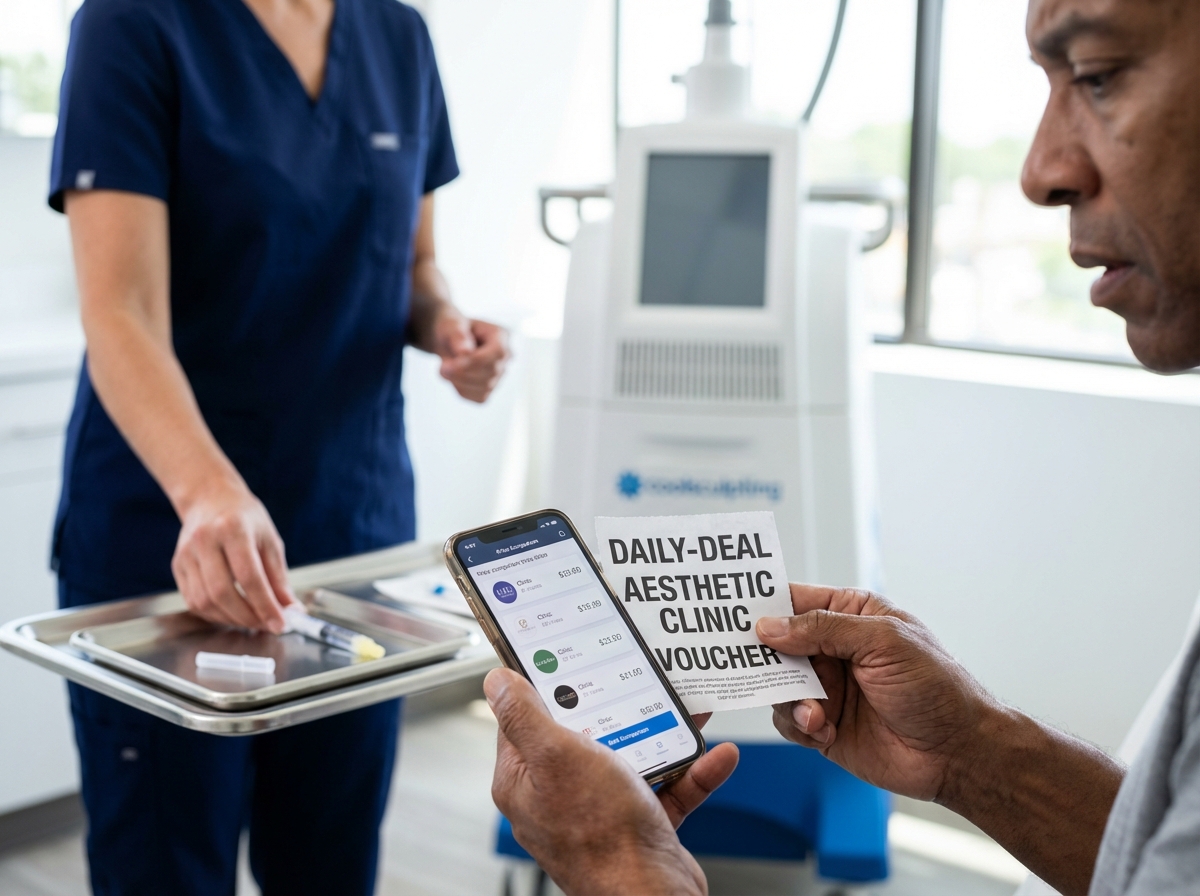
One of the most common strategies is using Botox as a loss leader. The clinic might break even or even lose a little money on your initial Botox voucher, but their goal is to get you in the door. Once you’re in the chair, the conversation often shifts. The injector might suggest that the 20 units in your voucher aren’t quite enough for the desired result, encouraging you to buy more at the full price. Or they might pivot to up-selling more profitable services, like dermal fillers, laser treatments, or expensive skincare products. The cheap Botox is the bait; the real profit comes from the add-ons. Industry data has shown that a high percentage of daily-deal customers, sometimes cited as over 80%, never return to pay full price, so the pressure to up-sell during that first visit is intense.
Another reason is simply to fill empty appointment slots. A new med spa needs to build a client base quickly, and a flash sale can generate a sudden influx of bookings. Established clinics might use deals to fill unpopular times, like weekday mornings, that would otherwise go unused. While this isn’t inherently risky, it can create a high-volume, low-margin environment. The clinic’s focus may shift from personalized care to getting as many voucher-holders through the door as possible to make up for the thin profit margins. Remember, platforms like Groupon take a significant cut of the voucher price, sometimes up to 50%. So, if you pay $199 for a deal, the clinic might only see $100, from which they still have to cover the cost of the authentic Botox, the injector’s time, and all other overhead. This financial squeeze is often where the trouble starts.
This pressure on profit margins can lead to serious ethical and legal compromises. To cut costs, a clinic might hire a less experienced injector, like a newly certified nurse or someone still in training, who is paid a lower wage. While everyone has to start somewhere, you may not want your face to be their practice ground. Some deals are explicitly for trainee clinics, where procedures are performed by students under supervision; if this isn’t clearly disclosed, you are taking on a risk you didn’t agree to. Furthermore, state laws, known as scope-of-practice rules, dictate who can legally perform injections and what level of supervision is required. In some states, a registered nurse can inject, but a physician must be on-site. A discount clinic might cut corners by not having the required medical director present, leaving the injector without immediate backup if a complication arises. Additionally, be wary of vouchers limited to certain providers, such as a “junior injector,” as this confirms the discount is a tool to build clientele for less experienced staff.
Clinics advertise on daily-deal sites because it’s a powerful marketing tool for rapid customer acquisition. For a new practice or one trying to fill its schedule, the volume can seem worth the risk. However, as a patient, you must weigh the perceived savings against the very real hidden risks. The cost of fixing a botched injection from an inexperienced provider or a counterfeit product will always be far greater than the money saved on a questionable deal.
Hidden Risks of Cheap Botox and How to Protect Yourself
While a steep discount on Botox or fillers can feel like a smart find, that low price tag often hides significant clinical and practical risks. When a clinic cuts costs, it’s rarely their profit margin that takes the biggest hit. Instead, the compromise is often made in areas that directly affect your safety and results, turning a bargain into a potential long-term liability. The truth is, that deal might be cheap for a reason, and it’s crucial to understand what corners could be cut.
The most immediate danger lies with the product itself. Reputable clinics purchase authentic Botox, Dysport, or Xeomin directly from the manufacturer or an authorized distributor, which guarantees its quality and proper handling. Deeply discounted providers, however, may be sourcing their products from unauthorized channels to save money. This introduces the risk of using counterfeit, diluted, or expired products. The FDA has repeatedly issued warnings about unapproved botulinum toxin products sold online, which have been linked to serious adverse events, including hospitalizations from botulism-like symptoms. An injector might also over-dilute the product, meaning you receive fewer active units than you paid for, leading to weak results that fade quickly.
Beyond the product, the injector’s skill is the single most important factor for a safe outcome. Medical aesthetics is a delicate blend of art and science that requires a deep understanding of facial anatomy. An inexperienced or poorly trained injector can make critical errors. Incorrect injection technique can lead to common but distressing complications like facial asymmetry, a crooked smile, or ptosis (drooping) of an eyelid or eyebrow. If the neurotoxin diffuses improperly, it can affect unintended muscles. With dermal fillers, the risks are even more severe. A misplaced injection can lead to vascular occlusion, where filler blocks a blood vessel, potentially causing tissue death (necrosis) if not identified and treated immediately.
This is why an injector’s credentials matter so much.
- Board-Certified Dermatologists and Plastic Surgeons have years of rigorous medical training focused on skin and facial anatomy. They are best equipped to prevent, identify, and manage complications.
- Nurse Practitioners (NPs) and Registered Nurses (RNs) can be excellent injectors, but their skill is highly dependent on their specific training and experience in aesthetics. Crucially, they should be working under the direct supervision of a physician in a medical setting.
- Trainees or newly certified injectors are often found at clinics offering the steepest discounts. While everyone has to start somewhere, you should know if you are being treated by someone with limited hands-on experience.
After a procedure, some minor bruising, swelling, or redness is normal. Your provider should give you clear aftercare instructions. However, certain symptoms demand urgent medical attention. For fillers, this includes severe pain, skin that looks pale or blotchy, or changes in vision. For neurotoxins, any difficulty breathing, swallowing, or speaking requires an immediate trip to the emergency room. A reputable clinic will have clear protocols for managing emergencies and will be available for follow-up questions. A discount provider might not.
The initial savings from a cheap deal can be quickly erased by the cost of fixing a bad result. Corrective procedures, additional treatments, and lost time from work can add up to far more than you would have paid at a reputable clinic in the first place.
To protect yourself, you must become an active, informed patient. Before you book any discounted treatment, take these steps:
- Verify Credentials. Ask for the full name and license number of the person performing the injection. Check their status on your state’s medical board website.
- Confirm the Product. Ask what brand of neurotoxin or filler will be used. A legitimate clinic will be transparent and should be able to show you the sealed, original packaging. Ask about their policy for documenting the product’s lot number in your chart.
- Ask About Experience. Inquire how many times the injector has performed the specific procedure you want. Ask to see recent, undoctored before-and-after photos of their own patients, not stock images from a manufacturer.
- Get an Itemized Quote. Request a written quote that details the number of units (for Botox) or syringes (for fillers) you will receive for the price.
- Insist on a Consultation. Never pay for a medical procedure online without a prior in-person consultation. This is a critical step for a provider to assess your anatomy, discuss your goals, and review your medical history.
- Clarify Emergency and Follow-Up Policies. Understand the clinic’s policy for follow-up appointments and managing complications. Are touch-ups included? What are the costs if a complication arises?
- Avoid Full Prepayment Online. Be wary of deals that require you to pay for the entire treatment upfront before you’ve even met the provider or had a medical assessment.
Ultimately, choosing an injector is a medical decision, not just a shopping one. Weigh the perceived savings against the potential for long-term physical and financial costs. Your face and health are worth more than a bargain.
Frequently Asked Questions
Navigating the world of discounted aesthetic treatments can feel like a minefield. You want a good deal, but you also want safe, beautiful results. Here are answers to the most common questions people have when they see a tempting offer online.
Are Groupon Botox treatments safe?
The safety of a treatment depends entirely on the provider, not the platform where you find the deal. While legitimate clinics sometimes use platforms like Groupon to fill empty appointment slots or attract new clients, extremely low prices can be a red flag. These deals are sometimes offered by less experienced injectors or clinics that may cut corners by using diluted or even counterfeit products. The FDA has issued warnings about unapproved botulinum toxin products sold by unauthorized sources, which have been linked to serious adverse events. The risk isn’t Groupon itself, but the possibility that a “too good to be true” deal is a sign of a compromised practice.
Action Step: Vet the specific clinic and injector offering the deal, not the deal platform itself.
What should I ask before I buy a discounted treatment?
A thorough consultation is non-negotiable, even for a discounted service. Before committing, you need to ask several key questions to protect yourself. Inquire about the injector’s full name, license number, and specific experience with the procedure you want. Ask for the exact brand name of the product being used (e.g., Botox, Dysport, Juvéderm) and whether you can see the vial. You should also get a clear, itemized quote detailing the number of units or syringes included in the price and confirm the clinic’s policy on follow-up appointments and managing potential complications.
Action Step: Create a checklist of questions and get clear answers before providing any payment.
How do I compare per-unit Botox pricing versus per-area pricing?
Per-unit pricing is the most transparent method. You pay for the exact amount of product used. For example, if a clinic charges $12 per unit and you receive 20 units, your cost is $240. Per-area pricing (e.g., “$350 for frown lines”) can be misleading because it doesn’t specify how many units you’ll receive. One clinic might use 25 units for that price, while another uses only 15, leading to weaker results that fade faster. This makes it difficult to compare value between clinics.
Action Step: If a clinic quotes a per-area price, ask exactly how many units are included for that cost.
What are normal price ranges for Botox, fillers, and CoolSculpting in the US?
Prices vary significantly by location and clinic, but as of late 2025, you can expect typical ranges.
- Botox: Generally $10 to $15 per unit. Be wary of prices below $9 per unit, as this can be a red flag for counterfeit products or inexperienced injectors.
- Dermal Fillers: Typically priced per syringe, ranging from $500 to $900 for standard hyaluronic acid fillers like Juvéderm or Restylane. Specialty or longer-lasting fillers can exceed $1,000 per syringe.
- CoolSculpting: Priced per cycle or applicator. A single cycle can cost several hundred dollars, with total treatment packages often running into the low thousands, as multiple cycles are usually needed.
Action Step: Research the average prices in your specific city to establish a baseline for what is reasonable.
How can I verify an injector’s credentials and experience?
Start by asking for the injector’s full name and license type (e.g., MD, DO, NP, RN). You can then verify their license status and check for any disciplinary actions on your state’s medical board website. For physicians, look for board certification in a core aesthetic specialty like dermatology or plastic surgery. Ask to see recent, dated before-and-after photos of their actual patients, not stock images from a manufacturer.
Action Step: Use your state’s official medical board website to look up the provider’s license number and status.
What should I do if I get a bad result from a discount treatment?
First, contact the clinic where you received the treatment immediately. A reputable provider should want to assess the issue and discuss corrective options. Document everything with clear photos and notes. If you are not satisfied with their response or feel unsafe, seek a second opinion from a board-certified dermatologist or plastic surgeon. They are experienced in managing complications and can provide corrective treatment, though this will be an additional cost.
Action Step: Schedule a follow-up with the original provider, but be prepared to see an expert for a second opinion.
Will discounts affect the brand or authenticity of the product?
They can. A clinic’s profit margin on authentic, FDA-approved products like Botox is relatively slim. To offer a steep discount, some practices might be tempted to purchase products from unauthorized international suppliers, use counterfeit versions, or over-dilute the product to stretch it further. The FDA has repeatedly warned consumers about the dangers of unapproved botulinum toxin products that may be unsafe and ineffective.
Action Step: Ask the clinic if they source their products directly from the manufacturer and if you can see the original packaging.
Are follow-up or revision visits usually included?
Often, they are not. Deeply discounted deals are typically bare-bones services. The price usually covers only the initial injection. Follow-up appointments to assess results or perform minor touch-ups (which are standard practice at many full-price clinics) may cost extra. This is a crucial detail to clarify, as an initially cheap treatment can become expensive if you need to pay for additional visits.
Action Step: Ask for the clinic’s policy on touch-ups and revisions in writing before your treatment.
How does geographic location change pricing?
Operating costs like rent, insurance, and staff salaries are much higher in major metropolitan areas like New York City or Los Angeles than in smaller towns. As a result, aesthetic treatments in big cities can cost 20% to 50% more. While it might be tempting to travel for a cheaper deal, remember to factor in the cost and inconvenience of travel, especially if a follow-up visit is needed.
Action Step: Compare prices within your local area rather than against national averages or other cities.
Is it OK to go to a training clinic?
Training clinics can be a legitimate way to receive a discounted treatment, but you must go in with your eyes open. Your injector will be a student (often a licensed doctor or nurse) who is learning advanced techniques. The key is the quality of supervision. A good training program will have an expert instructor directly overseeing every step of the procedure. You should feel comfortable with the level of supervision before agreeing to be a model.
Action Step: Confirm who the supervising instructor is and ask how closely they will be involved in your specific treatment.
Final Recommendations and Choosing Value Over Price
Navigating the world of aesthetic treatments requires more than just finding a good price. It demands a commitment to your own safety and long-term satisfaction. To help you make a confident and informed decision, here is a final set of recommendations and a practical checklist to use before booking any treatment, especially one offered at a steep discount. Think of this as your final safety check before moving forward.
Your priority should always be a thorough evaluation, not a quick purchase. Follow these steps in order to protect your health and ensure you get the results you want.
- Schedule a Consultation Before Buying Anything. This is the most critical step. Never prepay for a medical procedure online without a prior in-person medical assessment. A legitimate clinic will need to evaluate your anatomy, discuss your goals, and review your medical history to determine if you are a suitable candidate. A voucher should follow a consultation, not replace it.
- Verify Credentials and Recent Work. Confirm the full name and license number of the exact person who will be performing your injection. Check their credentials on your state’s medical board website for any disciplinary actions. Ask to see a portfolio of their recent work, specifically for the procedure you want, on patients with similar features. Photos should be recent, not stock images from a manufacturer.
- Confirm Product Authenticity and Tracking. Ask which brand of neurotoxin or filler will be used. Reputable clinics source products directly from manufacturers like Allergan (Botox) or Galderma (Dysport, Restylane) and should be transparent about it. Inquire about their policy for tracking lot numbers. They should record the lot number of the product used in your medical chart for safety and traceability.
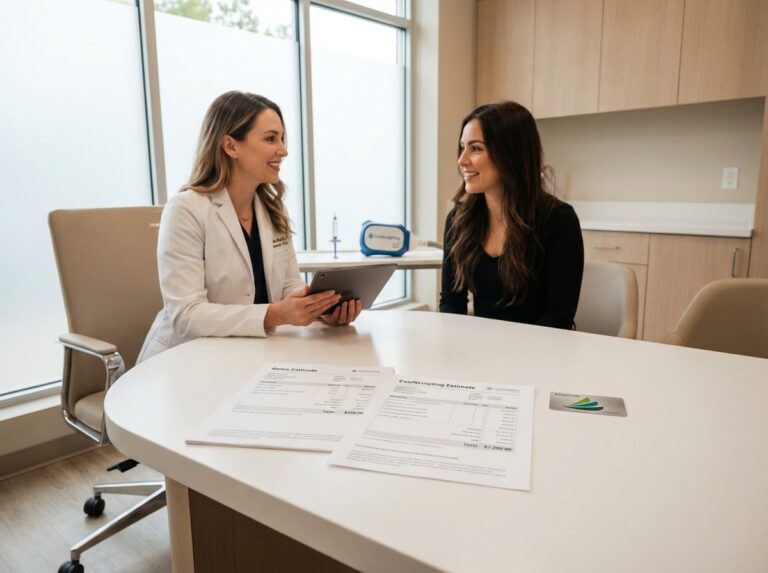
- Get an Itemized Written Estimate. A price should never be a mystery. Request a written quote that details the cost per unit or per syringe, the total number of units or syringes recommended for your treatment plan, and any additional fees. This prevents surprise charges and clarifies exactly what you are paying for.
- Understand the Full Cost. A cheap initial treatment can become expensive over time. Ask about typical maintenance intervals. Botox, for example, usually requires touch-ups every three to four months. Factor this into your budget to understand the true lifetime cost. Also, consider the potential cost of corrective treatments if something goes wrong, as these are rarely included in the initial price and can be very expensive.
- Review Safety and Aftercare Policies. A professional clinic will have clear protocols for managing complications. Ask about their process for handling adverse events, like vascular occlusion from fillers, which requires immediate medical intervention. Confirm they have emergency supplies, such as hyaluronidase for dissolving hyaluronic acid fillers. You should also receive a written aftercare plan and an emergency contact number.
During your consultation, you are interviewing the provider for a job. Use these questions to guide the conversation and assess their professionalism and transparency.
A Sample Script for Your Consultation
- “Who will be performing my injection? Can you provide their full name and license number?”
- “Which brand of product will you be using for my treatment? Do you source it directly from the manufacturer or an authorized distributor?”
- “How many units or syringes do you recommend to achieve my goals, and may I have an itemized quote in writing?”
- “How do you track product lot numbers for patient safety?”
- “What is your protocol if a complication occurs after hours? Do you have reversal agents like hyaluronidase on site?”
- “Is a follow-up appointment included in this price, particularly for a touch-up if needed?”
Finally, trust your instincts. If a deal feels rushed, opaque, or too good to be true, it probably is. Walk away if you encounter red flags such as missing provider credentials, requirements for full prepayment before a medical consultation, or intense pressure to “buy now.” Be wary of prices drastically lower than the market average—such as Botox advertised for under $9 per unit—or staff who are evasive about product sourcing. Ultimately, choosing an aesthetic treatment is a medical decision, not just a cosmetic purchase. Your face and health are your most valuable assets. Prioritizing an experienced, credentialed provider who uses authentic products in a safe environment is the only way to ensure a positive outcome. Use this checklist not to avoid spending money, but to invest it wisely in your long-term well-being and confidence.
References
- FDA Warns Companies Over Illegal Marketing of Botox and Related … — The U.S. Food and Drug Administration issued 18 warning letters to owners of websites illegally marketing unapproved and misbranded …
- Why Groupon Botox Deals Might Not Be as Good as They Seem — The Dangers of Cheap Botox. While the allure of saving money on botox through Groupon deals may be strong, there are significant dangers to be aware of.
- The Truth about Groupon Botox – Reston Dermatology + Cosmetic … — Risk of Low-Quality Products If you see a Botox Groupon deal for 50% off, that's a big red flag. Providers must recoup their losses in some way …
- Botox Is More Affordable Than Ever. Is That A Good Thing? — Reports of counterfeit Botox injections causing serious side effects have dermatologists concerned. Here's what you need to know about …
- 5 Reasons Why You Shouldn't Get Botox On Groupon — No one is implying that Groupon Botox is certain to be a negative experience, but discounted offers are often questionable.
- 5 Treatments Derms Say You Should Never Buy on Groupon — Experts weigh-in and sound off on the dangers of bargain cosmetic treatments, and the exact treatments to never buy on Groupon.
- Is Groupon Legit in 2025? Read This Before You Buy Anything — In this guide, I'll break down how Groupon works in 2025, when it's worth using, and how to avoid common pitfalls based on real data, verified reviews, and …
- Why You Shouldn't Fall for Discount Botox Deals — One of the biggest risks of discount Botox deals is the lack of qualified providers administering the treatment. Medical spas and clinics …
Legal Disclaimers & Brand Notices
This article is for informational purposes only and does not constitute medical advice. The information contained herein is not intended to be a substitute for professional medical advice, diagnosis, or treatment. Always seek the advice of a qualified health provider with any questions you may have regarding a medical condition. Never disregard professional medical advice or delay in seeking it because of something you have read in this article.
All product names, logos, and brands are property of their respective owners. The use of these names, logos, and brands does not imply endorsement. The following are registered trademarks mentioned in this article:
- Botox® and Juvéderm® are registered trademarks of Allergan, Inc.
- Dysport® and Restylane® are registered trademarks of Galderma S.A.
- CoolSculpting® is a registered trademark of Zeltiq Aesthetics, Inc.