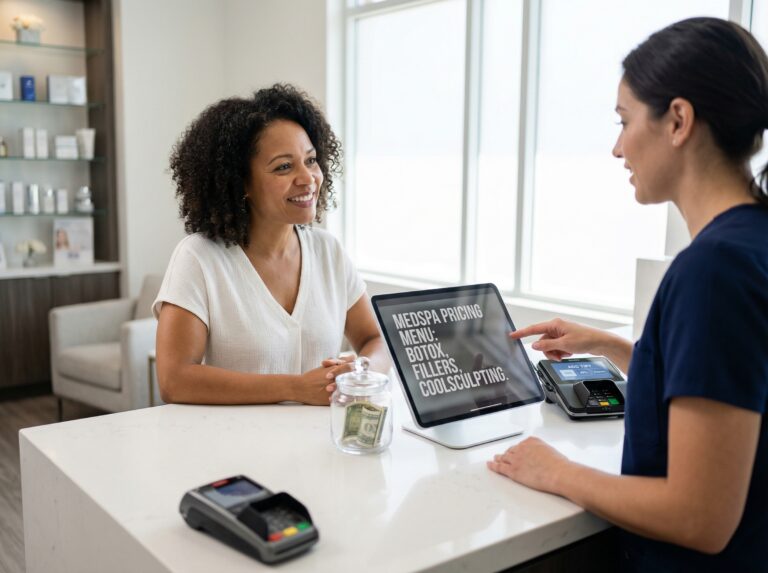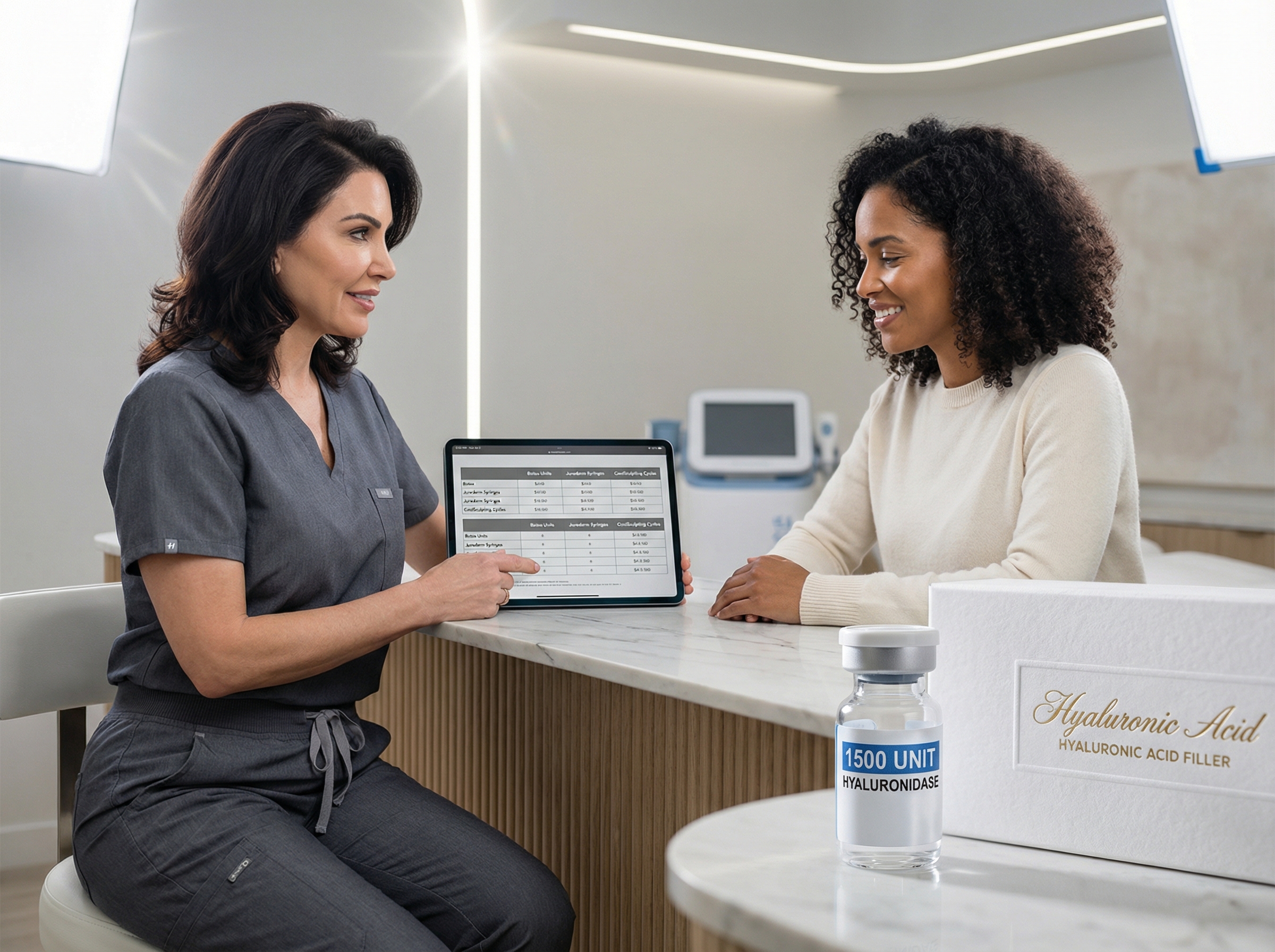
Before booking a medspa or cosmetic clinic, compare typical prices for Botox, dermal fillers, CoolSculpting and other non-surgical procedures—and learn how clinics set fees. This article explains price ranges, common billing models, the real cost of correcting bad Botox or migrated filler, and practical steps to avoid overpaying while protecting safety and outcomes. Includes checklists, red flags, and cost-saving strategies for U.S. patients.
Typical prices and the real cost of corrections
We often focus on the upfront price of a treatment. You see a promotion for $10 per unit of Botox or a $400 syringe of filler and book the appointment. But the true cost of aesthetic medicine includes the financial risk of fixing things when they go wrong. If you hunt for the lowest price per unit, you are statistically more likely to encounter complications. Correcting a bad outcome is almost always more expensive than the original procedure; in 2025, the cost of correction often exceeds the price of the original treatment by double or triple.
Botox Gone Wrong: The Cost of Waiting
Neuromodulators like Botox, Dysport, and Xeomin are temporary. This is both a blessing and a curse. If you receive a bad result, you cannot simply dissolve it like a hyaluronic acid filler. You usually have to wait for the toxin to wear off and the nerve endings to regenerate.
Asymmetry and Spock Brow
This happens when the injector places the product unevenly or ignores your muscle dynamics. One eyebrow might shoot up (the “Spock” look) while the other stays heavy. Fixing this is relatively cheap. It usually requires just a few units of Botox to relax the overactive muscle. Many reputable clinics offer a complimentary touch-up within two weeks to correct minor asymmetry. However, if you went to a discount provider who refuses to help, you will pay a new clinic their consultation fee plus the cost of units. This often ranges from $150 to $300 just to open the chart and inject the necessary units.
Eyelid Ptosis
This is the dreaded droopy eyelid. It occurs when the toxin migrates to the muscle that lifts the eyelid. You cannot reverse this instantly. You must wait 2 to 4 months for the strongest effects to subside. The financial cost here comes from management. You might need prescription eye drops like Upneeq to stimulate the muscle and open the eye by 1 to 2 millimeters. A one-month supply of these drops costs roughly $200 to $250. Over a three-month recovery period, you are looking at $750 out of pocket just to look normal again.
Migrated and Lumpy Filler: The Dissolving Bill
Hyaluronic acid (HA) fillers are reversible. We use an enzyme called hyaluronidase (brand names include Hylenex or Vitrase) to break down the product. While this offers a safety net, it is not a magic eraser. The process is uncomfortable, time-consuming, and expensive.
The Dissolving Process
Hyaluronidase is not cheap. A single vial in the US market in late 2025 costs between $200 and $500. The clinic also charges for the provider’s time. A simple migration case—often seen as a “shelf” above the lip or a widened nose bridge—might require one vial. Dense nodules or extensive migration often require two or three sessions spaced two weeks apart. You pay for the enzyme and the appointment fee each time.
Refilling the Area
You cannot refill the area immediately after dissolving. The enzyme causes temporary swelling and tissue softening. You must wait at least 14 days before injecting new filler. This means you pay for the original bad filler, the dissolving sessions, and then the full price for a new syringe of filler two weeks later. The “cheap” filler you bought initially has now tripled in cost.
The High Stakes of Vascular Occlusion
The most serious complication is a vascular occlusion (VO). This happens when filler enters a blood vessel or compresses it, stopping blood flow to the skin or even the eye. This is a medical emergency.
Urgent Management Costs
If you feel severe pain, see blanching (white spots), or notice a net-like purple pattern, you need help immediately. The standard of care involves flooding the area with high doses of hyaluronidase. A provider might use 3 to 5 vials in a single sitting to save the tissue. At $300+ per vial plus emergency clinic fees, the immediate bill can exceed $1,500. You will also need warm compresses and topical nitroglycerin paste to stimulate blood flow. If you are at the original clinic, they should treat this without charge as a matter of ethics. If you go to an urgent care or a different specialist, you could face emergency fees ranging from $1,000 to $5,000.
Medical Intervention
If the occlusion threatens your vision, you must go to the ER or an ophthalmologist immediately. Emergency room visits for cosmetic complications are rarely covered by insurance. You could face bills ranging from $2,000 to over $5,000 depending on the facility and the level of care required. This highlights why choosing a board-certified provider who knows anatomy is a financial safeguard.
Real-World Correction Scenarios
To understand the financial impact, we can look at the math for common correction situations. These estimates reflect average US pricing in late 2025.
| Scenario | Original “Deal” Cost | Correction Steps | Correction Cost | Total Expense |
|---|---|---|---|---|
| Migrated Lip Filler | $450 (Promo Syringe) | 1. Consult & Dissolve (1 vial) 2. Follow-up check 3. Re-treat with quality filler |
$400 (Dissolve) $0 (Check) $750 (New Syringe) |
$1,600 |
| Botox Asymmetry | $9 per unit (20 units = $180) | 1. New Clinic Consult fee 2. Correction units (4-6 units) |
$150 (Consult) $80 (Units) |
$410 |
| Nodule Removal | $500 (Cheek Filler) | 1. Steroid Injection/Massage 2. Hyaluronidase (if needed) |
$200 (Steroid) $350 (Enzyme) |
$1,050 |
The math shows that the migrated lip filler scenario ends up costing nearly four times the original promotional price. Medical Aesthetics The Most Popular Treatments and Prices in 2025 indicate that standard syringe prices have stabilized, but correction fees remain high due to the expertise required.
Clinic Policies and Liability
You need to ask about revision policies before you let anyone touch your face. A reputable clinic usually stands by their work.
The Two-Week Rule
Most clinics will not touch up Botox or filler for at least 14 days. This allows swelling to settle and the product to integrate. If you demand a fix on day three, a good provider will tell you to wait. Standard of care guidelines from organizations like the ASDS dictate these waiting periods to ensure safety and prevent overdosing.
Revision Fees
Ask if the clinic charges for touch-ups. Many top-tier practices offer a complimentary follow-up for Botox adjustments. However, if you have a complication like a nodule or migration, policies vary. Some clinics dissolve their own work for free or at cost. Others charge full price for the enzyme. If you go to a different clinic to fix a mistake, you will always pay full price. They take on the liability by treating you.
Insurance Reality
Health insurance does not cover complications from elective cosmetic procedures. If you develop an infection that requires hospitalization or surgery to remove a granuloma, the bill is yours. This is why checking the credentials of your injector is a financial decision. A board-certified plastic surgeon or dermatologist has the training to manage complications and often has admitting privileges or direct lines to specialists if things go wrong.
How to compare clinics and avoid overpaying
Finding a clinic isn’t just about scrolling through Instagram or picking the place with the prettiest waiting room. After reading about the financial and physical toll of correcting botched procedures, you know that “cheap” often ends up being the most expensive option. The goal is to find the sweet spot: safe, high-quality care at a fair market rate.
To do this, you have to treat your consultation like an interview. You are hiring a medical professional to alter your face. Here is how to strip away the marketing noise and compare clinics effectively.
The Actionable Consultation Checklist
Before you book an appointment, or even while you are on the phone, you need specific answers. If a clinic hesitates to answer these, hang up.
Injector Credentials and Caseload
Don’t just ask if they are certified. Ask specifically: “Who will be performing my injection, and how many of these specific procedures do they do per week?” You want someone who does this all day, every day, not a generalist who dabbles in fillers occasionally. In 2025, board-certified surgeons or specialized nurse practitioners typically charge a premium, but their anatomical knowledge is your safety net.
Product Transparency
Ask to see the box. A reputable clinic will have no issue showing you the unopened package, the brand name (Botox, Dysport, Juvéderm, Restylane), and the expiration date. Ask: “Do you open the syringe in front of patients?” If they pre-fill syringes in a back room, you have no way of knowing if the product is diluted or counterfeit.
Emergency Protocols
This is the single most important question regarding safety. Ask: “Do you have hyaluronidase on-site right now, and what is your protocol for vascular occlusion?” If they say they don’t keep dissolving agents in stock or they would send you to the ER for a complication, leave immediately. The ER often does not have the specific expertise or supplies to reverse a filler blockage in time to save your skin.
Revision Policies
Clarify what happens if you aren’t satisfied or if there is a minor asymmetry. Ask: “Is a two-week follow-up included in the price, and do you charge for minor touch-ups?” Many reputable clinics offer a complimentary follow-up assessment, though they may charge for additional product if more units are needed.
How to Normalize Quotes and Compare Prices
Clinics price differently, making direct comparisons difficult. Some charge by the “area” (e.g., forehead), while others charge by the “unit” (Botox) or “syringe” (filler). To compare apples to apples, you must do the math based on the total expected cost.
Normalize by Units, Not Areas
“Per area” pricing often benefits the clinic, not you. If a clinic charges $300 for the forehead, but you only need 10 units, you are overpaying significantly if the market rate is $15 per unit. Always ask for the estimated number of units and the price per unit.
Ask for the “Out the Door” Price
Hidden fees are common. Ask: “Does this quote include the consultation fee, facility fee, or any numbing charges?” Some clinics waive the consultation fee if you book the procedure same-day, while others charge it separately.
Mini Case Study: The “Cheap” Quote Trap
Let’s look at two hypothetical quotes for a standard forehead and glabella (frown lines) treatment to see how pricing structures can be misleading.
| Item | Clinic A (The “Bargain”) | Clinic B (The Professional) |
|---|---|---|
| Advertised Price | $10 per unit | $15 per unit |
| Consultation Fee | $75 (Non-refundable) | Included in treatment |
| Unit Estimation | 50 units (Aggressive dosing) | 35 units (Conservative dosing) |
| Total Cost | $575 | $525 |
| Value Verdict | Higher risk of “frozen” look; higher total cost. | Better value; natural result; lower total cost. |
Clinic A lures you in with a low unit price but oversells the amount of product you need and adds fees. Clinic B has a higher upfront unit price but is honest about the dosage and includes the service fee, resulting in a lower bill and a safer, more natural outcome.
Strategies to Save Without Compromising Safety
You can negotiate and find value without resorting to dangerous discount bins.
- Membership Plans: Many clinics now offer monthly memberships (ranging from $99 to $299) that bank money toward treatments and unlock “member-only” pricing on units. This is often the safest way to get a discount because you remain with a trusted provider.
- Package Discounts: If you know you need filler in your cheeks and chin, ask for a package price. Clinics often discount the second or third syringe by $50-$100 because it saves them chair time.
- Official Rewards Programs: Sign up for manufacturer rewards like Allē (Allergan) or Aspire (Galderma). These are legitimate rebates directly from the pharmaceutical companies that can save you $20 to $80 per visit.
- Seasonal Promotions: Look for specials during slower months (often January or late summer). However, verify that the “special” doesn’t involve expiring product.
Red Flags: When to Walk Away
There are specific warning signs that a low price is actually a danger signal. If you see these, the money you save will likely be spent later on corrective work.
The “Botox Party”
Medical procedures should happen in a medical environment, not a living room or a salon without medical oversight. Lighting is poor, sterility is compromised, and if you have an allergic reaction, you are far from help.
Unbranded Menus
If the price list says “Wrinkle Relaxer” or “Lip Plumper” without naming the specific drug (e.g., Botox, Juvederm), they may be using gray-market imports or unapproved substances. Always insist on knowing the brand.
The “Too Good to Be True” Price
As of late 2025, the wholesale cost of authentic product is high. If someone is offering Botox for $7 or $8 a unit in a major metro area, they are likely operating at a loss—or, more likely, they are over-diluting the product with saline. You will pay for 20 units but effectively receive 10.
Scripts for Your Phone Inquiries
Use these exact phrases to filter clinics quickly:
Phone Script:
“Hi, I’m price-shopping for cheek filler. I know you can’t give an exact quote without seeing me, but can you tell me your price range per syringe for Voluma or Lyft? Also, is the consultation fee applied to the treatment cost?”
In-Person Script (The Safety Check):
“Before we start, could you walk me through your safety protocol? If I were to have a vascular occlusion today, do you have enough hyaluronidase in this room to dissolve the filler immediately?”
By normalizing the data and asking the hard questions upfront, you shift the power dynamic. You aren’t just a patient hoping for a good result; you are an informed consumer demanding the safety standard you deserve.
Frequently Asked Questions
Even after you have vetted a clinic and negotiated a fair price, questions often linger. Most patients hesitate to ask about “worst-case scenarios” during a consultation because they do not want to seem difficult or anxious. However, understanding the financial and physical reality of corrections is just as important as agreeing on the initial cost. This section addresses the practical, often unspoken concerns regarding safety, product verification, and the true expense of fixing complications.
Does hyaluronidase always dissolve filler and how much does it cost?
Hyaluronidase is an enzyme used to break down hyaluronic acid (HA) fillers like Juvéderm, Restylane, and Belotero, but it is not a precise “undo” button. While it is generally effective, it does not work instantly for everyone and may require multiple sessions to fully resolve a nodule or migration. It also cannot distinguish between the injected filler and your body’s natural hyaluronic acid, which means you might experience temporary volume loss or “hollowing” in the treated area until your body regenerates its own supply. The cost is rarely included in the initial treatment price unless the error was egregiously the injector’s fault and they admit it. In the US market, you can expect to pay between $200 and $500 per vial, and complex corrections often require 2 to 3 vials.
Action Item
Before your injection, ask specifically: “If I have an adverse reaction or migration, do you have hyaluronidase in stock right now, and what is your policy on charging for dissolving it?”
Are complications like vascular occlusion covered by insurance?
Medical insurance classifies aesthetic injections as elective procedures, meaning they almost never cover the costs associated with correcting complications. If you suffer a vascular occlusion—where filler blocks a blood vessel—the emergency treatment involves flooding the area with hyaluronidase, using warm compresses, and potentially hyperbaric oxygen therapy. These urgent interventions can cost between $1,000 and $5,000 depending on the severity and the facility. Unless the clinic has a specific policy to cover these costs (which is rare outside of high-end practices), the patient is financially responsible. This financial risk is a major reason why choosing a provider based solely on the lowest price is dangerous.
Action Item
Check your clinic’s consent form for a “financial responsibility” clause regarding complications. If the language is vague, ask the practice manager to clarify who pays for emergency reversal agents.
How long do I wait to correct bad Botox or add more filler?
Patience is financially and physically necessary when dealing with injectables. Neurotoxins like Botox and Dysport take a full 14 days to reach their peak effect. Attempting to “fix” asymmetry or lack of movement before the two-week mark can lead to overdosing and heavy, drooping brows. For dermal fillers, swelling can distort the true result for up to four weeks. Adding more filler too soon often leads to “filler fatigue” or migration, which then requires expensive dissolving. According to Medical Aesthetics Statistics and Facts (2025), the market is seeing a rise in corrective procedures, partly due to patients rushing the process. If you have a droopy eyelid (ptosis) from Botox, you unfortunately cannot dissolve it; you must wait 2 to 4 months for the toxin to wear off, though prescription eye drops may help temporarily.
Action Item
Do not book a follow-up or “touch-up” appointment sooner than 14 days after neurotoxins or 4 weeks after filler. If a clinic offers to add more product immediately to fix swelling, decline.
What are typical warranties or complimentary touch-up policies?
In the aesthetic industry, a “warranty” does not guarantee you will like the look, but rather that the product was delivered correctly. About 50% to 60% of reputable clinics offer a complimentary “tweak” for Botox if there is clear asymmetry (like one eyebrow higher than the other) within the first two weeks. However, if you simply want “more frozen” results or additional volume in your lips, that is considered an additional purchase, not a correction. Clinics operate on thin margins for the product itself; they cannot give away vials for free. Be wary of clinics that promise free refills indefinitely, as this often signals they are using diluted products or charging an inflated initial fee.
Action Item
Ask specifically: “If I have noticeable asymmetry after two weeks, is the correction complimentary, or do I pay per unit for the fix?”
What questions should I ask about product brand and serial numbers?
You have a right to know exactly what is being put into your face. The FDA approves specific brands for specific areas, and “off-label” use should be disclosed. Unscrupulous providers may swap premium brands for cheaper, grey-market imports that lack proper cold-chain storage. Legitimate clinics will have no issue showing you the box. You should check that the box is sealed, has a hologram (for many brands), and has an expiration date in the future. With Medical Aesthetics Market Size & Outlook showing rising prices in 2025, the incentive for counterfeit products has grown.
Action Item
Ask to see the vial before they draw it up. Take a photo of the box with the lot number and expiration date for your personal records in case of a recall or complication.
Can Botox migrate and what causes it?
Neurotoxins do not “migrate” in the same way filler moves, but they can diffuse into neighboring muscles if handled incorrectly. This diffusion is what causes side effects like a droopy eyelid or a crooked smile. The primary causes are poor injection technique (injecting too deep or too close to the orbital rim), diluting the product too much (causing it to spread further than intended), or the patient rubbing the area immediately after treatment. While some diffusion is biological, choosing an injector who understands rigorous anatomy significantly reduces this risk.
Action Item
Follow post-care strictly: stay upright for 4 hours, do not exercise for 24 hours, and absolutely do not massage the treated area or wear tight hats/headbands immediately after.
Are Groupon or deep-discount offers safe?
Deep discounts on medical procedures are a significant red flag. If a clinic is offering Botox for $7/unit when the local average is $14, or a syringe of filler for $300 when the product cost alone is nearly that high, they are cutting corners. This usually happens through over-dilution (watering down the Botox so you get less active ingredient), using grey-market products imported illegally, or employing inexperienced trainees who need practice subjects. Data suggests that complications are significantly higher in discount-driven environments because the focus is on volume and speed rather than safety.
Action Item
Avoid any offer that is more than 20% below the local market average. If you use a “new patient special,” ensure it is for the consultation fee or a specific package, not a per-unit price that seems too good to be true.
What are signs I need urgent care?
While bruising and mild swelling are normal, certain symptoms require immediate medical attention. If you see skin blanching (turning white or pale) that does not return to normal color, or a reticulated “fishnet” pattern of discoloration, this could be a vascular occlusion. This is a medical emergency where blood flow is blocked, risking tissue death (necrosis). Severe pain that is disproportionate to the procedure, or any vision changes (blurriness, dark spots), demands an immediate trip to the ER or an urgent return to the injector if they are equipped to handle it.
Action Item
If you notice blanching or severe pain, call the clinic immediately. If they are closed, go to the ER and tell them you suspect a “vascular occlusion from cosmetic filler” so they treat it with urgency.
| Feature | Standard Safe Practice | Red Flag / Risky Practice |
|---|---|---|
| Consultation | Separate medical history review, facial assessment, clear pricing quote. | Rushed, no medical history asked, immediate pressure to buy. |
| Pricing | Per unit (Botox) or per syringe (Filler). Clear total cost estimate. | “Per area” without defining units, or prices significantly below cost. |
| Product | Box opened in front of you, lot number recorded in your chart. | Pre-filled syringes brought into the room, refusal to show the bottle. |
| Aftercare | Written instructions provided, 24/7 emergency contact number given. | “You’ll be fine,” no paperwork, no way to reach the doctor after hours. |
Final takeaways and next steps
We have spent a lot of time looking at numbers. You now know that a syringe of Juvéderm in 2025 costs between $600 and $900 on average. You understand that a “cheap” Botox unit at $10 usually comes with a catch compared to the standard $18 to $25 you see in major metro areas like New York or Los Angeles. But knowing the price list is only half the battle. The real financial danger in aesthetic medicine is not paying a premium for a good injector. The real danger is paying for a correction.
We are closing out 2025 with a market that has grown to over $59 billion globally. That volume means more procedures, but it also means more complications. I want you to walk away from this article with a very clear understanding of how to protect your bank account and your face. The goal is never to find the cheapest needle. The goal is to get the result you want the first time so you do not have to spend triple the amount fixing it later.
Timing Your Treatments
Bad timing can be just as costly as a bad injector. You need to give your body time to heal and react.
Follow the two-week rule
Never book a treatment less than two weeks before a major event. Botox takes 14 days to fully settle. Bruising from filler can last just as long. If you have a wedding or a big presentation, book at least a month out. This gives you a buffer window for a touch-up if things are not perfect.
Wait for the sales cycle
We know that clinics often run promotions in Q4 or around holidays. If you can wait, you might save 15% to 20% on legitimate manufacturer rebates. But be careful with third-party discount sites. A 50% off coupon often signals a clinic is desperate for patients, which is a red flag.
Documentation is Your Insurance
You need to be your own record keeper. If you ever need a correction, the new provider needs to know exactly what was done to you previously.
Take your own before and after photos
Do not rely on the clinic’s lighting. Take clear photos of your face in natural light before you leave your house. Take photos immediately after the procedure and again two weeks later. This is your evidence if you notice asymmetry or migration later.
Get the lot numbers
Ask the injector to write down the lot number and expiration date of the product used. Many clinics will put a sticker from the syringe packaging into your file. Ask for a photo of that sticker. If you have a reaction three months later, knowing the exact batch number is critical information for your doctor.
Making the Final Decision
You have the data. You know that the average spend per visit is climbing and that the industry is shifting toward high-frequency, lower-downtime treatments. The market is huge, and the options are overwhelming.
When you compare prices, normalize the units. If Clinic A quotes $300 for a “forehead” and Clinic B quotes $12 per unit, do the math. A typical forehead treatment might need 20 units. That makes Clinic B $240. But if Clinic A includes a free touch-up and Clinic B charges for it, Clinic A might be the better value.
Value in aesthetic medicine is safety plus results divided by price. Do not remove safety from that equation just to lower the price.
If you suspect a complication, do not wait. If you see skin blanching (turning white) or feel unusual pain, seek urgent care immediately. Use the Medical Aesthetics Market Size & Outlook data to understand that you are part of a massive consumer base, and you have the right to demand safe, standardized care.
Take the checklist from the previous section. Call the clinic. Ask the hard questions. If they get annoyed, hang up. Your face is the only one you get, and it is worth more than a discount coupon.
Sources
- Facelift Statistics 2025: Cost, Age Trends & Results Analysis — The US alone saw over 4.7 million cosmetic procedures performed in 2025, with facelifts remaining among the most requested invasive treatments.
- Aesthetic Services Market Analysis 2025 – Cognitive Market Research — According to Cognitive Market Research, the US had a major share in the Aesthetic Services market with a market size of USD 5730.15 million in 2025 and is …
- The Aesthetics Market Is Growing: 2025 Trends to Watch – Nextech — In 2025, the aesthetics market can expect to see an uptick in demand for regenerative medicine, stimulating the body's own repair processes.
- Medical Aesthetics Statistics and Facts (2025) – Market.us Media — In 2022, the Medical Aesthetics market size was $15.3 million. · By the year 2032, the market is expected to achieve a substantial size of $51.7 million, …
- Aesthetic Industry Trends in 2025: See the Data – Guidepoint Qsight — Explore the top aesthetics industry trends shaping 2025—from minimally invasive treatments to biostimulatory injectables & Gen Z demand.
- Growth Data 2025: Medspa Industry Insights and Trends — The global medical spa market is projected to grow from $18.88 billion in 2024 to $21.47 billion in 2025, reflecting a compound annual growth rate (CAGR) of 13 …
- Medical Aesthetics Market Size & Outlook, 2025-2033 — … US, with prices ranging from $1,320 to $1,800 as of 2025. This is considerably more affordable than in the US, where costs can exceed $3,000. The procedure …
- Medical Aesthetics The Most Popular Treatments and Prices in 2025 — This guide explores the most popular aesthetic treatments, trends, and innovations while addressing frequently asked questions about the aesthetics industry.
- Aesthetics Industry Trend Predictions 2025 | The Cosmetic Skin Clinic — For 2025, we predict a surge in the popularity of treatments that work harmoniously with the body's natural processes to deliver exceptional, natural-looking …
- Non-invasive Aesthetic Treatments Market Hits $238.04 Bn by 2034 — The global non-invasive aesthetic treatments market size is forecast to grow from USD 83.13 billion in 2025 to USD 238.04 billion by 2034, driven by a CAGR of …
Legal Disclaimers & Brand Notices
The information provided in this article is for educational and informational purposes only and does not constitute professional medical advice, diagnosis, or treatment. Always seek the advice of your physician or other qualified health provider with any questions you may have regarding a medical condition or specific aesthetic procedure. Never disregard professional medical advice or delay in seeking it because of something you have read in this content.
All product names, logos, and brands mentioned in this article are the property of their respective owners. This includes, but is not limited to, the following trademarks:
- Botox® and Juvéderm® are registered trademarks of Allergan Aesthetics (an AbbVie company).
- Dysport® and Restylane® are registered trademarks of Galderma.
- CoolSculpting® is a registered trademark of ZELTIQ Aesthetics, Inc.
All company, product, and service names used in this article are for identification purposes only. Use of these names, logos, and brands does not imply endorsement, affiliation, or certification by the trademark owners.