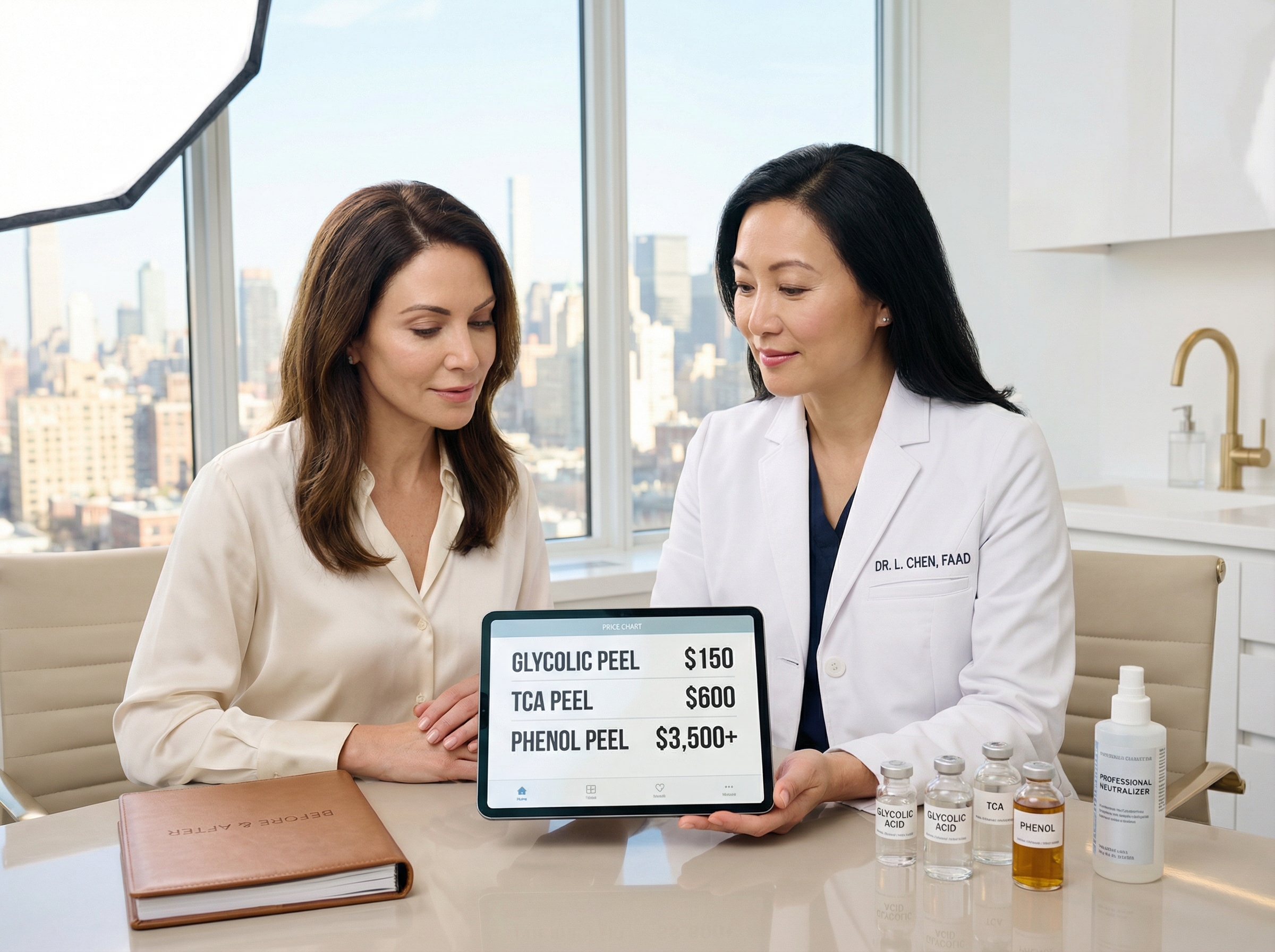
Chemical peels range from mild glycolic treatments to deep phenol resurfacings—and prices in the U.S. reflect that spectrum. This article explains how clinics set peel costs, compares typical ranges for peels and other non‑surgical procedures, and gives practical tips to compare clinics so you pay a fair price for safe, effective care.
Understanding Chemical Peel Types and Why Costs Vary
To understand the bill, you first have to understand the burn. The price gap between a $150 lunch-break facial and a $5,000 medical procedure isn’t arbitrary. It comes down to chemistry, depth of penetration, and the level of medical supervision required to keep you safe.
We categorize chemical peels by how deeply they penetrate the skin layers. As the depth increases, the results become more dramatic, but the risks—and the costs—rise sharply.
Superficial Peels: The “Lunchtime” Refresh
These are the entry-level options found in almost every medspa and aesthetic clinic. They target the epidermis, the outermost layer of skin.
Active Agents & Concentration:
These typically use Alpha Hydroxy Acids (AHAs) like glycolic or lactic acid (20–50%), or Beta Hydroxy Acids (BHAs) like salicylic acid.
Indications:
They work best for rough texture, mild acne, and dullness. They won’t fix deep wrinkles or sagging.
Downtime & Safety:
You might experience mild redness or flaking, but often there is no visible peeling at all. Side effects are rare but can include temporary irritation. Because the risk profile is low, these are often performed by licensed estheticians rather than nurses or doctors, which keeps the labor cost lower.
Light-to-Medium Peels
This category steps up the intensity to reach the upper dermis. This is where you start seeing actual skin shedding.
Active Agents:
Common formulas include Jessner’s solution (a blend of resorcinol, lactic acid, and salicylic acid) or Trichloroacetic Acid (TCA) in lower concentrations (10–20%).
Indications:
These address fine lines, superficial sun damage, and pigmentation issues like melasma.
Downtime & Safety:
Expect 2 to 5 days of visible peeling. The skin will likely turn brown and shed. The risk of hyperpigmentation (darkening of the skin) increases here, especially for darker skin tones, requiring a provider who understands Fitzpatrick skin typing.
Medium Depth Peels
This is the standard for correcting significant photodamage. These penetrate through the papillary dermis.
Active Agents:
High-concentration TCA (35%+) is the gold standard here, often combined with a Jessner’s solution pre-peel to drive the acid deeper.
Indications:
These treat actinic keratoses (precancerous spots), deeper acne scars, and moderate wrinkles.
Downtime & Safety:
Recovery takes 7 to 14 days. You will look swollen and the skin will crust and peel significantly. The American Academy of Dermatology (AAD) notes that the risk of scarring and permanent pigment changes is real at this depth. Consequently, these are usually performed by a PA, NP, or dermatologist, driving up the professional fee.
Deep Peels: The Phenol Standard
This is the most aggressive category and is effectively a non-surgical facelift. It penetrates the reticular dermis.
Active Agents:
Phenol (carbolic acid) and Croton oil.
Indications:
Severe photoaging, deep etched wrinkles, and significant laxity.
Downtime & Safety:
This is a major medical event. Phenol can be toxic to the heart (cardiotoxicity) if absorbed too quickly. Therefore, cardiac monitoring and IV hydration are mandatory during the procedure. Recovery takes weeks, and redness can persist for months. Hypopigmentation (permanent lightening of the skin) is a common long-term effect, making this unsuitable for darker skin tones.
Why Costs Escalate with Depth
You might wonder why a bottle of acid costs $200 in one room and $4,000 in another. You are not paying for the liquid; you are paying for risk management and expertise.
Provider Qualifications
A superficial peel can be safely administered by an esthetician. A deep phenol peel requires a board-certified dermatologist or plastic surgeon, often assisted by an anesthesiologist. The hourly rate of the provider is the single biggest factor in the price.
Facility Fees and Anesthesia
Deep peels cannot be done in a standard spa chair. They require a surgical suite or an accredited medical facility. You also incur costs for sedation—ranging from twilight sedation to general anesthesia—to manage the intense pain associated with deep chemical cauterization.
Pre and Post-Procedure Care
A deep peel isn’t a single appointment. It involves:
- Pre-treatment consultation and cardiac clearance.
- Prescriptions for antivirals (to prevent cold sores) and pain management.
- Multiple follow-up visits to monitor for infection and scarring.
Clinics factor these “invisible” hours into the upfront package price. The average cost of a chemical peel in 2025 ranges from $150 for light peels to $4000+ for deep peels, reflecting this massive disparity in resources.
Strategic Choices: When to Spend More
A higher price doesn’t always mean a better choice for your specific needs.
When a Deep Peel is Justified:
If you have severe, etched-in lines (like deep lip lines) and significant sun damage, a single deep peel can achieve results that ten superficial peels never will. It is a “one-and-done” investment that rivals laser resurfacing.
When to Choose a Series:
For general maintenance, glow, or mild acne, a series of 3–6 superficial peels is often superior. It spreads the cost over months and avoids the social downtime of shedding skin.
The Combination Approach:
Many providers now recommend combining modalities. For example, treating deep acne scars might be more cost-effective with a series of microneedling sessions combined with medium-depth TCA cross treatments, rather than a full-face deep peel. This reduces the risk of overall hypopigmentation while targeting the problem areas.
Always verify that your provider uses up-to-date clinical guidelines, such as those from the American Society for Dermatologic Surgery (ASDS), especially when considering medium or deep options. Pricing and protocols evolve, but the anatomy of the skin remains the same.
Typical U.S. Price Ranges for Peels and How They Compare to Other Non Surgical Procedures
Now that we have covered the different skin depths and ingredients, let’s talk about the actual numbers you will see on the bill. As of late 2025, pricing for aesthetic treatments in the U.S. has shifted slightly due to inflation and the rising cost of medical supplies, but the hierarchy remains consistent. You generally pay for the depth of the injury and the credentials of the person holding the acid.
Chemical Peel Price Ranges by Category
When budgeting for a peel, you need to distinguish between a single “lunchtime” refresh and a major medical procedure. Here is the breakdown of what you can expect to pay per session.
Superficial Peels (Glycolic, Lactic, Salicylic)
These are your standard maintenance peels. In 2025, the typical cost ranges from $150 to $400 per session. The lower end usually reflects treatments at a medspa by an esthetician, while the higher end involves a dermatologist’s office. The variance here is driven by the brand of the peel solution and the facility fee. Keep in mind that these are rarely “one and done.” You usually need a series of 3 to 6 treatments to see significant changes in texture or acne, so your total investment might actually be closer to $1,000 over a few months.
Jessner and Light-to-Medium TCA
Stepping up to Jessner’s solution or low-percentage TCA (Trichloroacetic Acid), prices generally land between $300 and $600 per session. These penetrate the epidermis more effectively. The price jump reflects the increased risk management required and the fact that these are often performed by or under the supervision of a medical professional (RN, PA, or MD). You might need 1 to 3 sessions depending on the severity of sun damage.
Medium Depth TCA
For correcting deeper wrinkles and pigmentation, a medium-depth TCA peel (often 20-35%) costs between $600 and $1,500. At this level, you are paying for the provider’s expertise to avoid scarring or hypopigmentation. This is a medical procedure that requires downtime, and the price often includes a follow-up visit to monitor healing.
Deep Phenol and Croton Oil Peels
This is the top of the pyramid. A deep phenol peel is a major event, often performed only once in a lifetime. Prices in 2025 typically range from $3,500 to $6,000+. This price tag is hefty because it includes cardiac monitoring (phenol can affect the heart), anesthesia or heavy sedation, and extensive pre- and post-procedure care. You aren’t just paying for the liquid; you are paying for a sterile surgical environment and a board-certified physician’s time.
Comparing Peels to Other Non-Surgical Procedures
It helps to weigh the cost of a peel against other tools in the aesthetic toolbox. Sometimes a $500 peel series makes more sense than a $800 laser session, and sometimes it doesn’t.
- Botox and Dysport: These neurotoxins stop muscle movement but don’t fix skin texture. The average cost is $12 to $18 per unit, or roughly $350 to $600 per treatment area (like the forehead). While a peel resurfaces the skin, Botox prevents the wrinkles from deepening. Many patients combine them, but they serve different functions.
- Hyaluronic Acid Fillers: Fillers restore volume. Expect to pay $650 to $900 per syringe. A peel won’t fill a hollow cheek, and a filler won’t remove a sun spot. If your main concern is surface quality, a peel is the better financial move.
- Fractional Laser Resurfacing: This is the direct competitor to chemical peels. Non-ablative laser sessions range from $1,000 to $2,500. Lasers are often more precise than chemical peels, but they are significantly more expensive. A deep chemical peel can sometimes achieve results comparable to aggressive laser resurfacing for a lower price, though with different recovery profiles.
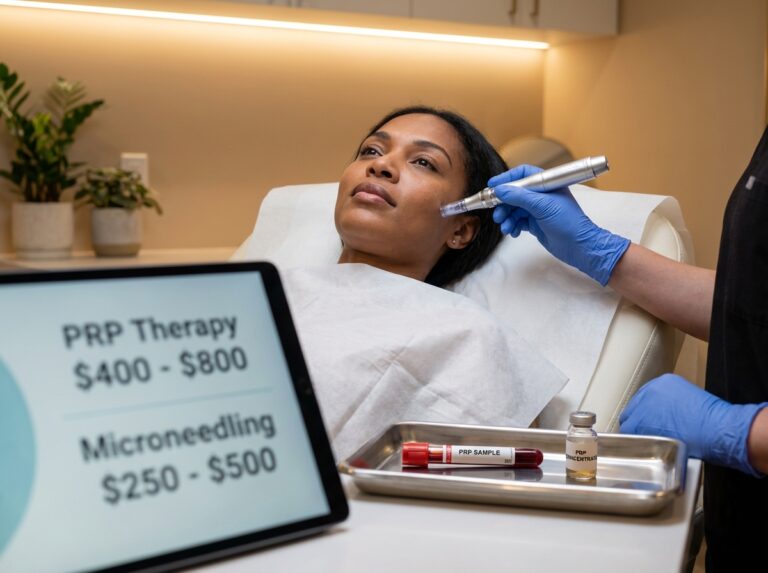
- Microneedling with PRP: Often called the “Vampire Facial,” this costs between $600 and $900 per session. It is excellent for acne scars and texture. A medium-depth peel is often comparable in price but might offer better results for widespread pigmentation issues.
- CoolSculpting: For body contouring, you are looking at $600 to $800 per cycle (or applicator). Treating a full abdomen can easily run $2,400 to $4,000. This is a completely different category than peels, but it’s useful to see where your aesthetic budget goes.
For a broader look at how these costs stack up, you can check resources like CareCredit’s guide on chemical peel costs, which breaks down financing options for these procedures.
Geographic Price Variations
Location is the biggest hidden variable in aesthetic pricing. Rent, insurance, and local market demand drive prices up in coastal hubs. A clinic in Manhattan pays vastly different overhead than one in a suburban strip mall in the Midwest, and those costs are passed directly to you.
Below is an illustrative table showing how location impacts the price of the same treatments in late 2025.
| Procedure | New York / Los Angeles (High Cost) | Austin / Chicago (Mid-Market) | Suburban / Rural Area |
|---|---|---|---|
| Superficial Peel | $250 – $500 | $175 – $350 | $125 – $200 |
| Medium TCA Peel | $900 – $1,800 | $600 – $1,200 | $450 – $800 |
| Deep Phenol Peel | $4,500 – $7,000+ | $3,500 – $5,500 | Rarely Available* |
| Botox (per unit) | $16 – $22 | $13 – $16 | $10 – $13 |
*Deep phenol peels require specialized cardiac monitoring and are rarely performed outside of major medical centers or specialized surgical practices.
Package Pricing and Hidden Costs
When you see a price list, you are often looking at the “a la carte” rate. Most clinics offer package pricing for superficial and light-medium peels. A common structure is “buy 5, get 1 free,” or a 15-20% discount if you pay for a series upfront. This is standard practice because superficial peels rely on repetition for results.
However, be careful with “total cost” calculations. For deep peels, the sticker price might not include anesthesia fees, facility fees (if done in a surgery center), or post-procedure skincare kits, which can add another $200 to $500 to the bill. Always ask for an itemized quote. Some clinics, like those offering specialized deep treatments, may bundle everything into a flat fee to simplify the process for patients traveling for the procedure. You can see examples of this bundled value in high-end treatments like MelanX and other deep peel protocols.
Finally, always verify pricing before you book. Prices listed on third-party sites or old blog posts can be outdated. Check the clinic’s current website, look for recent patient reviews on RealSelf, or consult reports from the American Academy of Facial Plastic and Reconstructive Surgery (AAFPRS). If a price looks too good to be true—like a $50 medium TCA peel—it is a red flag regarding the quality of the product or the safety standards of the facility. For a general baseline, Denefits provides a 2025 cost breakdown that can help you benchmark the quotes you receive.
How Clinics Set Prices and Smart Strategies to Compare Offers
Understanding why one clinic charges $300 for a peel while another charges $1,500 for a similar-sounding treatment can be frustrating. It often feels arbitrary, but there is usually a logic behind the numbers. Clinics run like any other business, and their pricing reflects a mix of hard costs, market positioning, and the premium placed on safety.
How Clinics Build Their Prices
Most aesthetic practices use a combination of three models to set their fees. Recognizing these helps you understand what you are actually paying for.
Cost-Plus Pricing
This is the baseline. The clinic calculates the cost of the acid solution, the neutralizer, the gloves, and the gauze. They add a portion of their rent, electricity, and staff salaries. Then, they add a profit margin. For superficial peels, the markup on the actual fluid is high—often 200% to 500%—because the material is cheap, but you are paying for the time and the room.
Market-Based Pricing
Clinics look at their competitors. If every high-end dermatologist in Manhattan charges $450 for a VI Peel, a clinic in the same zip code is unlikely to charge $150 unless they are cutting corners. Conversely, they won’t charge $900 unless they offer a significantly more luxurious experience.
Value-Based Pricing
This is where expertise comes in. You aren’t just paying for trichloroacetic acid; you are paying for the hand applying it. A board-certified dermatologist or plastic surgeon charges more than a medspa aesthetician because they have the training to manage complications. For deep peels like phenol, this model dominates. The high price reflects the risk, the skill required to monitor cardiac health during the procedure, and the intense follow-up care.
The Hidden Costs in Your Quote
When you see a quote, it covers much more than the 30 minutes you spend in the chair. In 2025, operational costs for medical practices have surged, and those costs are passed down to patients.
- Clinician Time and Expertise
This is the biggest factor. A 20-minute slot with a nurse practitioner costs the clinic less than an hour with a surgeon. For deep peels, the physician might be with you for two hours, plus daily check-ins during recovery. - Liability Insurance
Malpractice insurance premiums for deep chemical resurfacing are incredibly high. A portion of your fee goes directly to covering this risk. - Facility and Anesthesia Fees
If you are getting a deep peel that requires sedation or twilight anesthesia, you will pay for the anesthesiologist and the operating room time. This can easily double the cost of the peel itself. - Pre and Post-Procedure Care
Reputable clinics include the cost of required skincare products in the package. This includes antivirals (to prevent cold sores), specialized cleansers, and heavy moisturizers needed for healing.
For a broader look at these breakdowns, you can check resources like How Much Does a Chemical Peel Cost? (In 2025) – Denefits, which details how these factors stack up.
Smart Strategies to Compare Offers
Never book a chemical peel based on the website price list alone. Those are starting points. To get a real comparison, you need to dig deeper during your consultation.
Request an Itemized Quote
Ask for a breakdown that separates the procedure fee from anesthesia, facility fees, and products. Sometimes a “cheaper” quote excludes the $500 post-peel kit you absolutely need. Ensure the quote specifically lists “post-procedure skincare” and “follow-up appointments” as separate line items or explicitly included.
Evaluate the Portfolio
Look at before and after photos, but look critically. Are the “after” photos taken with a ring light while the “before” photos have harsh shadows? Ask to see healed results for patients with your specific skin tone. This is non-negotiable for darker skin types (Fitzpatrick IV-VI) to ensure they understand safety protocols.
Assess Recovery Logistics
Ask about the follow-up policy. If you have a reaction at 9 PM on a Saturday, is there a direct line to the provider? For medium and deep peels, this access is part of what you pay for.
Red Flags vs. Justified Premiums
Sometimes a high price is a rip-off, but sometimes a low price is a danger sign.
When to Walk Away
Be wary of “Groupon-style” deep discounts for medium or deep peels. These procedures require medical clearance. If a clinic lets you book a TCA peel online without a prior consultation or skin assessment, they are prioritizing volume over safety. Another red flag is a provider who glosses over the risks or doesn’t have a clear consent form detailing potential scarring or pigmentation changes.
When to Pay More
A higher price is justified if the provider is a board-certified physician, especially for deep peels. It is also worth paying extra for a hospital-based facility if you have underlying health conditions. Complex skin types requiring specialized blended peels (like modified Jessner’s or specific depigmentation formulas) often cost more because the customization takes more skill.
Scripts for Negotiation and Clarity
You can’t usually haggle like you’re at a flea market, but you can ask smart questions to get better value or uncover hidden costs.
Asking About Packages
“I understand I might need a series of treatments for these acne scars. Do you offer a tiered price if I commit to a three-session plan upfront?”
Clarifying the ‘All-In’ Price
“Does this quote include the post-procedure skincare kit and the follow-up appointments, or will those be separate charges?”
Checking for First-Time Offers
“Do you have any introductory pricing for new patients, or a membership program that lowers the per-visit cost?”
Discussing Financing
“I’m interested in the deep peel, but the upfront cost is high. Do you work with third-party financing like CareCredit, and do you offer interest-free periods?”
By breaking down the quote and asking the right questions, you shift the conversation from “how much is this?” to “what am I getting for my money?” This ensures you aren’t just buying a chemical peel, but a safe, managed outcome.
Frequently Asked Questions About Peel Costs and Clinic Comparison
You have the pricing models and the strategy to compare quotes. Now you likely have specific questions about why the numbers look the way they do. Patients often feel confused when they see one clinic charging $200 and another charging $4,000. These answers address the practical realities of peel costs in late 2025.
Why is a phenol peel so much more expensive than a glycolic peel?
The price difference comes down to medical risk and facility requirements. A glycolic peel is a superficial treatment. It stays on the skin for a few minutes and requires no sedation. A phenol peel is a controlled chemical burn that penetrates the deep reticular dermis. It requires cardiac monitoring because phenol can cause heart irregularities during application. You are not just paying for the acid. You pay for an anesthesiologist, IV sedation, cardiac monitoring equipment, and a board-certified physician to apply it. Deep chemical peel treatments often range from $3,500 to over $6,000 for this reason.
Action item
Ask if the quote includes the anesthesia provider fee and the facility fee or if those are billed separately.
Will my insurance ever cover a chemical peel?
Insurance companies classify chemical peels as cosmetic procedures in 99% of cases. They will not pay for wrinkle reduction or skin brightening. There is a small exception for pre-cancerous conditions. If you have widespread actinic keratoses, which are rough patches caused by sun damage, a dermatologist might justify a peel as a medical necessity to prevent skin cancer. This is rare and requires strict documentation. Some plans might cover peels for severe acne scarring that causes functional impairment but do not count on it.
Action item
Call your insurance provider and ask if they cover CPT code 17000 or 17004 for destruction of premalignant lesions via chemical destruction.
How do the number of sessions affect the real cost?
A single superficial peel looks cheap at $250. But superficial peels work through repetition. You typically need a series of 4 to 6 treatments to see significant changes in texture or pigment. That brings your total investment to $1,000 or $1,500. A deep peel might cost $3,500+ upfront but it is a “one and done” procedure. You pay more at once but you do not return for monthly visits. You must compare the total project cost rather than the single visit price.
Action item
Ask the provider to write down the total estimated number of sessions needed to achieve your specific goal.
Is a low-cost ‘peel special’ usually a good deal?
Clinics often use low prices to get new patients in the door. A $99 peel special is common. These are often very light “lunchtime” peels with low acid concentrations. They exfoliate dead skin but will not remove wrinkles or pigment. The danger arises when a clinic uses a cheap special to upsell you a $2,000 package once you are in the chair. Another risk is that high-volume discount clinics may rush the neutralization step. This increases burn risk.
Action item
Ask the specific name, percentage, and pH of the peeling agent before you book the special.
How does skin type and ethnicity affect the cost?
Darker skin types (Fitzpatrick IV-VI) require more expertise. Standard protocols can cause permanent dark spots or white patches on melanin-rich skin. Providers must use specific, more expensive blended peels or modified Jessner’s solutions. They often require a longer pre-treatment period with tyrosinase inhibitors to prep the skin. This preparation phase adds to the cost. You are paying for the customized safety protocol. Cheap, standardized peels are dangerous for darker skin tones. Chemical peel costs in California and other diverse regions often reflect this need for specialized expertise.
Action item
Ask to see before and after photos of healed patients who share your exact skin tone.
What are the typical recovery costs I should plan for?
The procedure price is only part of the financial picture. A deep peel requires 10 to 14 days of social downtime. You cannot go to work. You must calculate two weeks of lost wages into your budget. You will also need specific supplies. This includes vinegar for soaks, plenty of distilled water, heavy ointments like Aquaphor, and high-quality mineral sunscreen. These pharmacy items can add $100 to $200 to your expenses.
Action item
Create a “recovery budget” that includes lost income and pharmacy supplies.
What safety questions should I ask during the consultation?
You need to know what happens when the office closes. Chemical peels continue to react after you leave the clinic. Ask specifically about their burn protocol. You need to know who answers the phone on a Saturday night if your skin feels excessively hot or painful. A reputable clinic provides a direct line to a medical professional, not an answering service.
Action item
Ask “Who do I contact directly if I suspect an adverse reaction outside of business hours?”
Final Takeaways and How to Move Forward Confidently
You now have the data to navigate the pricing hierarchy of chemical peels. We have looked at everything from the affordable $150 glycolic refresh to the $6,000 phenol investment. The numbers are important. But knowing the price is only half the battle. You need a strategy to book the right appointment without overpaying or compromising your safety.
This final section gives you a practical framework to make that decision.
Your Pre-Booking Checklist
Do not book an appointment based solely on an Instagram ad or a Groupon deal. Use this checklist to vet every clinic and provider before you hand over your credit card.
- Verify the Provider’s Credentials
The depth of the peel dictates who should perform it. A licensed esthetician can safely handle superficial peels. But if you are looking at a deep phenol or croton oil peel, you need a board-certified dermatologist or plastic surgeon. Do not let a non-medical provider attempt a deep resurfacing procedure. - Request a Fully Itemized Quote
Ask for the “out-the-door” price. The initial number often excludes essential costs. Your quote must include the procedure fee, anesthesia or sedation costs, facility fees, and required post-procedure skincare kits. The average cost of a chemical peel in the U.S. varies widely, so seeing the breakdown prevents billing surprises later. - Compare Healed Outcomes, Not Just Prices
A cheap peel that does nothing is a waste of money. A cheap peel that causes hyperpigmentation is a disaster. Ask to see before-and-after photos of patients with your specific skin tone and age. If they cannot show you a successful result on someone who looks like you, walk away. - Calculate the Hidden Cost of Downtime
Time off work is a financial factor. A superficial peel requires zero days off. A deep peel might require two weeks of seclusion. If you earn $300 a day and miss ten days of work, that adds $3,000 to the real cost of your procedure. Factor this into your budget. - Clarify the Revision Policy
Ask what happens if complications occur. If you need a touch-up or medical treatment for a reaction, is that included? Reputable clinics often have protocols for managing complications without charging you full price for the fix. - Evaluate Financing and Packages Responsibly
Clinics often upsell packages of three or six sessions. This lowers the cost per visit. Only agree to this if you have had a single treatment first and liked the results. Do not finance a cosmetic procedure with high-interest credit unless you have a solid repayment plan.
Risk vs. Benefit Decision Framework
Choosing between a series of light peels or one deep peel is difficult. It usually comes down to your tolerance for risk and downtime.
| Factor | Superficial Series | Medium Peel | Deep Peel (Phenol) |
|---|---|---|---|
| Cost Structure | Lower per visit ($150–$400), but adds up over 3–6 sessions. | Moderate single cost ($600–$1,500). usually 1–2 visits. | High upfront cost ($3,500–$6,000+). One-time expense. |
| Downtime | None to 2 days of flaking. “Lunchtime” procedure. | 5–7 days of peeling and redness. Social downtime required. | 14+ days of significant recovery. Swelling and crusting. |
| Risk Profile | Very low. Rare complications. Safe for most skin tones. | Moderate. Risk of pigmentation changes if sun exposure occurs. | High. Requires cardiac monitoring. Risk of scarring or hypopigmentation. |
| Best For | Maintenance, glow, very mild texture issues. | Acne scars, moderate wrinkles, sun spots. | Deep etched lines, severe photo-aging, laxity. |
When to Call a Board-Certified Specialist
You can visit a high-end medspa for a lactic or glycolic peel. These are surface-level treatments. The stakes change when you move to TCA concentrations above 20% or any phenol-based formula.
Seek a board-certified dermatologist or plastic surgeon if you have darker skin (Fitzpatrick IV-VI). Deep peels carry a higher risk of permanent pigment loss for these skin types. A specialist knows how to prep your skin with melanin-inhibiting creams weeks before the actual peel.
You also need a surgeon if you require sedation. Deep peels are painful. If the clinic suggests “toughing it out” with just a stress ball, find a new provider. Proper pain management is a sign of a professional medical environment.
Protecting Your Investment
Treat this like a business transaction. Keep a digital folder of your consultation notes. Save the receipts for your skincare products and the procedure itself.
Write down the specific name and percentage of the acid they plan to use. “A strong peel” is not a medical term. You want to know if it is “TCA 35%” or “Jessner’s Solution.” This information is vital if you ever switch doctors or need a second opinion.
Get that second opinion if a provider pushes you toward the most expensive option immediately. A good aesthetic provider often suggests starting small to see how your skin reacts. If they demand a $4,000 deposit for a deep peel within five minutes of meeting you, that is a red flag.
You have the knowledge now. You know the fair market prices for 2025. You understand the risks. Go into your consultation ready to ask hard questions. Your skin and your wallet deserve that level of care.
References
- How Much Does a Chemical Peel Cost? (In 2025) – Denefits — The average cost of a chemical peel in 2025 ranges from $50 for light peels to $4000 for deep peels. Find out more about chemical peels in our latest blog.
- Chemical Peel Costs, Types and Benefits for Your Skin – CareCredit — The average cost of a chemical peel in the U.S. can range from $192 to $5174, depending on various factors. Learn more about the procedure and pricing.
- Deep Chemical Peel Cost: Why MelanX Offers Superior Value at $999 — Deep chemical peel treatments have traditionally been among the most expensive aesthetic procedures, with costs ranging from $2,500 to $6,000 …
- How Much Does a Chemical Peel Cost in 2025? | Chevy Chase … — In 2025, you can generally expect the following price ranges: Superficial Peels (light exfoliation): Typically range from $250 to $400 per …
- How Much Is a Chemical Peel? Complete 2025 Cost Guide — Chemical peels range from $100 to over $3,000 per session. The wide range reflects different peel types and treatment depths. Light peels cost …
- How Much Does a Chemical Peel Cost? – San Antonio — Chemical peels cost an average of $519 per appointment, according to the American Society of Plastic Surgeons, but the cost may vary between $200 and $600.
- Chemical Peel Costs, Types, and Results Explained (2025) – Credee — The cost typically ranges from $1,000 to $3,000 or more, depending on the clinic and the extent of the treatment area. You should also factor in …
- Best Back Chemical Peel Cost 2025: Is it Worth It? – SA Blissful Spa — Back chemical peel cost ranges from $265 to $816 based on recent market data, with most treatments falling between $288 for a single session and …
- Chemical Peel Costs in California: Full Price Breakdown – Unify Care — Deep peels are the highest tier, running $1,500 to $3,500 with an average of $2,500. They're typically one-time procedures overseen by …
Legal Disclaimers & Brand Notices
This content is for informational purposes only and does not constitute medical advice, diagnosis, or treatment. Always seek the advice of a physician or other qualified health provider with any questions you may have regarding a medical condition or specific aesthetic procedure. Never disregard professional medical advice or delay in seeking it because of something you have read in this article.
Vampire Facial® and Vampire Facelift® are registered trademarks of Charles Runels, MD. The specific procedures described in this article are generic representations of platelet-rich plasma (PRP) treatments and are not affiliated with, endorsed by, or certified by the trademark owner.
All product names, logos, and brands are property of their respective owners. All company, product, and service names used in this article—including Botox, Dysport, and CoolSculpting—are for identification purposes only. Use of these names, trademarks, and brands does not imply endorsement.